🍂 Printable Kindergarten Activities: November Plan
After the autumn half-term, period 2 of Kindergarten begins. In 2026, it runs from Monday 2 November to Friday 18 December: seven weeks of school before Christmas. If you’re looking for ways to support your child at home in November—without turning evenings into a second school day—here’s what the curriculum says, followed by a simple week-by-week plan.
November in Kindergarten: What the Curriculum Says
The nursery school curriculum (BO no. 41 of 31 October 2024, updated by BO no. 19 of 7 May 2026) doesn’t set out a list of exercises for each month. It sets goals "from age 5", and each school builds its own progression. In Kindergarten, four main areas are covered throughout the year:
- Vocabulary: by the end of Kindergarten, children should use at least 2,500 words, with three sets of words taught each term.
- Sounds: clapping out syllables, finding rhymes, spotting a sound in a word.
- Letters and Writing: knowing the names of the letters in the alphabet, recognising them in capitals, print and cursive, writing their first name in cursive.
- Numbers: counting a group up to ten (or beyond), reciting numbers up to thirty, making and breaking down numbers up to ten.
In November, none of these are "expected" yet—they’re the goals for the year. Your role at home isn’t to go faster than the class, but to revisit what’s being learned, little and often. That’s the idea behind our printable Kindergarten activities: one page, five to ten minutes, then put it away.
Printable Kindergarten Activities: November Schedule
This schedule is a suggestion from Kidibook, based on the curriculum goals. Pick one activity per day, not all of them.
| Week | Sounds and Words | Letters and Writing | Numbers | Time Markers |
|---|---|---|---|---|
| 1 · 2 to 6 Nov | Autumn words, clapping syllables | Pencil grip, loops and arches | Counting up to 10 | Days of the week |
| 2 · 9 to 13 Nov | Rhymes: poule, boule, moule | Letters of their name in all 3 scripts | One more, one less | Saying the date |
| 3 · 16 to 20 Nov | Hearing a sound: ffff, ssss, chhh | First name in cursive, with a model | Writing numbers from 1 to 10 | First, second, last |
| 4 · 23 to 27 Nov | Playing with syllables | Joining two letters in cursive | Breaking down numbers up to 10 | First, then, finally |
Weeks 1 and 2: syllables, rhymes and the letters of their name
Week 1: easing back in
- Autumn words: the curriculum asks for nouns, verbs and adjectives in each set. For example: feuille, marron, écureuil, citrouille, ramasser, tomber, roux, mouillé.
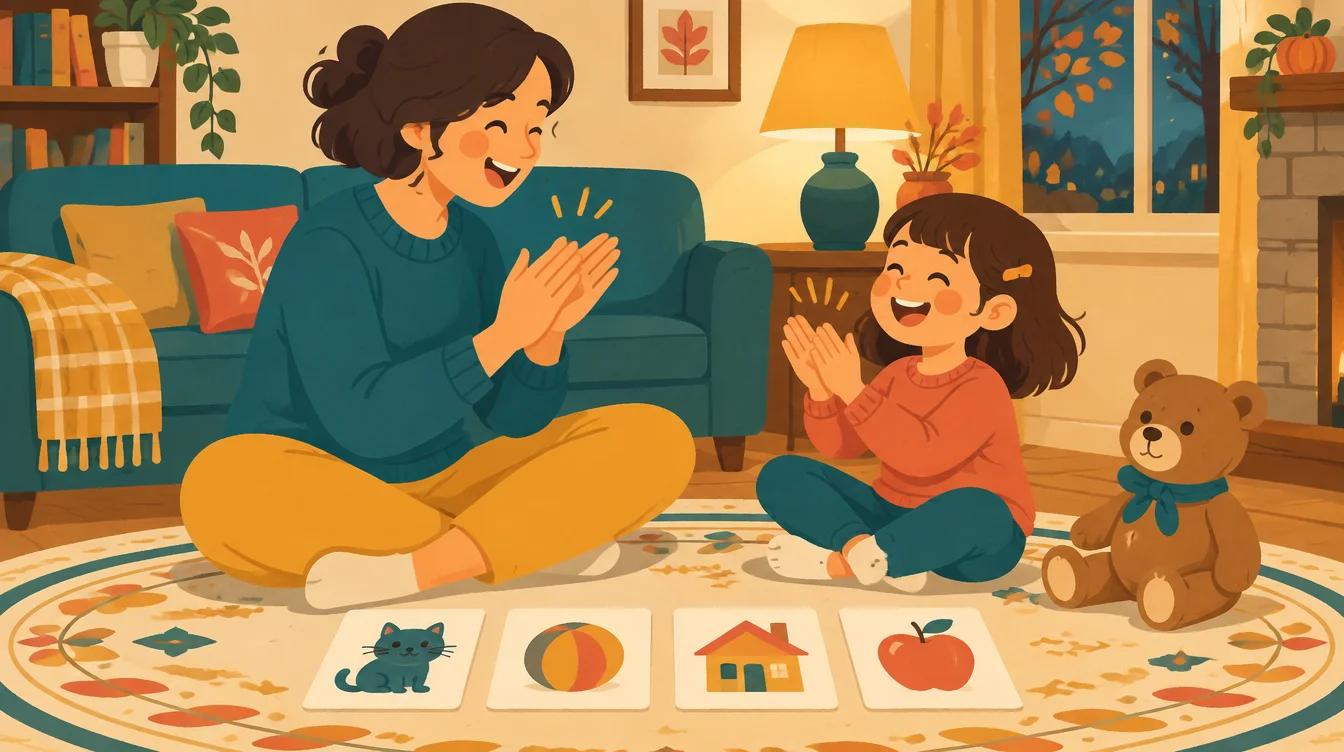
- Clap out the syllables in these words, then sort them: feuille (one clap), marron (two), écureuil (three).
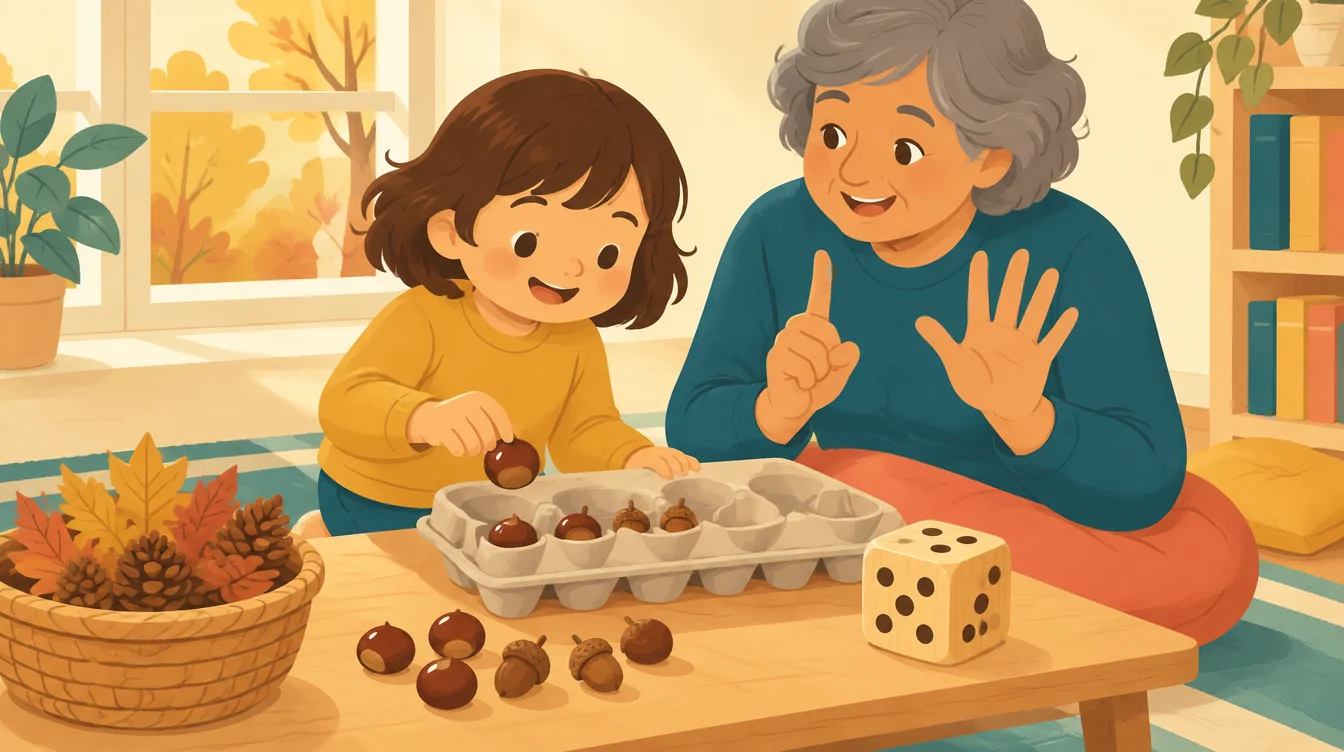
- Count conkers up to ten, touching each one only once.
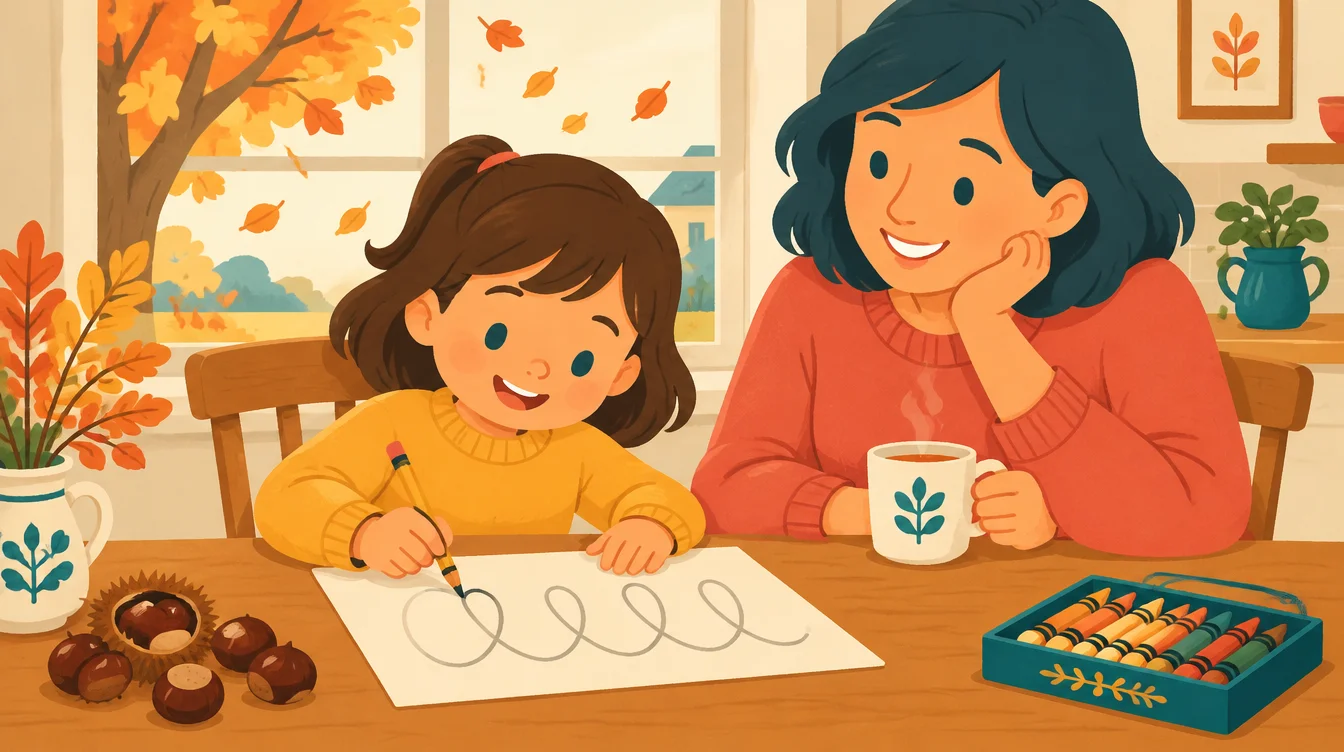
- Draw loops and arches, holding the pencil with a tripod grip: these are the movements that prepare for cursive writing.
Week 2: rhymes and letter names
- Rhymes: poule, boule, roule, moule… Words that sound alike are part of the Kindergarten curriculum. Odd one out game: poule, boule, chat.
- The letters in their name: say them, then find them in capitals, print and cursive.
- One more, one less: “You have five conkers. I add one: how many now?”
- The date: Wednesday 11 November is a holiday, a good chance to practise days of the week and today’s date.
Weeks 3 and 4: sounds, numbers and breaking things down
Week 3: hearing the first sound in a word
- Find the /f/ sound in a list of words, as in the curriculum: fourmi, sapin, feuille, fusée. Which word doesn’t have the ffff sound?
- Write their name in cursive, first with a model to copy. Writing it from memory will come later in the year.
- Match quantity, word and numeral: seven conkers, the word “seven”, the number 7. Then write the numbers from 1 to 10.
- Order: line up five soft toys. Who is first? Second? Last?
Week 4: breaking down and telling stories
- Break down numbers with fingers: five is four and one, or three and two. Then doubles: two and two make four, three and three make six.
- Portmanteau words: the start of POISSON and the end of SOURIS make POIRIS. This syllable game is part of the curriculum.
- Counting rhyme: count as far as possible up to thirty, then start from a number other than one (“Start at seven”).
- Tell a recipe using first, next, then, finally: Sunday’s stewed fruit is enough.
Making the most of printable Kindergarten worksheets
At age 5, regularity matters more than quantity. Four simple rules:
- A set time, always the same, and short: five to ten minutes.
- Start with speaking: clap, sing, count with objects, then move on to the worksheet.
- Only one worksheet at a time, chosen with your child.
- Finish on a success, even a small one, and stop before they get tired.
For numbers, our counting games fit into your day without paper. For handwriting, the Kindergarten writing worksheets build on loops and arches.
And after November?
Keep the same pace until 18 December, reusing the words and games from November rather than adding new ideas. To see the whole year and get ready for CP gently, our guide to the Kindergarten holiday workbook explains what a 5-year-old covers in each area.
Want to put these tips into practice?
Every day, a new adventure workbook adapted to your child's school level — to print or do on screen. No commitment.
Your questions
What should a child in Kindergarten know by November?
There’s no official list for November: the curriculum sets goals for the year, starting from age 5. Our plan is based on these goals: syllables, rhymes, letter names, their name and numbers up to ten. Your child’s teacher is best placed to say how they’re doing.
How much time per day for Kindergarten worksheets?
There’s no official time for home practice. Five to ten minutes is enough, at the same time each day, stopping before your child gets tired. A syllable game in the car counts just as much as a worksheet.
Where can you find free printable Kindergarten worksheets?
You can download Kidibook's Kindergarten workbook for free as a PDF, with no account or email needed, on our Kindergarten printable worksheets page. It covers letters and sounds, numbers, tracing and games, with answers included at the end.
My child doesn’t want to do worksheets: what can you do?
Switch to spoken activities and games: clap out syllables while walking, count the stairs together, or find rhyming words at the table. The preschool curriculum is play-based, so you can always come back to the worksheet another day without making it a big deal.
Read next
 Parent guide
The "summer slide": why your child forgets, and what to do
Loss of skills during school holidays is not inevitable: here’s how to avoid it in 10 minutes a day, without ruining the…
 Revision methods
Reading comprehension CE2: helping your child understand what they read
Support your child’s reading comprehension in CE2 with tips on question types, silent reading, unknown words and a simpl…
 Parent guide
Educational gift ideas: a present they'll still use in March
Educational gift ideas for children: 4 tips to avoid toys that end up forgotten, a selection by type and age, and inspir…
 Revision methods
Decimal numbers CM1: understanding the decimal point, with exercises
Help your child in CM1 master decimal numbers: reading, comparing, ordering, and placing decimals, plus 6 corrected exer…
 Parent guide
Poor school report: how to respond without crushing motivation
Poor school report? Read teachers’ comments, discuss calmly, find the cause and support your child with a plan for small…
 Revision methods
Mental maths in CE2: 10 minutes a day that make all the difference
Mental maths in CE2: discover the curriculum, 7 easy strategies, a 10-minute routine and 5 fun games to help your child …