🔢 Learning to Count in Nursery: Everyday Games
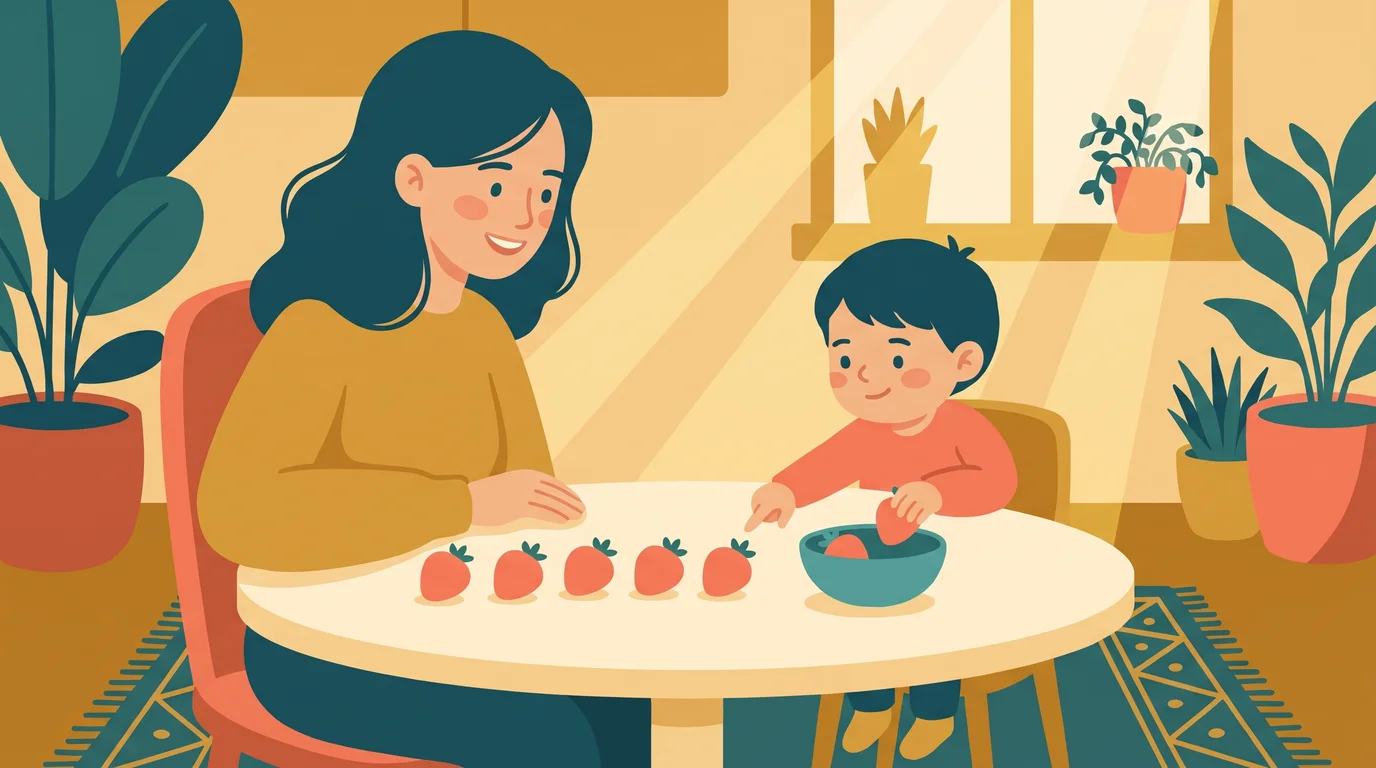
“One, two, three… ten!” Your child proudly counts up to ten, sometimes even further. But when you ask for four strawberries, they hand you a random handful. This is perfectly normal: reciting numbers and counting objects are two different skills. The nursery curriculum says so itself: a child may be able to recite the number sequence quite far without being able to use it to count a group of objects. The good news? Everyday life is full of chances to make the connection—no worksheets or screens needed.
Learning to Count: Reciting Isn’t the Same as Counting
To really count, your child needs to do several things at once:
- Know the number sequence in order, without skipping any (the “number rhyme”);
- Touch each object once and only once, without missing any or counting the same one twice;
- Understand that the last number said gives the total: if they say “one, two, three, four”, there are four strawberries. This is called the cardinality principle;
- Know that the amount doesn’t change if you spread the objects out or move them closer together, or whether they’re elephants or ants.
A common mistake: your child points to the third strawberry and says “three”, thinking “three” is the name of that particular strawberry. The curriculum suggests talking through the process: “one strawberry, and another one makes two strawberries; and another one makes three strawberries.” Each time, show the whole group, not just the last item.
What’s Expected in Nursery, from Preschool to Kindergarten
The nursery curriculum, published in the Official Bulletin on 31 October 2024, gives age guidelines, always with the note “or as soon as previous learning is observed”. Every child progresses at their own pace. Here’s what to expect:
| Age | Number Sequence | Counting a Group | Writing Numbers |
|---|---|---|---|
| Before age 4 | From one to six | Up to three, sometimes four | Matching digits to small quantities |
| From age 4 | From one to twelve | Up to six | Write the digits from 1 to 6 |
| From age 5 | Up to thirty, backwards from ten to one, in twos up to twenty | Up to ten, sometimes more | Write numbers from 1 to 10 |
Two things often surprise parents. First, small numbers take time: the curriculum reminds us that children understand two, then three, then four, in that order, and this can take several months. Second, zero isn’t a priority in nursery. So there’s no need to push a 3-year-old to count to a hundred—it’s much better if they really understand what “three” means.
Everyday Games for Learning to Count in Nursery
No special equipment needed: your home is full of little collections. The idea is to count for a real reason, not just as an exercise.
At the Table
- Setting the table: “Go and get just enough forks for everyone, in one trip.” This is an example given in the curriculum itself, along with plates and glasses.
- Snack time counting: “You can have five grapes.” Your child counts, and you check together.
- Sharing: six biscuits for two, handing them out one by one. How many does each person get?
Around the House
- Pairing up socks: “Two and two makes four.”
- Counting the stairs as you go up, then counting backwards as you come down.
- The empty egg box: put a lid or a pompom in each space, making sure not to miss any. This teaches your child to go through each spot just once.
Outdoors
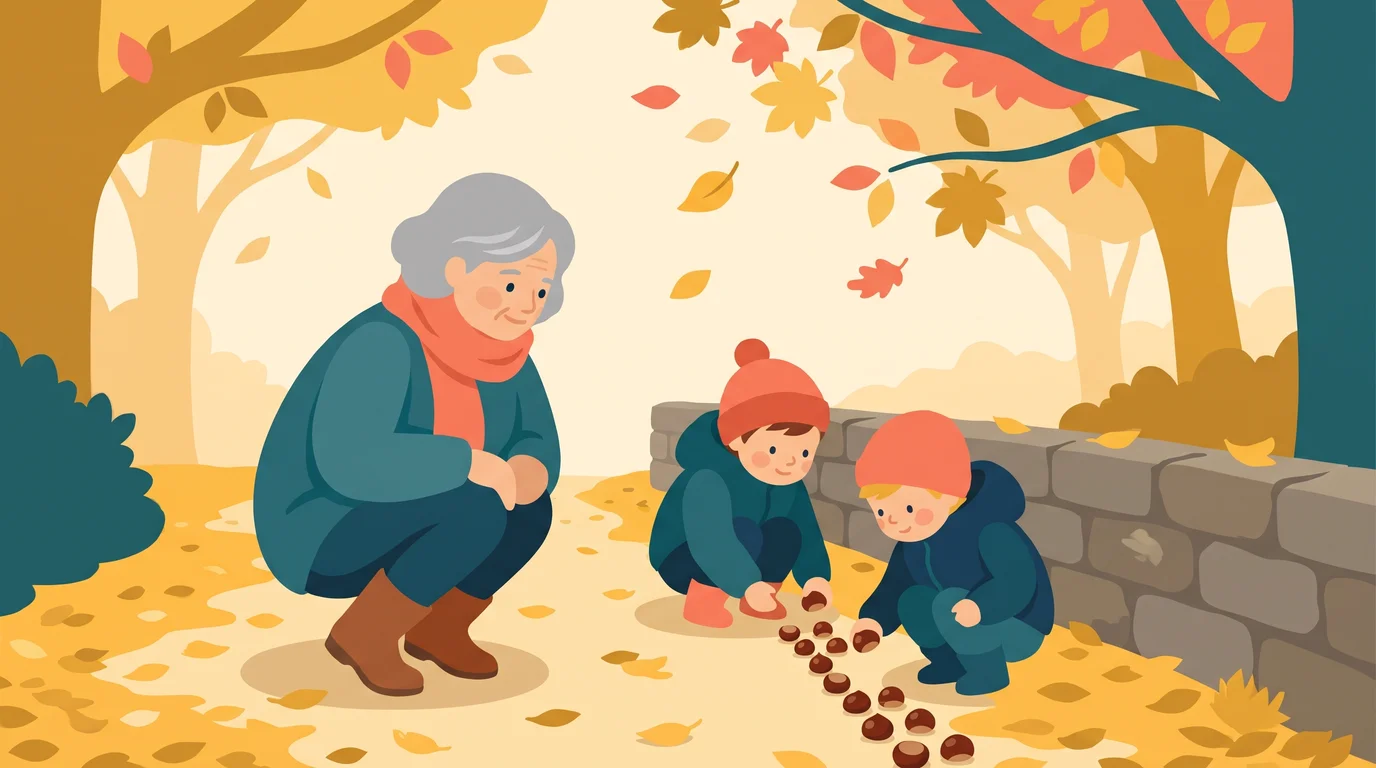
- Chestnuts from the walk: who has the most? Line them up side by side to compare, then count them.
- Red cars on the way to school: raise a finger for each one you spot.
Fingers, dice and board games: the best tools
Fingers aren’t a crutch to get rid of. In nursery, children learn to show a number with their fingers, then to break it down: “three is two and one more”. Try playing “Show me four fingers” and accept different ways: four on one hand, or two on each.
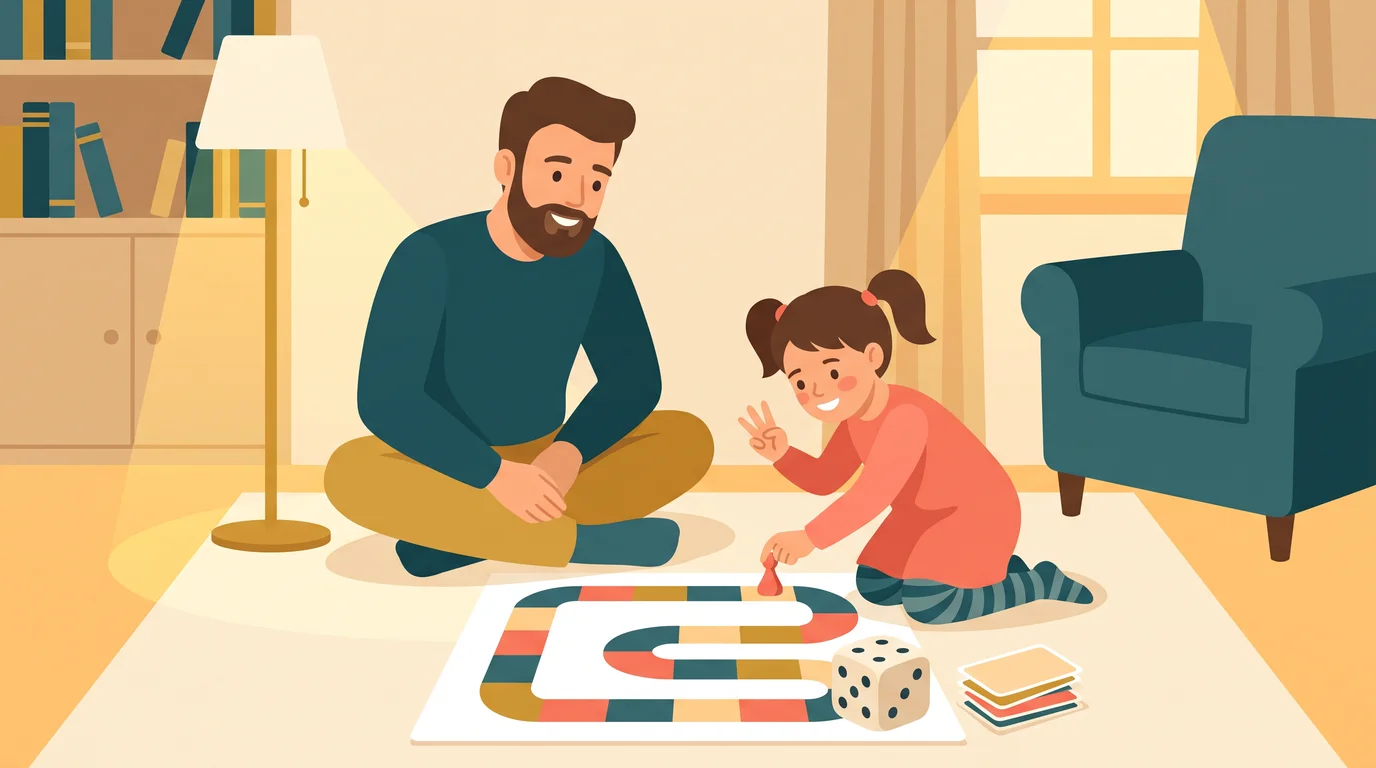
A classic die is another great ally. With practice, your child will recognise the dot patterns at a glance, without counting one by one. Board games like snakes and ladders or Ludo also help children see numbers as positions: “I’m on square four, move two, now I’m on six”. The curriculum even mentions these games as useful tools. For age-appropriate game ideas, see our selection of educational board games.
To keep the fun going on paper, the free Kidibook workbook has printable activities. And for a quick game break, The Big Jump lets your child catch stars—then ask how many they caught!
Common mistakes (and how to help)
- They skip a number (“one, two, four”): recite together with rhymes and songs, clapping hands. Repetition helps fix the sequence.
- They count the same object twice: suggest moving each item into a bowl as they count.
- They go too fast: their voice and finger should move together. Slow down and count with them, hand in hand.
- They forget the result: ask “how many?” straight after, then hide the objects under a tea towel and ask how many are underneath.
Getting ready for CP without rushing
By the end of Kindergarten, children are expected to count collections up to ten, sometimes more, and start counting on: to add four and five, they “put five in their head” and count “six, seven, eight, nine” on their fingers. These solid basics matter far more than reciting up to a hundred.
Five minutes a day, during a meal or a walk, is plenty. For more tips before the big first day, read our guide to getting ready for CP. And for ready-to-print activities, The 31-Day Adventure sends a free workbook every morning, from Preschool to CM2.
Want to put these tips into practice?
Every day, a new adventure workbook adapted to your child's school level — to print or do on screen. No commitment.
Your questions
At what age can a child count to 10?
The nursery curriculum aims for children to count collections up to ten from age 5, in Kindergarten, and to recite the number sequence up to thirty. Before that, they work up to three or four, then up to six. Every child progresses at their own pace.
My child can recite up to 20 but can’t count objects yet—is that a problem?
No, that’s a very common stage. Reciting numbers and counting objects are two different skills that gradually come together. Count small real collections with your child, moving each object, and ask “how many?” at the end.
Should children learn to write numbers at the same time?
Not right away. In nursery, quantity is first explored with objects, fingers and dice dots, then with number names. Writing numbers comes later: from 1 to 6 around age 4, and up to 10 in Kindergarten.
Is counting on fingers a bad habit?
No. The nursery curriculum specifically uses fingers to show quantities, build numbers and count on. They’re a tool, not a flaw to fix.
Next up
 Memory Tricks & Recall
Tricky words: the list from age 5 to 11 and 6 ways to remember them
Tricky words (the ones you can’t sound out): the list by age from 5 to 11, the traps to highlight and 6 simple ways to r…
 Learning through play
Halloween activities for children: 12 clever ideas to try at home
Halloween activities for kids: 12 simple ideas to do at home (crafts, cooking, games, stories), organised by age, with a…
 Memory Tricks & Recall
English verbs for kids: 7 tricks for tenses that really work
Verbs without tears: the -s of he/she/it, was or were, did or done, irregular verbs in sound families, -ed and -ing spel…
 Learning through play
Educational board games for ages 6-10: our skill-based picks
Educational board games for ages 6-10: our selection by skill (mental maths, words, logic, memory) and how to turn any g…
 Memory Tricks & Recall
Homophones: tricks to stop mixing up their/there/they’re, your/you’re and its/it’s
Homophones made easy: their, there or they’re? your or you’re? its or it’s? The swap test that works every time, a table…
 Learning through play
20 indoor games for rainy days (including 8 sneaky learning games)
Indoor games for kids on a rainy day: 20 fun ideas needing no purchases, from calm to energetic, plus 8 clever ways to i…