🧾 Back-to-school budget: how to cut costs without upsetting your child
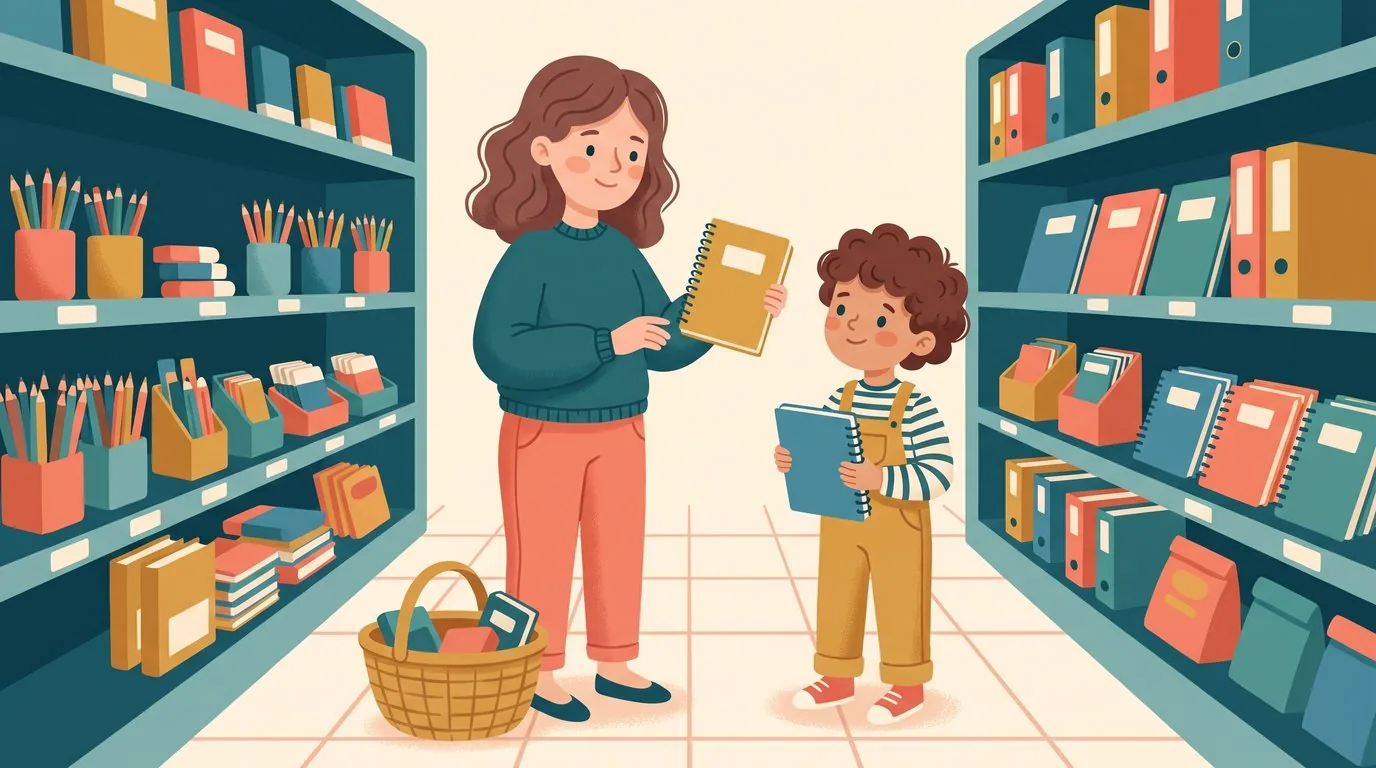
End of August, the same feeling: you walk into the shop with the school list and leave with a receipt you’d rather not look at. Then come the school bag, PE kit, lunch fees. Back-to-school is one of the year’s most intense expenses: everything hits in just two weeks, right after the holidays, and that’s what makes it tough.
Good news: most savings aren’t made in the shop, but before you go in and after you come out. Here are the tips that really make a difference, in order of what saves you the most. And a promise: spending less doesn’t mean your child is less prepared.
Back-to-school budget: the first tip is not to buy anything straight away
This is the step most articles forget: the most effective move is a twenty-minute inventory at the kitchen table, before your first shopping trip.
Empty out the June school bag, the desk drawer, last year’s pencil case. Make three piles:
- Good to go again: ruler, set square, compass, scissors, whiteboard, calculator, folders. These last for years—no need to buy them again.
- Needs testing: felt tips, highlighters, glue, cartridges. Two minutes scribbling on scrap paper is enough to sort the working from the dried-up.
- Throw away (or recycle): leaky pens, grey rubbers, half-scribbled notebooks.
Do this with your child: they’re much less likely to insist on a glittery new pencil case when they’ve just found their old one in perfect condition. On a full primary list, this sorting cuts out half the items. Our primary school supplies list goes through what to keep and what to replace, item by item.
Cheap school supplies: smart habits
Once you have the real list, a few simple habits help you avoid the most expensive traps.
Buy the plain version, not the branded one. A notebook with a superhero cover often costs twice as much as the plain one. The difference lasts two weeks—until the cover is covered in doodles.
Don’t buy everything in August. For specific items (a certain folder, a notebook with a particular ruling), wait for the teacher’s request: many families end up buying again in September what they’d already picked up ‘just in case’.
Multipacks, yes; giant packs, no. Twelve glue sticks on offer will dry out before you use them. Two is just right.
Check your insurance before signing up for a new one. School insurance isn’t required for compulsory lessons; it is for optional activities (trips, after-school clubs). But your home insurance often already includes personal liability. A quick call to your insurer can save you a whole new policy.
And remember, contributing to the school fund is voluntary: it supports real classroom projects, but it’s a donation, not a bill.
Buying in bulk with other parents
Many parent associations organise group orders: a set that matches the list, delivered to school, at a negotiated price. Ask about it as early as June—orders close quickly.
If not, the DIY version works well: two or three families from the same class, a big pack of notebooks or paper, and you split it. The price per item drops, and no one ends up with twelve packs of lined paper.
Second-hand school bags: where to look and what to check
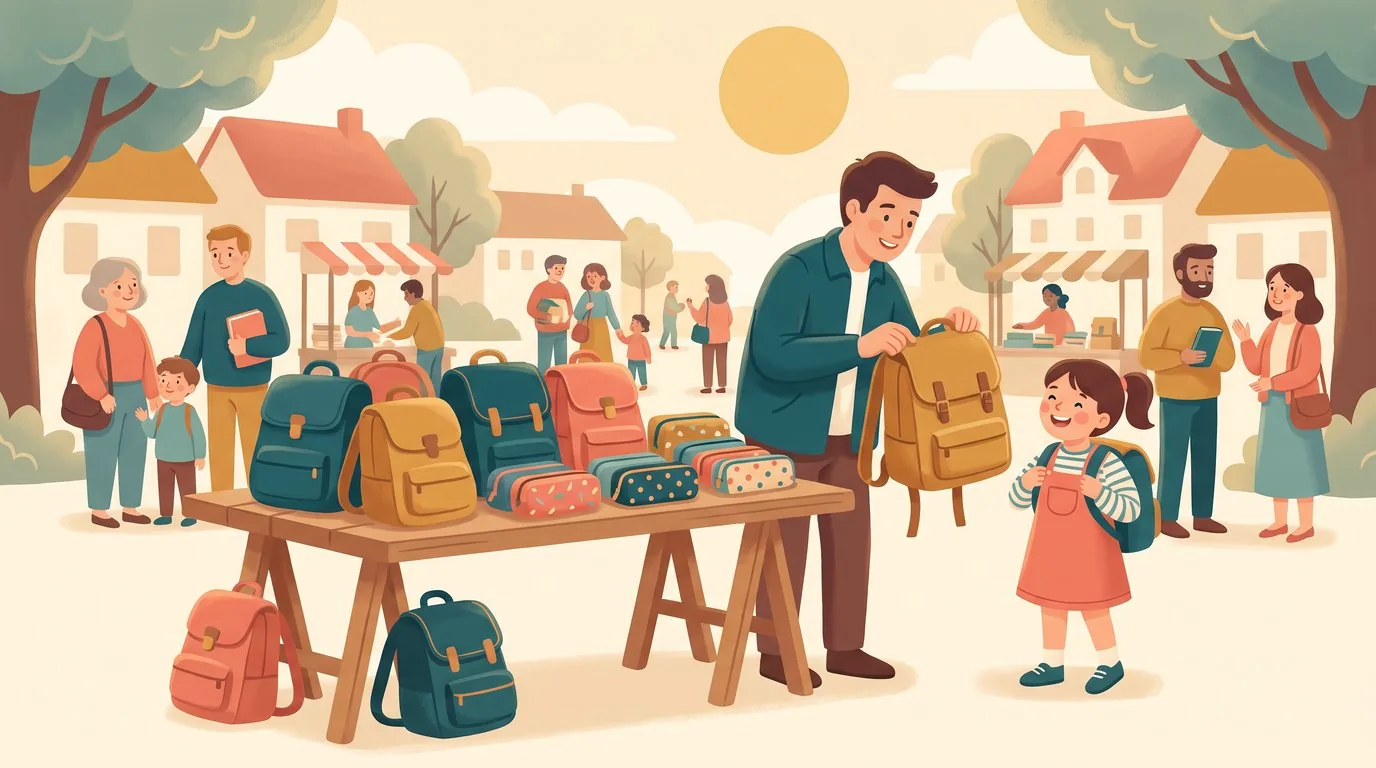
This is the most expensive item for back-to-school, and where second-hand is most worthwhile: a sturdy branded school bag can easily last through two or three owners. Good places to look: end-of-August school supply fairs and car boot sales, charity shops, local ads, or the school’s parent group.
Check three things before buying: the straps (stitching and padding intact), the main zip, and the bottom of the bag. The rest can be cleaned. Try it on your child: the bottom of the bag should sit in the small of the back, not on the hips.
Back-to-school allowance: check if you’re eligible
The back-to-school allowance (ARS) is paid by the CAF, or by the MSA for agricultural workers, to families whose income is below a certain threshold. It’s for children in school from about age 6 to 18, and the amount depends on their age group.
Two practical points:
- If you already receive benefits and your child is in primary or collège, payment is usually automatic: you don’t need to apply, it arrives before school starts.
- From age 16, you need to confirm your child is still in school or training, otherwise the payment won’t be made.
We’ve deliberately included no amounts or thresholds here: they change every year, and a figure copied from a blog will be wrong next year. The latest values and official calculator are on caf.fr, under back-to-school allowance.
Also check with your local council and county: depending on where you live, there may be extra help for back-to-school, reduced-price lunches based on income, or support from the CCAS. These are not widely known, rarely automatic, and often only take a few minutes to apply for.
Free learning support: the back-to-school budget line you can cut
No one mentions this in ‘cheaper back-to-school’ articles, but it costs more than the pencil case: the exercise book in September, another in January, sometimes private tutoring in spring.
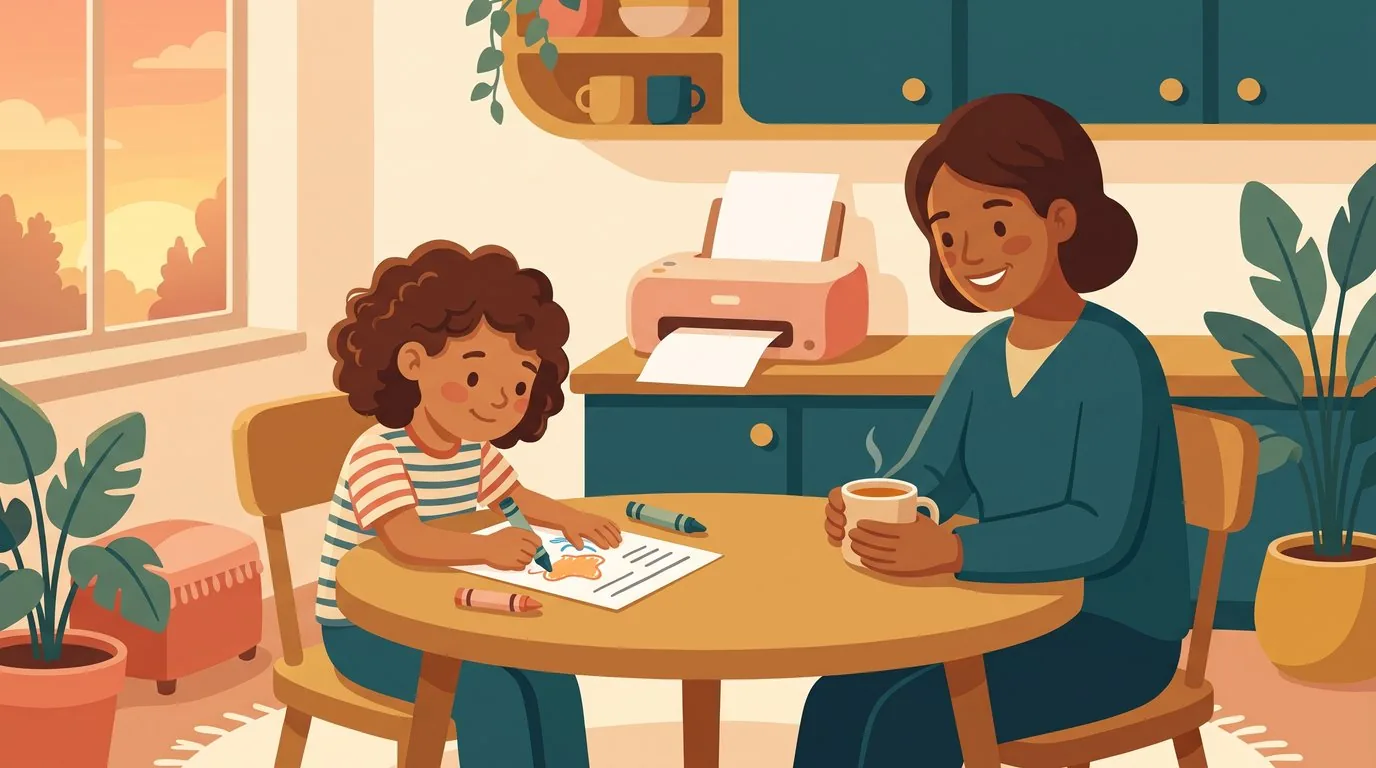
But home practice doesn’t need to cost anything: worksheets shared by teachers, public support websites, the local library (free for children in most areas), printable workbooks.
At Kidibook, we focus on this: our free printable activity book covers the basics for each class in short pages, and our free educational game is perfect for evenings when no one wants another workbook. Zero cost, zero subscription.
There’s only one expense to watch: printer ink. Print in black and white, use draft mode, and print double-sided: each page costs just a few pence, and children don’t mind at all.
The real savings, item by item
Keep this handy when making your list:
| Item | The costly habit | The money-saving tip |
|---|---|---|
| School bag | Brand new, licensed, replaced every year | Good quality second-hand, personalised by your child |
| Small supplies (ruler, scissors, compass) | Buy everything new | June inventory: almost everything can be reused |
| Exercise books and paper | One pack of each, bought individually | Group purchase with other parents, check the format |
| School insurance | Sign up without checking | Call your home insurance first |
| Extra tuition | Paid workbooks, private lessons | Free printable resources |
Spend less, without your child feeling left out
Children don’t compare prices—they notice how others look at them in the playground. So, two simple rules: don’t make saving money a worry—“we can’t afford it” can easily become “we keep what still works, and spend where it matters.” And keep one new item chosen by your child: a pencil case, a pen they love. That little treat makes everything else easier.
If your child is anxious about going back to school, it’s not really about money: our tips for supporting a child stressed about the new school year are more helpful than a new school bag. After that, consistency is key: a short, steady homework routine is worth more than any amount of shopping.
The cheapest back-to-school isn’t about going without—it’s about not buying the same thing twice.
Want to put these tips into practice?
Every day, a new adventure workbook adapted to your child's school level — to print or do on screen. No commitment.
Your questions
What budget should you plan for a primary school child’s return to school?
It’s impossible to give an honest figure: it all depends on the year group, last year’s school bag, and the school’s list. The best way is to start with the teacher’s list, cross off what you already have after checking, and only add up what’s left. Count non-school expenses separately if they come at the same time: lunch, after-school care, sports club fees. It’s this total—not just the supplies—that puts pressure on budgets.
How do you apply for the back-to-school allowance?
If you already receive CAF (or MSA) benefits and your child is in primary or collège, you usually don’t need to do anything: payment is automatic before the start of term, subject to income. If you’re not yet registered, you’ll need to create an account and declare your income. From age 16, you must provide proof your child is still in education. The amounts and income limits change every year: check them on caf.fr, never on a blog.
Where can you find a good second-hand school bag?
End-of-August school supply fairs and car boot sales, charity shops, online classified ads, and the school’s parent group are your best bets. Check the straps, main zip, and the bottom of the bag—these are the weak spots. The rest can be cleaned. And make sure your child tries it on: the bottom of the bag should sit in the small of their back.
Can you help your child revise for free?
Yes: several free resources are more than enough for primary. Teacher-made worksheets online, the local library, educational games, and printable workbooks cover most home practice. The free Kidibook workbook is made for this: short pages, one per day, no subscription. The only cost to watch is ink: print in black and white, draft mode.
Read next
 Parent guide
The 'summer slide': why your child forgets, and what to do
Learning loss over the school holidays isn’t inevitable: here’s how to avoid it in just 10 minutes a day…
 Parent's Guide
“My child is bored during the holidays”: what to do (without feeling guilty)
My child is bored during the holidays: why boredom is actually healthy, a box of boredom-busting ideas, and a daily ritual…
👨👩👧Parent's GuideMy child doesn’t want to do homework: what can I do tonight?
Is your child refusing to do homework? Calming phrases to ease the tension, spot what’s blocking them, and prepare for a helpful chat…