🎒 Primary homework routine: a year-by-year guide, from CP to CM2
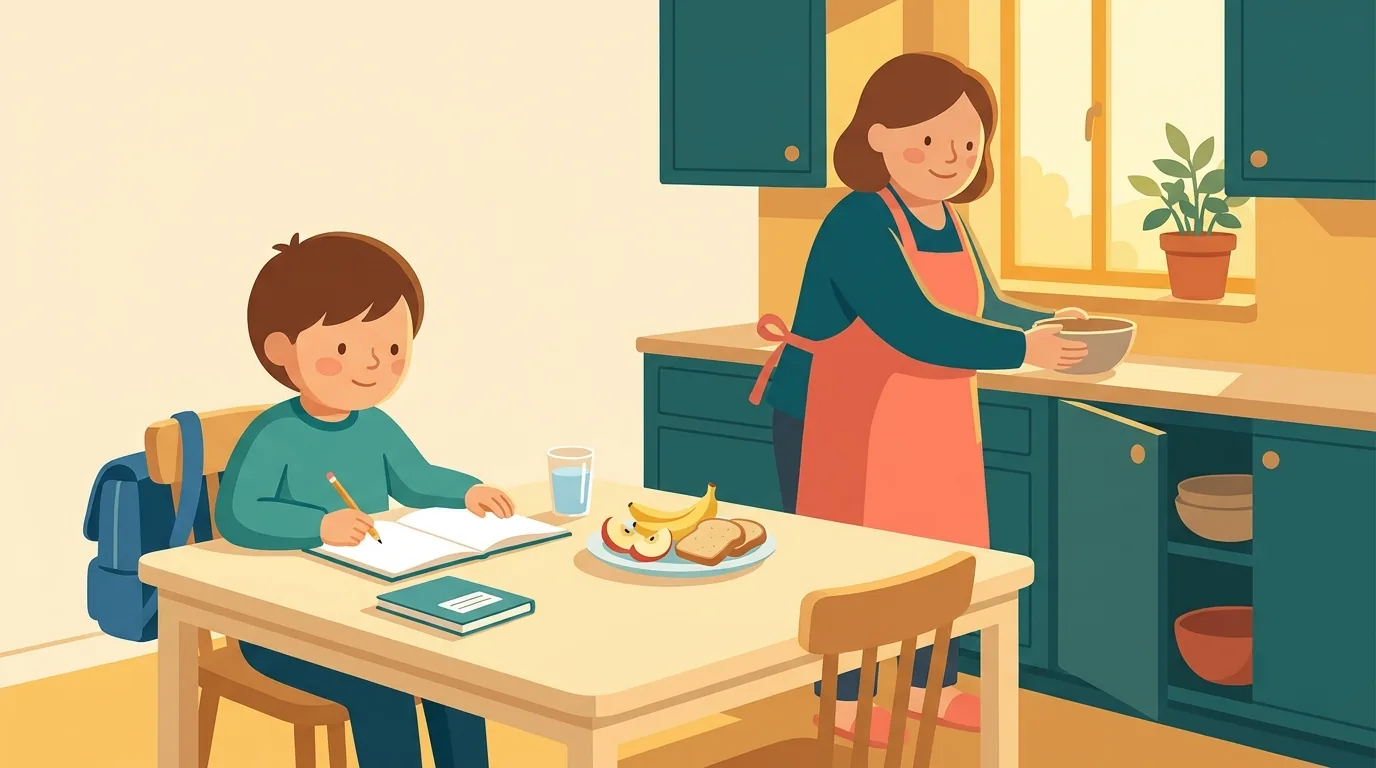
It's 5:40 pm. The school bag is dropped in the hallway, the TV is on, and no one is moving. At 7:15 pm, somewhere between bath time and dinner, someone will remember there was a poem to learn. The evening is ruined—and it's only Monday.
What's missing isn't motivation or goodwill: it's structure. A routine is simply a series of steps that always happen in the same order, so there's nothing left to argue about. The first two weeks of September are enough to set it up—and it will last until June.
Why homework time so often turns into a battle
Managing homework at home becomes much easier once you identify the real cause of the friction. Three issues come up in almost every family, and none of them are about your child's school level:
- The floating time slot. If homework time isn't set, it becomes a decision to make every evening—which means another discussion every evening.
- Built-up tiredness. After six hours in class, a primary school child has little energy left. By 7:30 pm, they're running on empty.
- Vague instructions. “Go do your homework” isn't an instruction—it's a plan. “Read your history lesson, then tell it back to me” is an instruction.
Here's something reassuring that few parents know: official guidelines don't require written homework at home in primary school. What's expected is to review lessons, read, and learn words. If your child spends an hour writing every evening, the issue isn't your routine.
What time should homework be done after school? A routine that works, from CP to CM2
The best time slot is the one that actually fits your family, every day, without exception. Three simple rules:
- Snack first, and ideally ten minutes of movement. Going straight from the classroom chair to the kitchen chair is the quickest way to a failed homework session.
- Never after 6:30 pm in primary. After this time, more is lost than gained; it's better to postpone until the next morning.
- The same place, a clear table, no screens on in the room. The kitchen table works perfectly: it's the routine that matters, not the desk.
The times below are practical guidelines, not official rules. The real reference is what your child's teacher asks for.
| Year | Time per evening | Parent's role | Biggest challenge |
|---|---|---|---|
| CP | 10 minutes | Sit next to them the whole time | Reading aloud |
| CE1 | 15 minutes | Sit nearby, but step back a little | Learning new words |
| CE2 | 20 minutes | Be in the room, available | Reviewing a lesson without reciting it |
| CM1 | 25 minutes | Check in at the start and end | Keeping the homework diary up to date |
| CM2 | 30 minutes | Only check at the end | Planning ahead for tests |
If your child regularly goes well over these times every evening, it's not because they're working badly: it's a sign that something isn't understood, or that tiredness is taking over. Let the teacher know—stretching out homework time won't fix it.
Primary homework routine: the 5 steps and year-round plan that really last
A solid routine comes down to five steps, always in the same order. Give it two weeks to become second nature.
- The starting signal. Always the same, always at the same time.
- Reading the homework diary out loud. Your child reads, you break it down together: tonight, two things, not five.
- The work block. Short, timed, one task at a time. The timer ends the session for you — that’s the whole idea behind the child-friendly Pomodoro method.
- The standing break if there’s a second task: have a drink, stretch, no screens.
- Finishing up. Tick off what’s done, pack the schoolbag for tomorrow, and that’s it. Children need to know when the school day really ends.
On extra-busy days, keep steps 1, 2, and 5: the ritual survives even if the work doesn’t happen. It’s the habit you’re protecting, not the evening’s content.
Helping your child with homework — without doing it for them
This is the hardest line to hold, and it shifts as your child grows.
From CP to CE1: stay close by
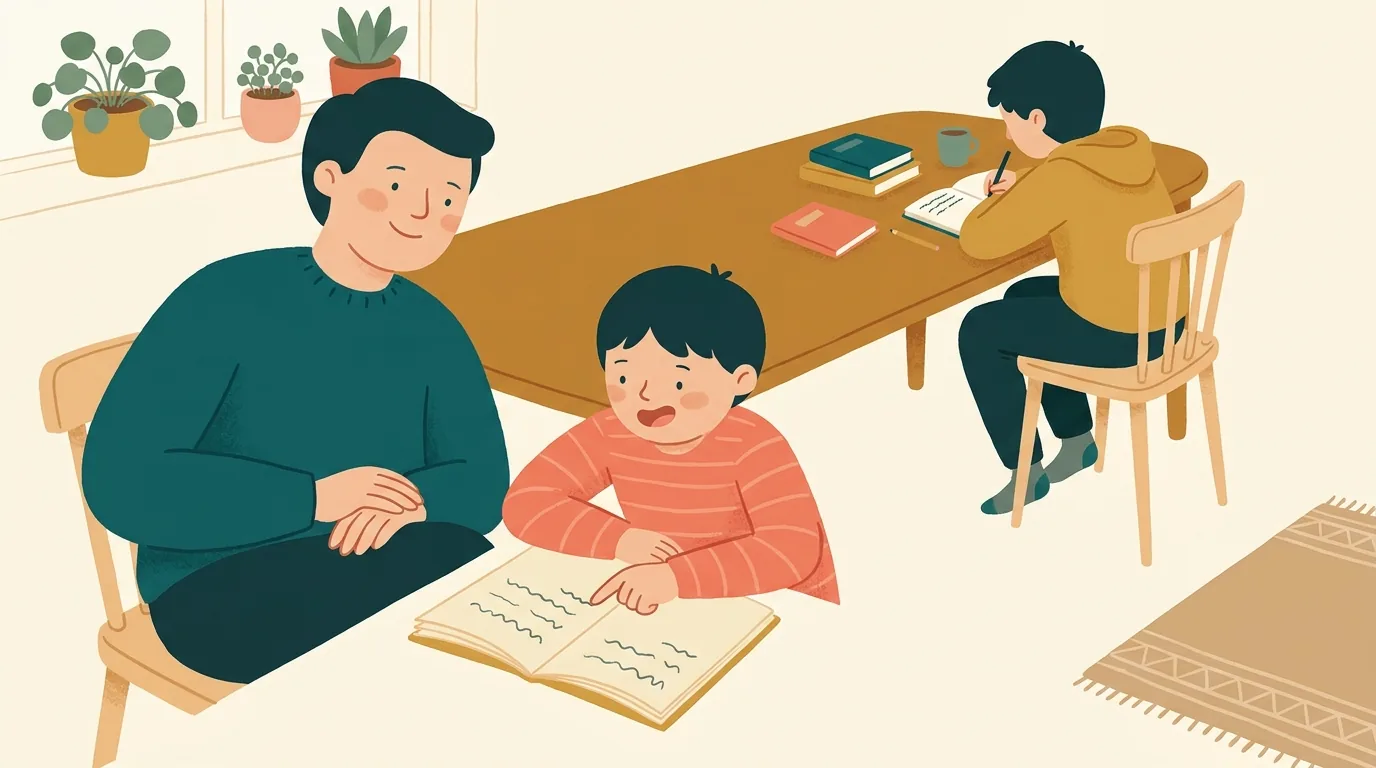
At this age, children can’t get themselves going again on their own: your presence is the tool. Read the instructions together, let them try, rephrase if they get stuck. Never give the answer: just ask the question another way.
From CE2 to CM2: building independence at school
Gradually, you move to checking at the start and end: present for the launch, present for the review, elsewhere in between. The best question at the end isn’t “have you finished?” but “tell me what you learned.” If your child can explain the lesson, they know it; if they’ve reread it three times while daydreaming, they don’t.
When they resist, cry, or say they have nothing to do
Before arguing, work out which of the three reasons is at play — the response depends on it:
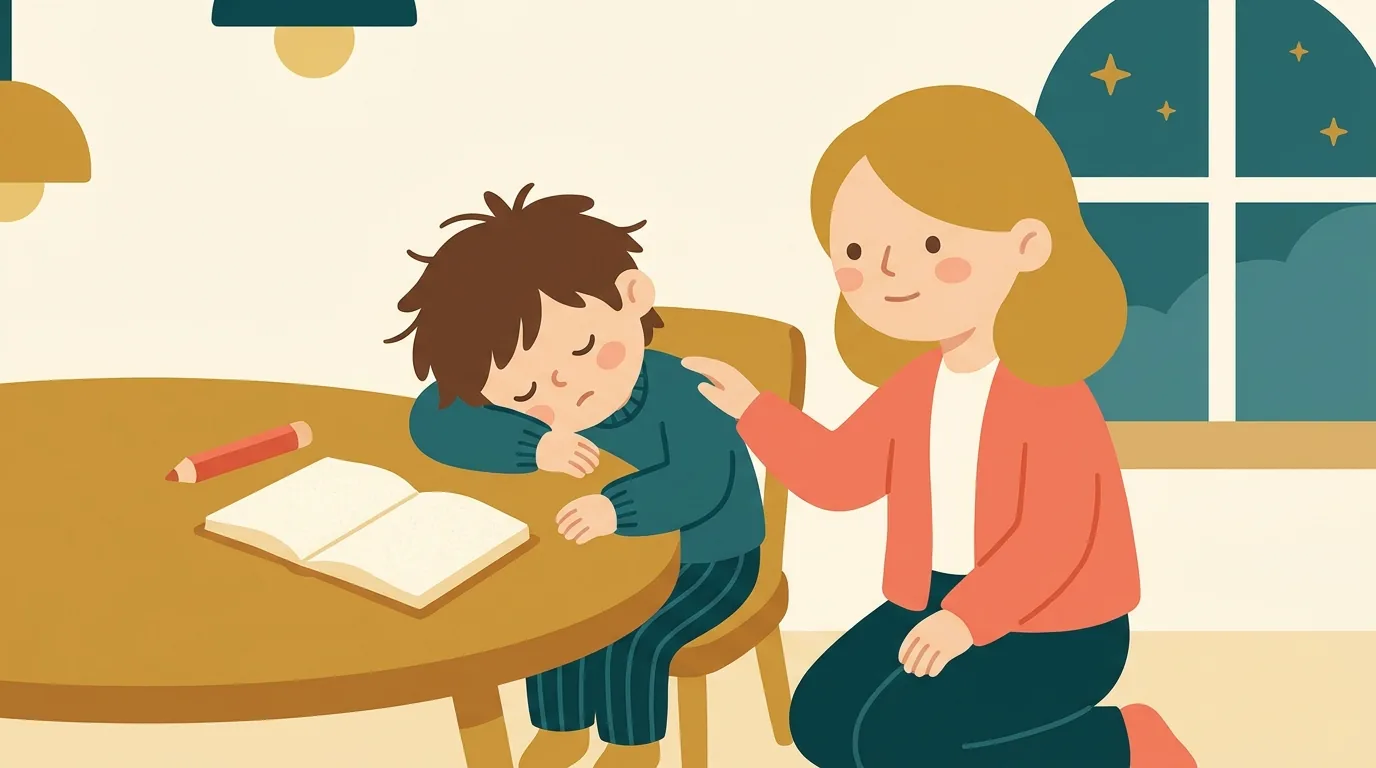
- Tiredness. They yawn, slump, get cross over a pencil. Solution: cut things short tonight, and look at bedtime for the week rather than the session itself.
- Lack of understanding. They avoid the task, change the subject, say “it’s rubbish.” We don’t focus on what we don’t understand: we escape it. Solution: go back to an easier example, then let the teacher know.
- Power struggle. They “never” have anything, even though the diary says otherwise. Solution: stick to the rules, not negotiation. That’s the focus of our guide on getting a reluctant child to revise.
In all three cases, one rule protects the routine: stop at the planned time, even if it’s not finished. Note what’s left in the diary, and the teacher will know. Letting a session overrun by half an hour buys you one quiet evening but ruins the rest of the week.
If the struggle is about sitting still rather than the work itself, our tips for improving concentration are best used before the session starts.
Primary homework routine: keeping it up during the holidays
A routine built in September won’t survive three weeks of total break. A school routine needs maintenance, like a muscle. That doesn’t mean doing school at home in July: ten minutes a day, with something that feels like a game, is enough to keep the habit going.
That’s exactly how Kidibook workbooks are designed: one page a day, a story to follow, and your child ticks off their own progress.
Want to put these tips into practice?
Every day, a new adventure workbook adapted to your child's school level — to print or do on screen. No commitment.
Your questions
What’s the best time for homework after school?
After a snack and some movement, and ideally before 6:30 pm. The exact slot matters less than sticking to it: having it always at the same time removes the evening arguments. If Wednesday or Saturday morning works better for your family, keep it and don’t change.
How much homework per evening in primary?
As a rough guide: about 10 minutes in CP, 15 in CE1, 20 in CE2, 25 in CM1 and 30 in CM2. If your child regularly goes over these times, it’s not a sign of poor organisation: it’s something to mention to their teacher.
Should I stay next to my child during homework?
Yes, in CP and CE1, where your presence is a working tool. From CE2, you move to the edges: start the session, step away, come back for the review. Hovering over a CM1’s shoulder stops them learning to get going on their own.
How do you set up the routine from the very start of September?
Pick the time and place before the first day of school, and stick to them for two weeks without exception: that’s how long it takes for a child to stop arguing about it. Start short, even if you need to make it longer later: a ten-minute routine that lasts is better than a thirty-minute one abandoned by the end of September.
Read next
 Getting ready for back-to-school
Preparing for CP over the summer: the 7 real priorities
Getting ready for CP without cramming: the 7 real summer priorities, what’s covered in class, and a 10-minute daily ritual…
 Getting ready for back-to-school
Preparing for 6e: a calm guide for parents of CM2 children
Getting ready for 6e without stress: what changes after CM2, a summer checklist, steps towards independence, and our tips…
 Getting ready for back-to-school
Revising before school starts in August: the plan for the last 2 weeks
Revising before school starts in August without stress: a gentle 15-day plan to get back into routine and review key topics, class by class…