🎒 Starting the School Year Well: Swap “getting good marks” for 5 family goals

Every year, the same scene around 15 September: in the car, someone says, “So, are you really going to try this year?” with the best intentions. The child nods. No one really knows what’s just been asked—least of all the child.
That’s the problem with the usual family goal: “get good marks”. A primary school child has no idea what to do with that tomorrow morning. But “I read for ten minutes every night before lights out”—that’s something they can start this evening. Here’s the method: five behaviour goals, written down, put up somewhere visible, and reviewed once a month.
School motivation: starting the year well isn’t about marks
A mark is a result. It depends on the topic, how tired you are, the marking scheme: a child can’t control it, it just happens to them. Asking them to improve it is giving them a mission they can’t actually steer.
A behaviour goal, on the other hand, is about something they can choose to do. It has three advantages that marks don’t:
- You can see it: you know that very evening if it’s been done, no need to wait for the report card.
- You can celebrate it: a full week of reading deserves praise, even if Friday’s dictation didn’t go well.
- It ends up boosting marks: a child who reads every night from November understands instructions better by March, without anyone mentioning averages.
The 5 back-to-school goals for a great start to the year
These cover the essentials for primary: reading, maths, independence, routine, and confidence. Three if your child is little, five from CE2 onwards—never more, and just one per area.
1. Read a little every evening
The most effective one. The winning version isn’t “read more” but “ten minutes of reading after pyjamas, before the bedtime story”. The time is linked to something that already happens—no more negotiating. In CP, your child reads aloud while you listen without correcting every word; from CE2, they read alone and tell you the story in one sentence.
2. Go over times tables three times a week
You can’t learn them all in one heroic January evening—they stick with small, regular practice. Three five-minute slots—Monday, Wednesday, Friday—work better than an hour on Sunday, and saying them out loud works well: in the car, on the stairs. If it’s tricky, our tips for learning times tables break it down table by table.
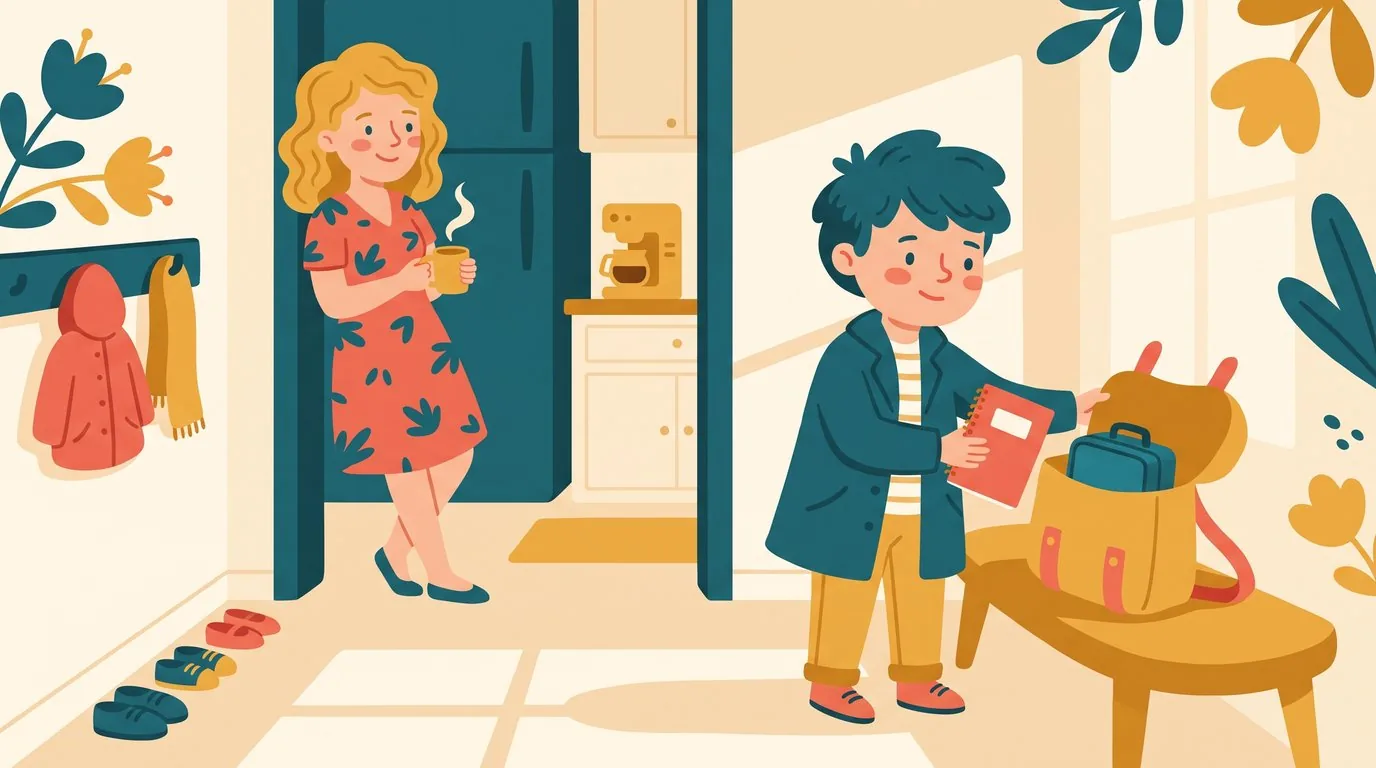
3. Pack your own school bag the night before
The ultimate independence goal, and the most obvious: either the bag is ready in the hallway by 8pm, or it isn’t. Keep the list of things needed for the next day on display, and don’t redo it for them: forgetting a notebook in October is less costly than a child convinced it’s always mum’s job.
4. Always have a set homework time
It’s not “do your homework properly”, it’s “we sit down at 5:30pm, after snack”. A fixed time ends the daily debate—the real source of evening stress. For help setting this up, our primary homework routine guide gives timings for each level.
5. Dare to say “I didn’t understand”
The only goal that happens in class, and the most valuable: “this week, I put my hand up at least once when I didn’t understand”. Many children stay quiet for fear of looking silly, and the gap just grows in silence. Ask on Friday if they managed to ask a question—just bringing it up each week often helps.
The family contract: get the goals out of your head and onto the wall
A goal mentioned in the car is forgotten in three days; put up in the kitchen, it lasts all winter. The family contract is just an A4 sheet, nothing more:
- At the top: your child’s name and the school year.
- In the middle: the three to five goals, written in the first person (“I read for ten minutes…”), in big letters.
- At the bottom: what you promise to do—the bit everyone forgets. “I won’t moan if you make a mistake”, “I’ll put my phone away during homework”.
- Signatures: for a 7-year-old, this is what turns an instruction into an agreement.
Put it up at your child’s height, with a sticker for each successful evening: they make consistency visible, which otherwise goes unnoticed. The contract isn’t for checking up—it builds independence step by step, until reminders aren’t needed anymore.
From GS to CM2: which goals for your child’s level?
A goal that’s too ambitious for their age is just setting them up to fail. Here are some ideas to adapt to your child, not just their class:
| Level | Reading & language | Maths | Independence | Time per day |
|---|---|---|---|---|
| GS | Listen to a story and retell it | Write numbers up to 10 | Put on their coat, pack away their school bag | 10 min |
| CP | Read a few lines out loud every evening | Addition and number bonds up to 10 | Take out their notebook and snack by themselves | 10 to 15 min |
| CE1 – CE2 | Read for 10 minutes, then sum it up in one sentence | Times tables from 2 to 5, then up to 10 | Pack their school bag the night before, using the checklist | 20 min |
| CM1 – CM2 | Read for 15 minutes from a book they've chosen | All times tables, daily mental maths | Write down homework, start without being told | 30 min |
A regular routine — same time, same order — is better than a packed schedule. And if reading is a struggle, lower the bar rather than giving up: five minutes every evening is worth more than twenty minutes abandoned by 10 October.
The monthly positive review: ten minutes, once a month
Without a follow-up meeting, the contract becomes invisible by November. The review is short, always on the same day (the first Sunday of the month) and in the same order:
- Look at the stickers: just the facts, no comments.
- Name three successes. Your child says them, you add to the list. Three, not just one: finding the third is what really boosts confidence.
- Pick one thing to improve, stated as an action: not “be more serious” but “in October, set the alarm five minutes earlier”.
- Adjust the contract. Any goal that’s become automatic comes off the sheet — that’s a win, not a gap to fill straight away.
The word “positive” isn’t just for show: this is not the time to bring up a failed dictation. If your child dreads this meeting, they’ll stop playing along.

Three situations that can derail your goals
They happen in almost every family, between half-term and Christmas — none of them are serious.
- “They managed two weeks, then nothing.” Totally normal, not a failure: go back to just one goal, the one that worked best, and leave the others aside for a month.
- “They refuse the contract.” Often it’s because it was handed to them instead of written together: redo the sheet with your child, letting them suggest a goal. If the refusal is broader, our solutions for when a child refuses to revise tackle the root of the problem.
- “It ends in an argument.” The contract is too full, or it’s measuring disguised results (“make fewer mistakes”). Halve it: three goals kept up until June beat eight goals dropped by November.
The contract doesn’t need to be pretty or final: it just needs to exist before the autumn half-term, while the year is still fresh. A sheet on the fridge, five lines, two signatures — and the first review in a month.
Want to put these tips into practice?
Every day, a new adventure workbook adapted to your child's school level — to print or do on screen. No commitment.
Your questions
Do you really need to set goals at the start of the year?
Yes, and it’s actually the best time: in September, everything’s fresh and your child is still motivated. Waiting for the first report turns it into a reaction to a bad result, so it feels like a punishment. A contract set in the two or three weeks after school starts feels like a project, not a penalty.
How many goals should you set for a primary school child?
Three before CE2, five at most after that, and only one per area. More than that, your child won’t remember them and you can’t keep track: the contract collapses on its own. Three goals kept all year are better than eight forgotten by half-term.
How can you motivate your child for the new school year?
By never talking about marks and celebrating consistency. A full week of reading deserves praise even if Friday’s dictation didn’t go well: that’s what your child can control. Add a goal they’ve chosen themselves and a short monthly meeting where they hear three positive things about themselves.
What if my child gives up on their goals after three weeks?
Don't worry — this is a normal part of building a new habit. Go back to just one goal, the one that was working best, and put the others on hold for a month. Also check that the goal is linked to a specific time of day — a goal without a set time is easily forgotten.
Read next
 Getting ready for the new school year
Preparing for CP: the 7 real priorities for summer
How to get ready for CP without cramming: the 7 real priorities for summer, what’s covered in class, and a 10-minute ritual…
 Getting ready for the new school year
Preparing for 6e: a calm guide for CM2 parents
Starting 6e without stress: what changes after CM2, your summer checklist, and steps towards independence…
 Getting ready for the new school year
Revising before school starts in August: the plan for the last 2 weeks
Gentle revision before school starts in August: a 15-day plan to get back into the swing of things and review key concepts, step by step…