💭 “My child is bored during the holidays”: what to do (without guilt)
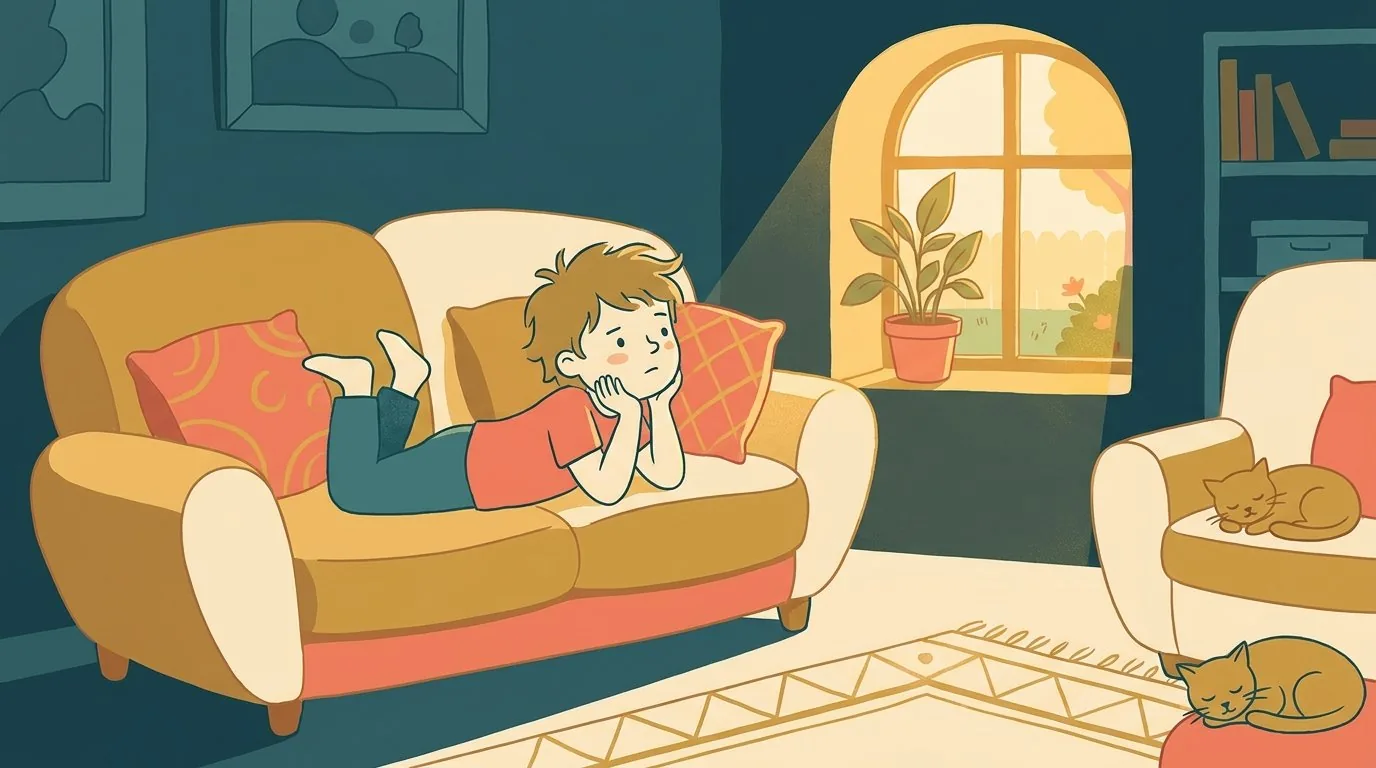
“Mom, I'm bored…” Three words repeated over and over from the third day of holidays, often in a tone of the end of the world. No panic, and especially no guilt: if your child is bored during the holidays, it is neither a parenting failure nor a problem to solve immediately. It is even, most of the time, very good news. Here is why boredom is useful, a ready-to-go idea box, and a simple ritual so that the days don’t turn into total emptiness — all without turning your living room into a play center.
“My child is bored during the holidays”: what if it was actually healthy?
Our children are used to a scheduled daily routine: school, activities, screens that chain stimulations. When everything stops, the brain faces emptiness… and it stings a little. Yet psychologists often remind us: boredom is not the enemy. It is precisely in these empty moments that imagination starts, the child invents a game, builds a fort, tells themselves a story.
A child who is constantly entertained never learns to occupy themselves alone. The one who is bored, on the contrary, gradually develops a valuable skill: finding resources within themselves. Your role is therefore not to fill every minute, but to set a framework and let it happen.
“My child is bored during the holidays”: the anti-boredom idea box
Having some ideas in advance avoids long negotiations. The trick is not to do everything for them, but to offer a direction then let it unfold. Here is a menu sorted by current mood.
| Type of activity | Some ideas | What it develops |
|---|---|---|
| Creating with your hands | Sheet forts, drawing, salt dough, collage, land art in the garden | Imagination, fine motor skills, patience |
| Moving outside | Obstacle courses, treasure hunts, biking, water games | Energy, coordination, cooperation |
| Helping at home | Baking a cake, washing the car, gardening, tidying your room as a challenge | Autonomy, pride, sense of responsibility |
| Calm down | Reading, activity workbook, puzzle, listening to an audio story | Concentration, language, imagination |
For travel or rainy days, keep handy games that require no materials: our article on games to keep children busy in the car also works very well in the living room on a gloomy afternoon.

A morning ritual that structures the day
Boredom becomes heavy when the day has no landmarks. Without recreating the school timetable, a small morning ritual provides a reassuring framework: the child knows there is a “me time” moment before the big free play period. Five to fifteen minutes is enough.
Many families adopt the same pattern: upon waking, after breakfast, settle in for a short calm activity — a workbook page, a few lines of reading, a careful coloring. It gently wakes up the brain and, bonus, maintains skills without feeling like homework.
You can download a free printable activity workbookwithout giving an email: one page per morning, illustrated and scripted as an adventure, turns the ritual into a fun appointment rather than a chore. And it also addresses a real parental concern, the little summer slide that teachers notice at back-to-school time.

Screen time: ally or trap when the child is bored?
Let's be honest: screen time is the easy solution when boredom rises and you also need a break. There is no shame in that. The trap is making it the automatic reflex: a child who goes to a tablet as soon as they are bored never learns to manage that emptiness themselves, and the screen only postpones the problem.
The rule that works: screen time as a choice, not as a filler. Announce it in advance (“after snack, you’ll have half an hour”), for a limited time, rather than as an emergency fallback. And prioritize quality content, without aggressive ads or in-app purchases.
When screen time has its place in the day, five minutes of our free game Le Grand Saut make a nice joker: a fast and colorful runner game with the Kidibook workbook mascots, free and no registration. Play one round, close it, then go back to real play.
In summary, when your child is bored during the holidays : breathe, it’s not an emergency problem to solve. Remember that boredom feeds imagination, keep an idea box handy, establish a simple morning ritual, and make screen time a controlled choice. Your mission is not to be the holiday club entertainer — just to open the door, then let your child invent their summer.
Want to put these tips into practice?
Every day, a new adventure workbook adapted to your child's school level — to print or do on screen. No commitment.

Your questions
Is it serious if my child is bored during the holidays?
No, on the contrary. Boredom is a driver of imagination: it’s often in these quiet moments that a child invents a game, crafts, or tells themselves a story. A child constantly entertained never learns to occupy themselves. Your role is not to fill every minute, but to set a reassuring framework and let them find resources on their own.
How to keep a bored child busy without screens?
Keep an idea box sorted by interest: creating with hands (fort, drawing, salt dough), moving outside (obstacle course, treasure hunt, bike riding), helping at home (cooking, gardening), or relaxing quietly (reading, activity book, puzzle). A simple tip: make a “boredom box” filled with small idea slips where the child picks randomly when they feel stuck.
Is a holiday activity schedule necessary?
No need for a tightly timed schedule like at school. A simple morning ritual (five to fifteen minutes of calm activity after breakfast) is enough to give a daily anchor, before a long period of free play. Too many organized activities tire the child and prevent learning to occupy themselves: balance between light structure and freedom is key.
How to manage screens when my child is bored?
Make screen time a choice announced in advance and limited in duration ("after snack, half an hour"), rather than an automatic reflex whenever boredom rises. Otherwise, the child never learns to manage this emptiness alone. Favor quality content, without aggressive advertising or in-app purchases, and always alternate with free play and off-screen activities.
To read next
 Parent’s guide
The “summer slide”: why your child forgets, and what to do
Loss of skills during school holidays is not inevitable: here’s how to avoid it in 10 minutes per day…
 Parent’s guide
Back-to-school budget: lighten the bill without upsetting the child
Back-to-school budget: sorting supplies, second-hand backpack, CAF aids — concrete tips to pay less c…
👨👩👧Parent’s guideMy child refuses to do homework: what to do tonight?
Your child refuses homework? Phrases to calm the crisis, identify the blockage, and prepare a useful exchange with…