✍️ Learning French conjugation: 7 tips that really work
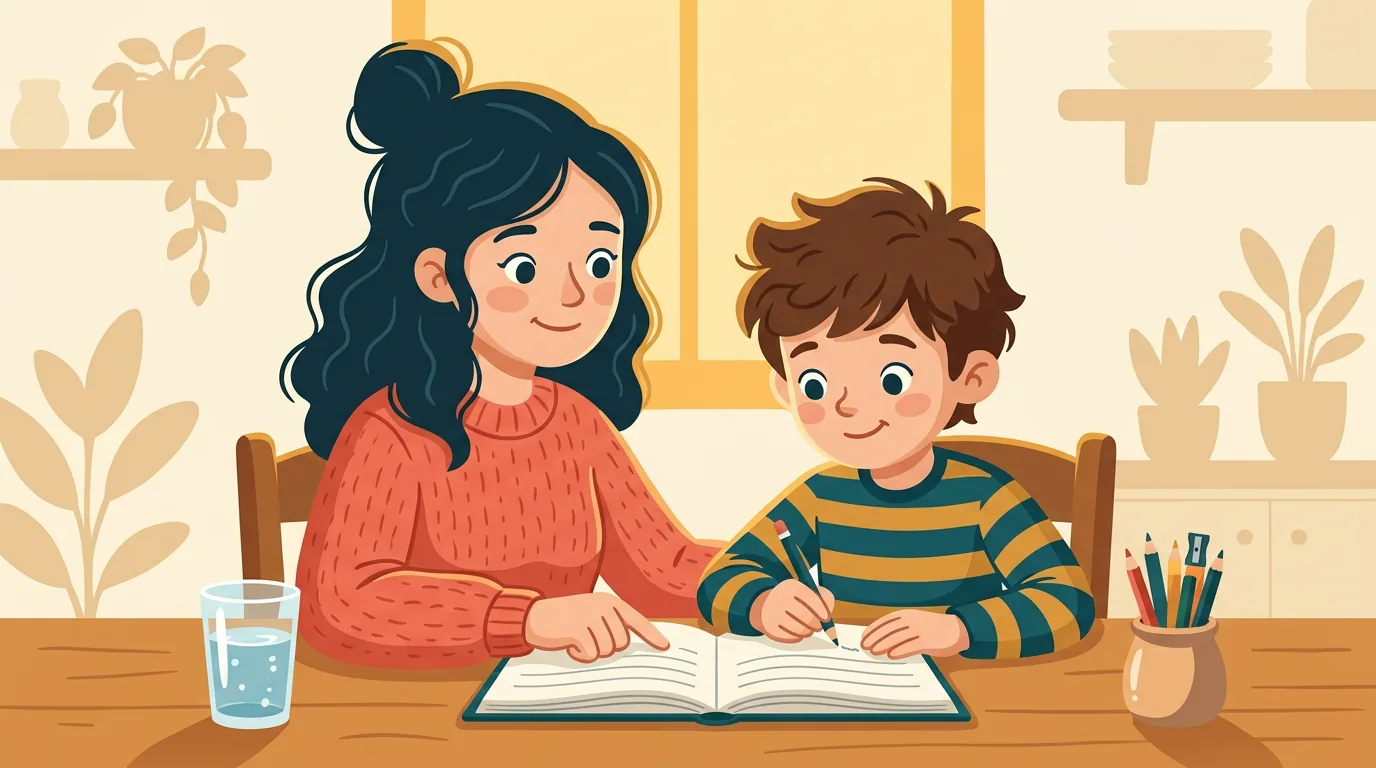
In the evening, he recites his conjugation table without a single mistake. The next day, his writing comes back with « il chantais », « les enfants joue » and « je serait content ». Every parent knows this scene, and it has nothing to do with how hard the child is working.
The good news: to learn French conjugation, you don’t need to memorise endless tables. French conjugation is much more regular than it seems, and a handful of well-chosen tips will cover most verbs your child will write up to collège. We’ve gathered them, along with other school pitfalls, in The Big Book of Memory Tricks. Here they are, with quick tests you can do at the table.
Why learning conjugation is tricky, even when the lesson is known
Three reasons—and none of them is called "not working hard enough".
1. You can’t rely on how it sounds. Many French verb endings simply aren’t pronounced. Il joue, ils jouent: they sound exactly the same. Je mangerai and je mangerais too, for many people. A child who "writes what they hear" can’t get it right on their own.
2. We learn verb by verb. Reciting the table for finir, then prendre, then venir—it’s just stacking up lists, never seeing what they have in common. But they actually have a lot in common.
3. The table is learned as a block. A child who’s memorised "je-finis-tu-finis-il-finit" in one go has to run through the whole thing to find a single form. In the middle of writing, they don’t have the time or the patience: they write by ear. The tips below don’t replace the lesson—they give a quick-check reflex you can use mid-sentence.
Tip 1: Look at the subject before the verb
This is the most useful breakthrough. For the four tenses most often written in primary school (present, imperfect, future, conditional), the ending depends first on the subject, not the verb. So before asking "how do I spell this verb?", your child should ask "who is doing the action?". The table below fits on a card the size of your hand:
| Subject | Ending ends with… | Exceptions to know |
|---|---|---|
| je / j' | -e, -s, -x or -ai, never -t | je peux, je veux, je vaux take an x |
| tu | always an s (or an x) | tu peux, tu veux; at the imperative: mange !, va ! (but vas-y) |
| il / elle / on | -e, -a, -t or -d, never an s | il prend, il vend, il coud end with d |
| nous | -ons | only one: nous sommes |
| vous | -ez | vous êtes, vous dites, vous faites |
| ils / elles | -ent (never pronounced) or -ont | -ont: ils ont, sont, font, vont and all future tense forms |
Look at the "ils / elles" line: it explains one of the most common mistakes in primary school, les enfants joue. The -ent isn’t heard, so it’s easy to forget—unless your child gets into the habit of checking the subject.
Present tense tip: verb endings by group
The present tense is the first one taught at school, and the one used most often. To find the right verb endings, you just need to know which group the verb belongs to. Three families, three sets:
- 1er groupe: all verbs ending in -er, except aller. Endings are -e, -es, -e, -ons, -ez, -ent: je chante, tu chantes, il chante, nous chantons, vous chantez, ils chantent. This is by far the largest group.
- 2nd group: verbs ending in -ir that use -issons with nous. Endings are -is, -is, -it, -issons, -issez, -issent: je finis, tu finis, il finit, nous finissons, vous finissez, ils finissent.
- 3rd group: all the others, including aller. Most often, the endings are -s, -s, -t (or -d), -ons, -ez, -ent: je dors, tu dors, il dort; je prends, tu prends, il prend.
A handy way to tell the 2nd and 3rd groups apart is to ask: “Do we say nous …issons?” Nous finissons, nous grandissons: 2nd group. Nous courons, nous partons: no -issons, so 3rd group, even if the infinitive ends in -ir.
Tricky 3rd group verbs in the present tense
- Verbs ending in -dre keep their d: il prend, il vend, il répond. Except those ending in -indre and -soudre: il peint, il craint, il joint, il résout.
- Ouvrir, offrir, couvrir, cueillir, souffrir are conjugated like 1st group verbs: j'ouvre, tu ouvres, il ouvre.
- Pouvoir, vouloir, valoir take an x: je peux, tu peux; je veux, tu veux.
- Être, avoir, aller, faire, dire are essential to know by heart: they're the most common and the most irregular.
Conjugation tip: the future tense uses “avoir”
The simple future becomes the easiest tense in French once you know the trick: take the infinitive and add the present tense of avoir.
- chanter + ai, as, a, ons, ez, ont → je chanterai, tu chanteras, il chantera, nous chanterons, vous chanterez, ils chanteront.
- Compare with avoir in the present: ai, as, a, (av)ons, (av)ez, ont. They're the same.
- Verbs ending in -re just drop the final e: prendre → je prendrai, dire → je dirai.
Another clue: the future tense always rolls its R. There's an r just before the ending in every verb, even the most irregular: je ferai, je serai, j'irai, je viendrai, je pourrai, je verrai. A future tense without this r is a mistake.
Future or conditional? The “tu” test
This common mix-up is solved in seconds. Faced with je mangerai(s), your child replaces je with tu and listens:
- “tu mangeras” → that's the future, so write -ai (je mangerai).
- “tu mangerais” → that's the conditional, so write -ais (je mangerais).
The same test works for je serai / je serais and j'aurai / j'aurais. And to remember the conditional: it's the start of the future with the endings of the imperfect (je chanter-ais, nous chanter-ions). Two familiar tenses, no extra tables.
The imperfect: the most regular tense in French
If your child learns just one set of endings, make it this one: -ais, -ais, -ait, -ions, -iez, -aient. It works for all verbs, no exceptions: être, avoir, aller, prendre, vouloir, 1st group and 3rd group verbs alike.
Now for the verb stem. There's a simple recipe: take the verb with nous in the present, remove -ons, and add the ending.
- nous finissons → finiss- → je finissais;
- nous prenons → pren- → je prenais;
- nous faisons → fais- → je faisais;
- the only exception: être, which gives j'étais.
This method means you don't need a table for every verb, and it naturally produces those tricky but correct forms everyone gets wrong: nous criions, vous voyiez, nous gagnions. The i in the ending is added to the stem, not replacing it.
“-é” or “-er”: the test that saves dictations
When spoken, manger and mangé sound the same. In writing, it's a mistake that keeps coming back. The solution is a classic teacher's trick: replace the verb with mordre (or vendre, or prendre—a verb where you can hear the difference).
- “Il a mang… la tarte” → “Il a mordu la tarte” → you hear a past participle, so mangé.
- “Il va mang… la tarte” → “Il va mordre la tarte” → you hear an infinitive, so manger.
Children love this test because it creates silly sentences: “j'ai mordu le bus”. Laughter helps, and the habit sticks quickly. To practise in real situations, our article on preparing for a dictation suggests a simple routine.
One last tip, for later: in the passé composé, the past participle agrees with the subject when the auxiliary is être (elle est partie), and doesn't change with avoir—except if a direct object comes before, a rule usually taught at the end of primary school.
The verb of the day ritual: five minutes at the table
Conjugation doesn't need long sessions, just regular short bursts. The routine that lasts all year fits into dinner time:
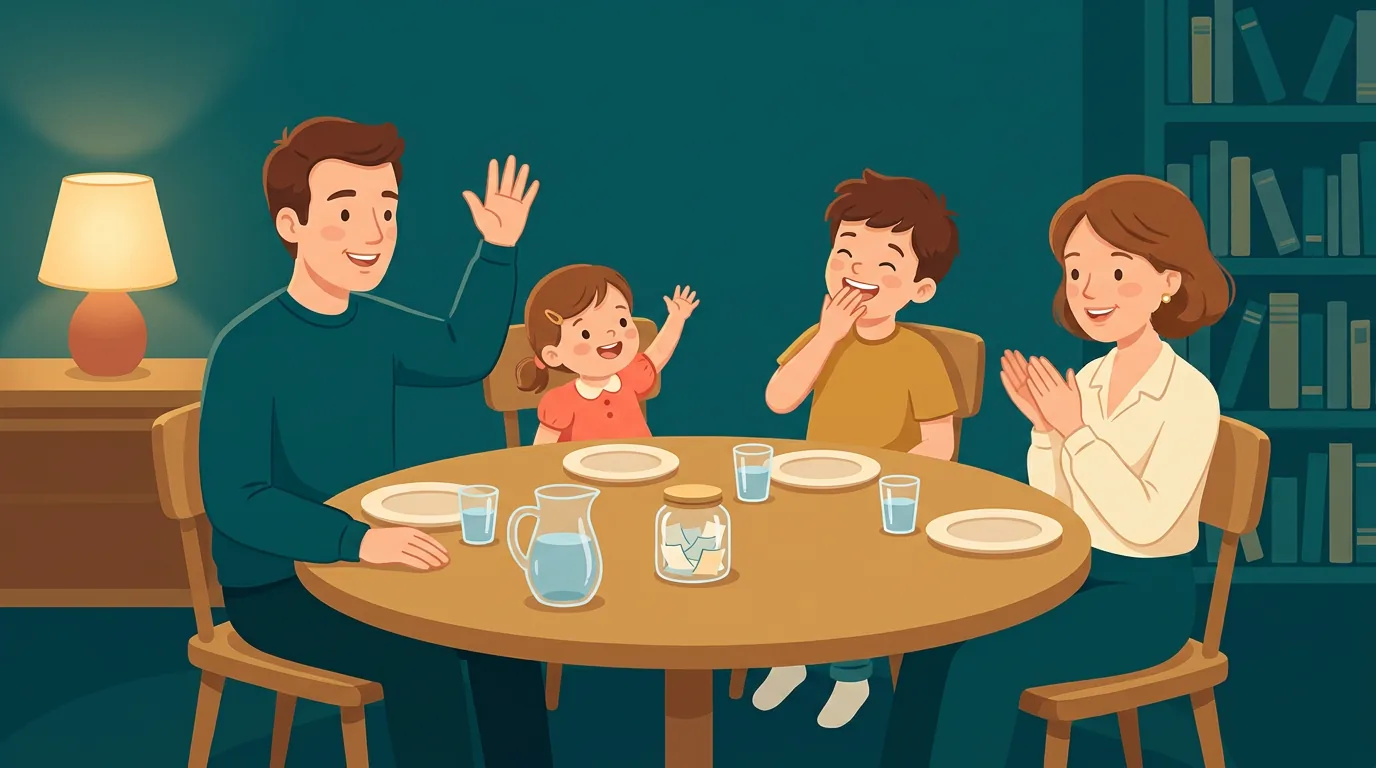
- Pick a verb at random (labels in a jar, or the first verb you hear on the radio).
- Pick a tense: present, imperfect, future.
- Take turns out loud around the table, one person each: je, tu, il, nous, vous, ils. Parents join in too, and are allowed to make mistakes.
- On Fridays, write it down: just two sentences, using the week's trickiest verb.
A few minutes each day are better than a long session with tables on Sunday night. It's the same idea as for invariable words: short, repeated practice, with a spaced reminder a few days later. And for other tricks that stick instantly, take a look at our article on essential memory techniques.
Learning conjugation from CE1 to CM2: what your child should aim for
Progress varies from school to school, but the pattern is the same: start with the present tense of common verbs, then the imperfect and the future, then compound tenses.
- CE1: spotting the verb and its subject, present tense of -er verbs, être and avoir. The key point: the verb changes when the subject changes.
- CE2: strong grasp of the present, imperfect and future tenses for common verbs (aller, faire, dire, venir, prendre), and first steps with the passé composé.
- CM1: linking different tenses within the same text, and first use of the passé simple, starting with third person forms (il partit, ils partirent).
- CM2: consolidation, plus-que-parfait, present conditional, and the tricky -ai / -ais endings. This foundation will be useful all through sixième.
Learning conjugation in CE2: the pivotal year
CE2 is often the year when everything comes together: three simple tenses arrive almost at once, along with the passé composé. This is when tip #1 (think of the subject before the verb) is most useful, as it works for the present, imperfect and future tenses. Focus on the three verb groups in the present, the imperfect endings, and the future as "infinitive + avoir". To practise with worksheets at the right level, our printable CE2 exercises cover all these points.
If your child is struggling with their year group, drop down a level without feeling guilty: everything builds up over time. A CM1 pupil who writes les enfants joue needs to revisit subject-verb agreement, not the passé simple.
Want all these tips in one place, handy for homework? The Big Book of Memory Tricks brings together the conjugation tips from this article, plus many more for spelling and maths, in short phrases to reread and little exercises. Perfect for turning those evening "I can't remember" moments into "oh yes, the tu test!".
To try out these tips with real exercises, start with our free printable workbook: just a few pages, no sign-up needed. And if the routine sticks, the 31-Day Adventure is a free daily challenge to keep up the pace.
📘 All these tips are also available as a book: The Big Book of Memory Tricks — conjugation, spelling and more, with a tip for every tricky point.
Want to put these tips into practice?
Every day, a new adventure workbook adapted to your child's school level — to print or do on screen. No commitment.
Your questions
How can I help a child who mixes everything up in conjugation?
Start with one habit: look for the subject before writing the verb, then check the ending for the right person (ils → -ent, nous → -ons, tu → -s). Work on one tense at a time, starting with the present. A few minutes of speaking practice each day, with a 'verb of the day' routine, is better than a long weekend session.
Should children learn conjugation tables by heart?
Reciting the table in order can be reassuring, but it's not enough: the child then has to go through the whole table to find a single form. After one or two recitals, move on to random questions: "venir, futur, vous?", "prendre, imparfait, ils?". This quick recall is what they'll need for writing.
What's a good mnemonic for future tense endings?
For the future tense, it's the infinitive plus the present tense of avoir: ai, as, a, ons, ez, ont (je chanterai, tu chanteras, ils chanteront). Verbs ending in -re just drop the final e: je prendrai. And the future always 'rolls its R's': there's always an r just before the ending, even in je serai, j'irai or je ferai.
My child gets conjugation exercises right but makes mistakes in their writing. Why?
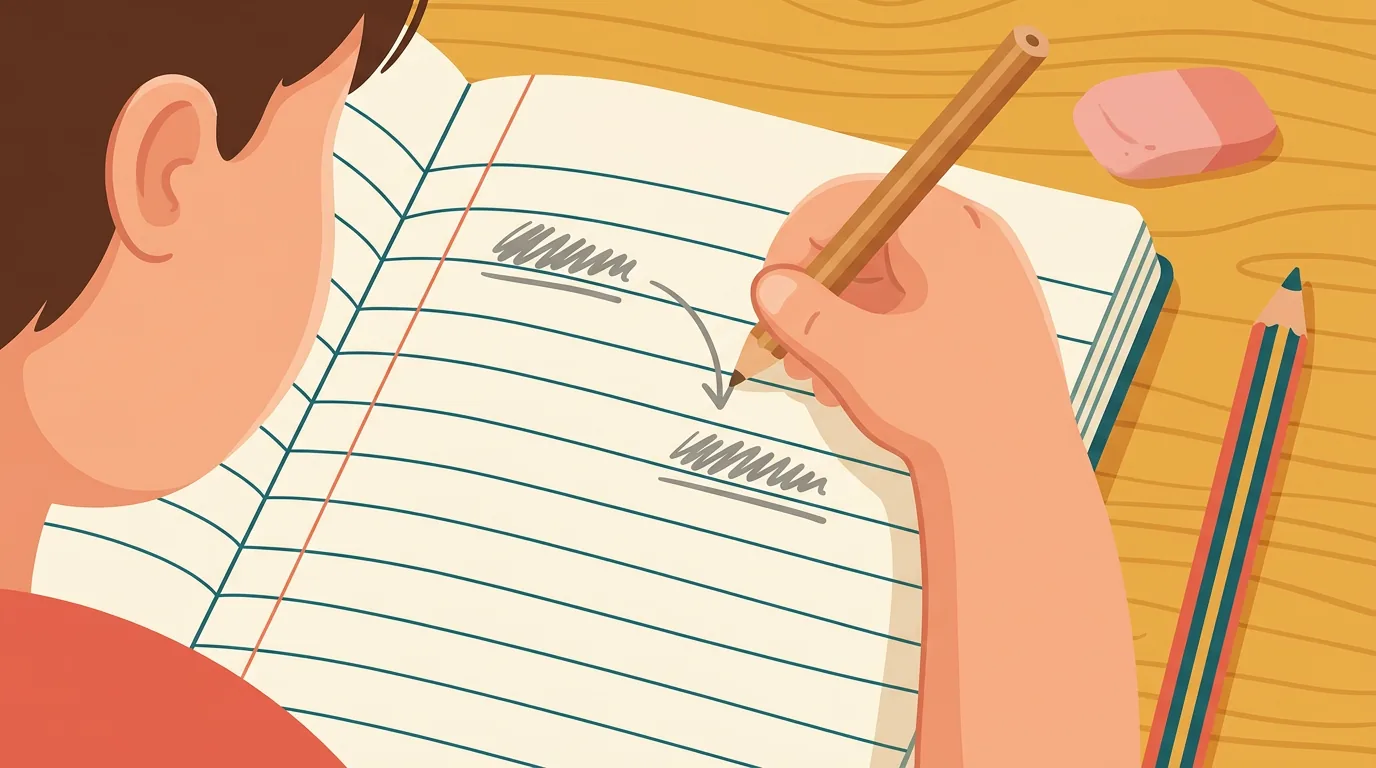
Because exercises give them the tense and subject in advance: all they have to do is apply the rule. In writing, they have to spot all that themselves while coming up with ideas. The solution is a special read-through just for verbs: underline the subject, draw an arrow to the verb, check the ending.
How can I help if I don't remember the rules myself?
You don't need to be an expert: the tests in this article can be used without any prior knowledge. Swap je for tu, replace the verb with mordre, look for the subject — you can ask your child these questions even if you don't know the answer. In fact, it's more effective, because it gets them thinking.
What conjugation is taught in CE2?
In CE2, children consolidate the present tense of all three verb groups and discover the imperfect, future and passé composé for the most common verbs (être, avoir, aller, faire, dire, venir, prendre…). Progress varies between schools, but these tenses form the foundation. If the present is still shaky, it's best to strengthen it before focusing on other tenses.
Read next
 Memory tricks & memorisation
Mnemonics: must-know tips for remembering, from CP to collège
Essential mnemonics: tried-and-tested examples for spelling, conjugation, maths and science, plus the method…
 Memory tricks & memorisation
Learning multiplication tables: the plan that finally works
Learn multiplication tables without the drama: the right order, a tip for each table, the 9 times table on your fingers and more…
 Memory tricks & memorisation
Mnemonic for the planets: remembering the order of the solar system in one phrase
Mnemonic for the planets: the phrase to remember the order, from Mercury to Neptune, the trap with the two Ms, and why…