🎃 Halloween activities for children: 12 clever ideas to try at home
31 October is just around the corner, and this year it falls on a Saturday, right in the middle of the autumn half-term (17 October to 2 November 2026 across all regions in mainland France). So the question is bound to come up: “What shall we do for Halloween?” The good news: you don’t need a big budget for decorations or a party that ends in a sugar overload. With a bit of cardboard, your kitchen, and a touch of mystery, you can turn the day into a real celebration… and sneak in a bit of reading, maths and logic without anyone noticing.
Here are 12 Halloween activities for children, all easy to try at home, sorted by type and age.
Halloween crafts for kids: 4 easy makes
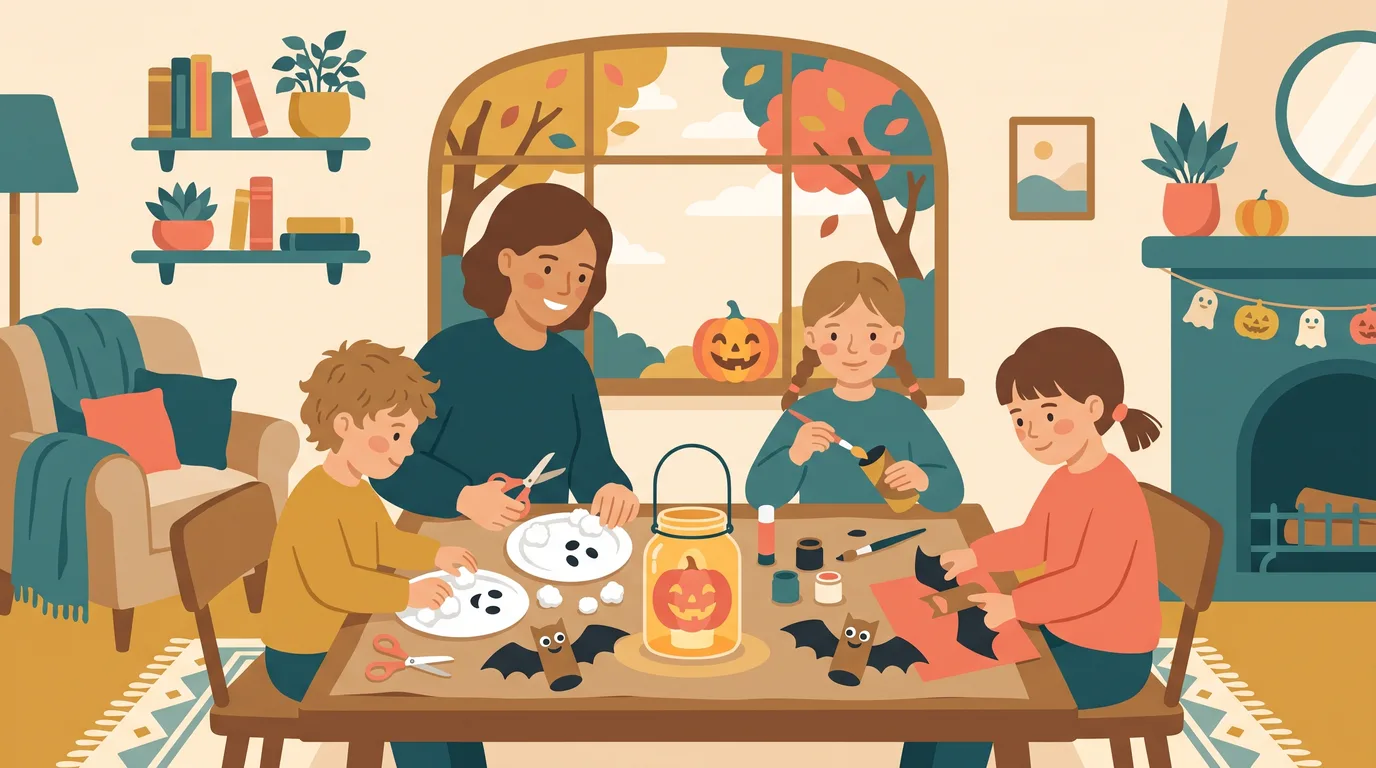
Crafting is the simplest Halloween activity to get started: cover the table, get out the supplies, and everyone goes home with their own creation to decorate the house.
- Paper plate ghosts. A white plate, two eyes drawn with a black marker, and strips of crepe paper glued to the bottom for a floating effect. Hang them in the window for a spooky touch from age 3.
- Toilet roll bats. Paint the roll black, cut out two wings from paper, and add eyes. One bat per child… or make a whole colony.
- Pumpkin jar lantern. Cover a glass jar with orange tissue paper using diluted glue, cut out a face from black paper, and pop in an LED candle. Never use a real flame: the LED is enough and keeps everyone safe.
- Monster mask. Cut holes for the eyes and mouth in a plate, add an elastic on each side, and let your child choose their monster. Older children can sketch their creature on paper first before making it.
In the kitchen: 3 slightly spooky recipes
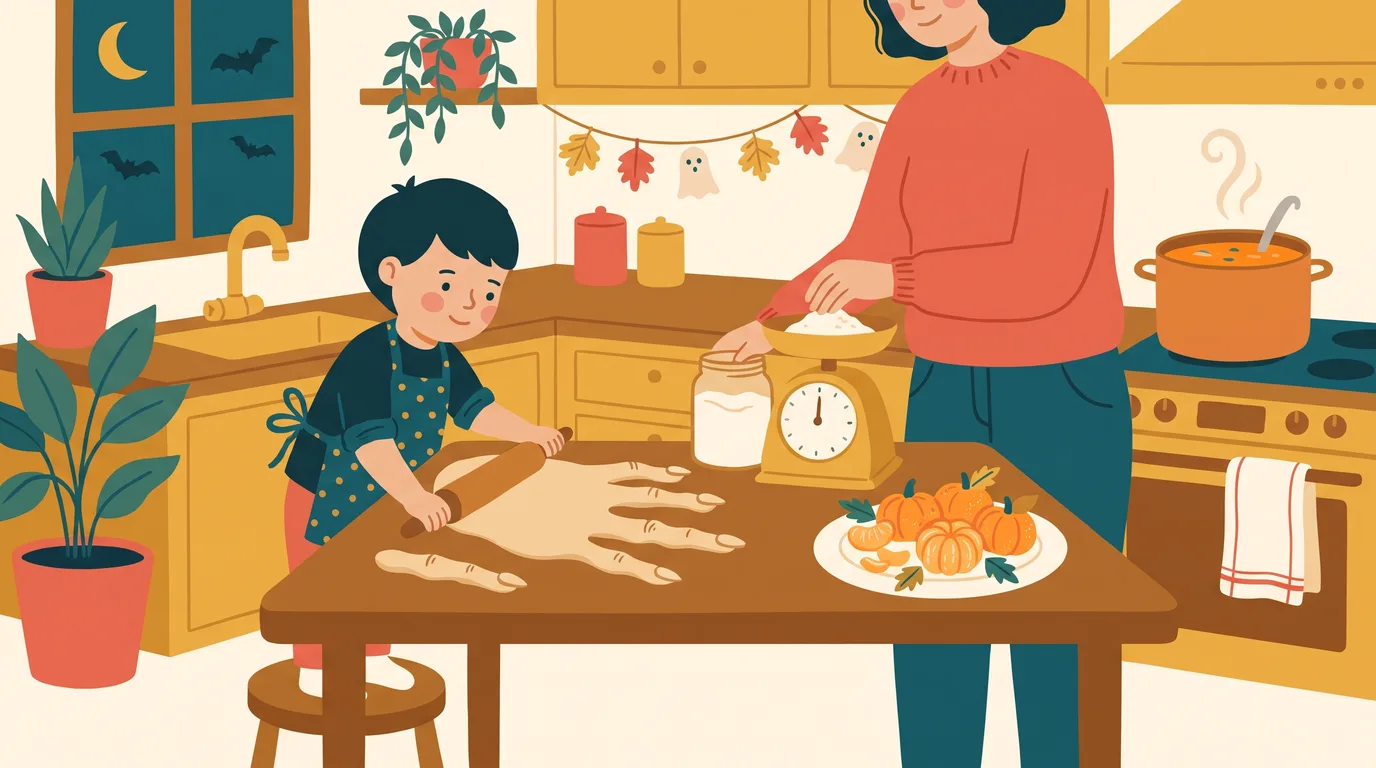
Cooking is a fantastic way to learn: you read a recipe, weigh, measure, and count. Halloween just adds a costume to it.
- Pumpkin clementines. Peel a clementine, stick a small piece of celery on top for a stalk. No cooking needed, perfect for little ones, and a snack that balances out the sweets.
- Witch’s fingers. Roll out shortbread dough into finger shapes, use an almond for the nail, and make a few knife marks for knuckles. They look brilliant straight out of the oven.
- ‘Magic potion’ pumpkin soup. Pumpkin, potato, onion, stock. Serve in bowls with a name invented by your child, and it goes down much better than on a regular weeknight.
While you’re cooking, ask simple questions: “We need 200g of flour, we’ve put in 150g, how much more do we need?” or “We have 12 biscuits for 4 people, how many each?” Mental maths becomes useful and obvious.
Halloween games: 3 ideas to get moving and thinking
Games are at the heart of the party. The idea: swap ‘eating sweets’ for ‘winning sweets’.
- Riddle treasure hunt for sweets. Hide small bags around the house and guide the children with written clues: a riddle, a rebus, or a sum where the answer gives the hiding place number. For non-readers, use drawings instead of words.
- Mummy race. In pairs, one child wraps the other in toilet paper as fast as possible. Guaranteed giggles, and the paper can be used for decorations or recycled afterwards.
- Ghost bowling. Six toilet rolls decorated as ghosts, a ball, and keep score. Older children can keep the score sheet and add up the points themselves.
Quiet Halloween: 2 gentle activities for calm learning
After all the excitement, you’ll need some quieter moments. These are often the ones children remember best.
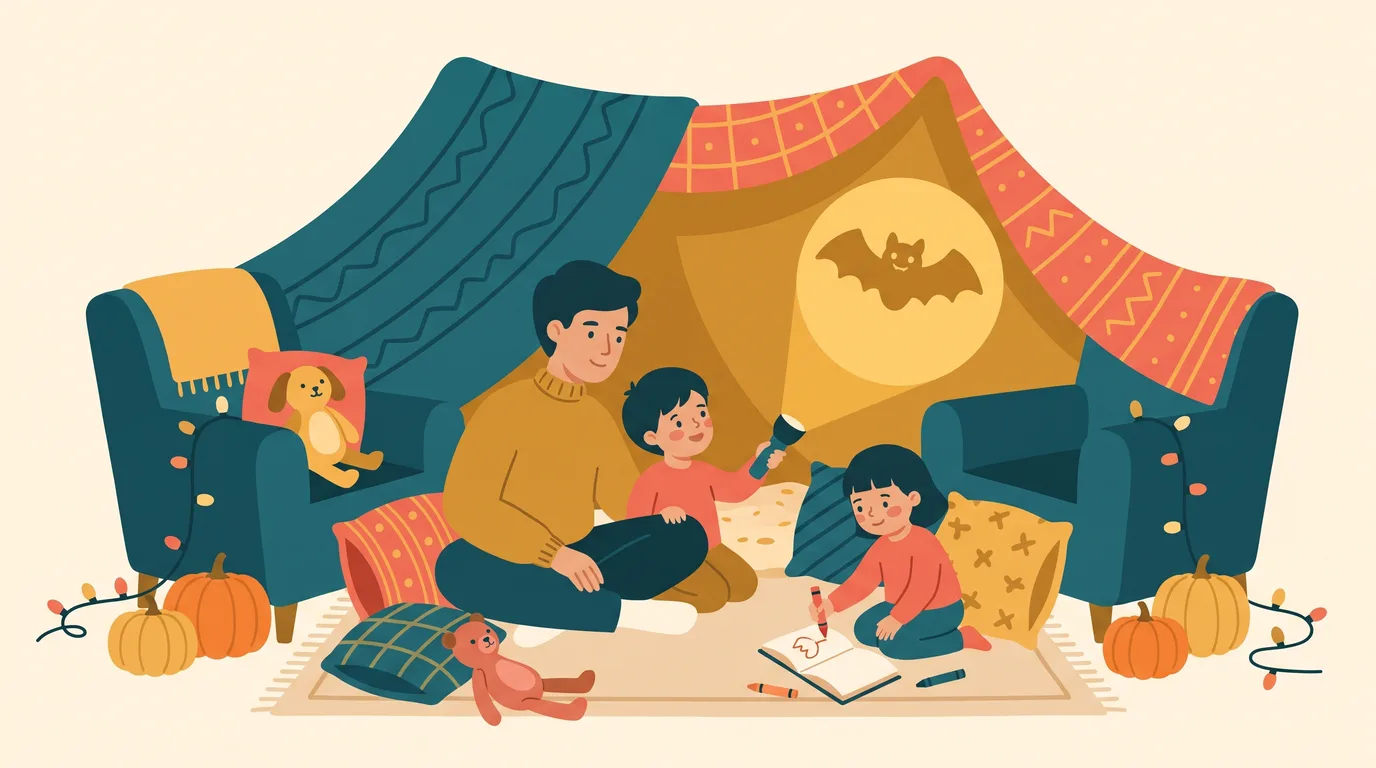
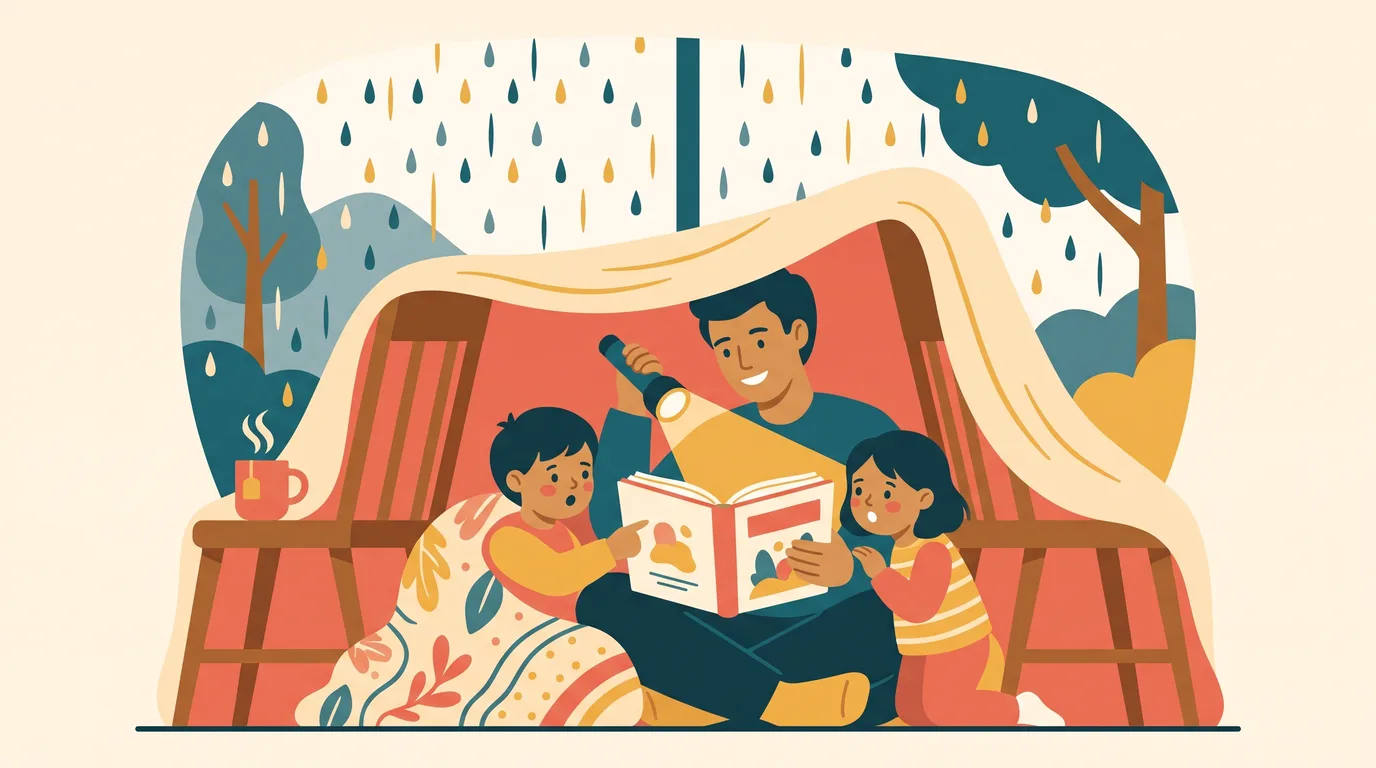
- A slightly spooky story. A torch, a tent made from a sheet stretched between two chairs, and a story invented together: everyone adds a sentence in turn. Older children can write it down and illustrate it afterwards. It’s a sneaky way to practise creative writing.
- Witch’s vocabulary book. A little notebook to collect Halloween words: pumpkin, cauldron, spellbook, scarecrow, spell… Look up their meanings, sort them (nouns, verbs, adjectives), and invent a sentence for each. It’s a real vocabulary lesson, witch-style.
For a calm screen break, the free game The Big Jump is a welcome pause between crafts. And if you’re after more ideas for afternoons at home, our article on indoor games for rainy days is packed with inspiration.
Which Halloween activity for which age?
Not every activity suits every age. This table helps you choose at a glance.
| Age | Recommended activities | What your child practises |
|---|---|---|
| Ages 3-5 (nursery) | Paper plate ghosts, pumpkin clementines, treasure hunt with drawings | Fine motor skills, vocabulary, spatial awareness |
| Ages 6-7 (CP-CE1) | Toilet roll bats, ghost bowling, treasure hunt with sums | Reading instructions, addition, keeping score |
| Ages 8-9 (CE2-CM1) | Jar lantern, witch's fingers, multi-voice storytelling | Measuring, multiplication, creative writing |
| Ages 10-11 (CM2) | Monster mask on paper, DIY riddle treasure hunt, vocabulary spellbook | Logic, organisation, word types |
A good test: if your eldest is bored, let them organise the sweet hunt for the younger ones. Writing clues, choosing hiding spots, checking everything is clear—it's a real project, and they love feeling responsible.
A ready-to-go Halloween afternoon
If you like to have a plan, here’s a simple schedule for Saturday 31 October:
- 2:00 pm – Crafts: ghosts and bats to decorate the living room.
- 3:30 pm – Cooking: make witch’s fingers together.
- 4:30 pm – Snack: homemade biscuits and clementine pumpkins.
- 5:00 pm – Riddle sweet hunt all around the house.
- 6:00 pm – Ghost bowling, then a story under the blanket tent by torchlight.
Want to keep the fun going through the holidays? The free Kidibook workbook has printable activities to keep up the pace gently, and the Kidibook subscription sends a daily adventure activity book tailored to your child’s level. A great way to make the autumn break a happy pause… without losing what’s been learned since school started.
Want to put these tips into practice?
Every day, a new adventure workbook adapted to your child's school level — to print or do on screen. No commitment.
Your questions
At what age can you start celebrating Halloween with your child?
From age 3, as long as you keep it fun: smiling ghosts, pumpkins, animal costumes. Realistic monsters and truly scary stories are better left for ages 7-8. Trust your child’s reactions: if they’re scared, just switch activities without insisting.
How can you celebrate Halloween without too many sweets?
Swap some of the sweets for non-food treats (stickers, small toys, tokens for “choosing the evening film”) and offer a homemade snack. Setting a rule in advance for how many sweets to keep also avoids haggling.
What Halloween activities for a 3-year-old?
Short, hands-on activities work best: decorating a ghost plate, peeling clementine pumpkins, hunting for hidden bags using drawings. Ten to fifteen minutes per activity is plenty at this age.
How can you make Halloween educational without spoiling the fun?
Weave learning into the games instead of adding it on top: reading and measuring a recipe, a sweet hunt with clues to solve, making up a story together. Your child reads, counts and writes to move the party along—not just to do homework.
Read next
 Learning through play
15 games to keep children busy in the car (that make them think)
15 car games to keep kids busy, almost no equipment needed: classics and clever games that help revise key skills
 Learning through play
Games to Learn Times Tables: 8 Ideas for Home
Games to learn times tables: battle, memory, dice, hopscotch… 8 screen-free ideas to play as a family, with printable cards.
 Learning through play
20 indoor games for rainy days (including 8 sneaky revision games)
Indoor games for children on a rainy day: 20 ideas that cost nothing, from calm activities to energetic games, plus 8 clever ways to sneak in some revision.