🐠 CP · 6-7 years · the world of the Ocean

Printable CP exercises
Free PDF

Here are CP exercises to print in PDF, free and without registration: decoding, writing, calculations up to 20 and games. Plouf the fish accompanies your child in the world of the Ocean, one page at a time.

✅ 100% free⚡ Instant PDF🚫 No account or email required🇫🇷 Designed in France

What are CP exercises for?

CP is the year when children learn to read. Everything goes slower than you might think: that’s why short pages, repeated often, make all the difference.

In September, a CP child does not yet read. They combine two letters, then a syllable, then a word, and a few months later a sentence. Meanwhile, they also learn to write in cursive and to calculate up to 20: many new things in the same year.

This is where printable CP exercises make perfect sense: you take out a page, your child completes it in ten minutes, and then you close the folder. A short and regular action that reinforces what has been learned in class.

Our pages are inspired by the end-of-CP expectations: short instructions, simple words, wide lines for a 6-year-old hand. The complete path is gathered on the page that brings together all our holiday workbooks.

The three domains of a CP workbook

Each activity, on paper or on screen, belongs to one of these three domains. Pick according to the mood of the day.

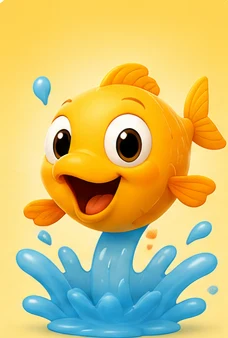
Plouf the fish, mascot of CP (6-7 years)
Domain 1 · The eye and the ear

Reading and decoding

We start from the sound: hearing the “an” in “maman”, breaking into syllables. Then we slowly assemble, up to the short sentence that the child reads alone.

This domain has its own pages: CP reading sheets.

  • Vowels, vowel sounds, complex sounds, initial sound
  • Syllables, word-image, alphabet and alphabetical order
  • Complete with “on” or “an”
  • Read a short sentence, then draw it
Domain 2 · The hand

Writing

In CP, writing becomes cursive: letters are connected. This gesture is mainly learned in class; at home, our pages offer short, pressure-free writing opportunities.

  • Find a word written in uppercase, then in script
  • Write the opposite of a word: grand, jour…
  • Write three words that start with the same letter
  • Choose “un” or “une”, build a sentence
Domain 3 · Numbers

Calculate up to 20

The child gradually moves away from finger counting: complements to 10, doubles, then additions and subtractions up to 20.

  • Additions up to 10, then up to 20
  • Subtractions, doubles, complements to 10
  • Numbers up to 20, before and after, compare, tens
  • Shapes, lengths, grid, time, days

6 A4 pages · French, maths and games · answers at the end · free, no account or email.

CP Exercises to Print in PDF

One file, six A4 pages, ready to come out of the printer. No account to create, no email to leave.

Our workbook brings together free printable CP exercises PDF in the three areas of the year. In French: complete words with "on" or "an", read a short sentence then draw it, write the opposite of a word. In maths: 7 + 5, 13 − 4, 8 + 6, 15 − 7, complements like 10 + … = 16, and the number just after 39, 69, 89 or 79. Then a page of games — colour the bubbles whose result is 10, count the fish — and the answers at the end, for you.

These CP exercises in PDF print in black and white without losing anything, and can be reprinted as many times as you want. Print on A4 at 100% scale — avoid "fit to page", which shrinks the writing lines — and give a pencil with an eraser rather than a marker: at 6 years old, being able to erase changes everything.

To go further, our CP holiday workbook guide details what a child learns throughout the year, and how to support them without overwhelming them.

And to review maths while having fun: our free magic colouring pages for CP — one calculation per box, one hidden drawing per page.

All level materials are gathered on the CP exercises to print page: the PDF workbook, the colouring pages, and 30 corrected exercises.

CP Maths Exercises to Print

Adding, subtracting, completing, comparing: in CP everything happens between 0 and 20.

Our CP maths exercises to print in PDF follow the progression of the year. We start with numbers up to 10: reading them, writing them, knowing what comes before and after, comparing. Then we introduce complements to 10 — those famous 3 + 7, 6 + 4 that must be memorised. Then come doubles, additions up to 20, subtractions, tens and word problems.

Alongside calculation, there are things we forget to count as maths: shapes, lengths, grids, time, days. These activities work very well as games.

A tip: keep fingers and objects as long as they are useful. A child who places six beans to find 6 + 4 is not cheating, they are building understanding.

The 30 interactive CP workbooks, to do on screen

Thirty self-correcting and free workbooks, to do in the browser: the child clicks, the screen responds immediately.

Not everything goes through paper. When the printer is broken, interactive workbooks take over. The child chooses an answer, immediately knows if it is correct, earns stars and leaves with their diploma. At the start of the year, stay nearby to read the instructions: it is often the instructions that block, not the exercise.

They cover the same areas as paper: vowels, vowel sounds, complex sounds, initial sound, syllables, sight words, alphabet and alphabetical order, uppercase and lowercase, "un" or "une", the sentence; additions up to 10 then up to 20, subtractions, doubles, complements to 10, numbers up to 10 then up to 20, tens, comparing, before and after, sequences, word problems; colours, shapes, lengths, grids, left and right, time and days.

It is also a way to occupy ten minutes of screen time without guilt. Everything is gathered on the big CP workbook.

How to support a 6-year-old child?

What makes the difference in CP is not the number of pages, it is how they are presented.

Read the instructions aloud, at least until Christmas. A child who is still decoding spends all their energy decoding the instructions: none is left for the exercise. Read, rephrase, let them do it alone.

Stop before fatigue. Ten minutes is enough. Put away while it still works: that is what makes them want to do it again.

Have them reread twice. The first reading is to decode, the second to understand: it is the second that makes them proud.

Do not correct with a red pen. Instead, name what the child has just succeeded in: "you connected all the letters", "you found that six were missing".

To place the year: if your child is just finishing preschool, go over the exercises for Kindergarten; if CP is well advanced, take a look at the CE1 holiday workbook and CE1 exercises to print in PDF.

Plouf the Fish and the World of the Ocean

Each class has its mascot at Kidibook. In CP, it is Plouf the Fish, who swims in the world of the Ocean.

Plouf is not just for decoration. He encourages the child when a syllable resists and celebrates every success: at 6 years old, an instruction carried by a character you love becomes a story. Follow him in the Ocean workbook, “Plouf’s Great Journey”, which you can flip through on screen.

And when an activity is finished, there is the reward: the Kidibook Passport, where your child meets Plouf, collects hero stamps, and prints their diploma. A good reason to ask for another page tomorrow.

Frequently Asked Questions about CP (age 6-7)

My child deciphers slowly, is that worrying?

No. CP is the year when children learn to read: at the beginning of the year, a child assembles syllables one by one, and that is exactly what is expected. Fluency comes much later, often in spring, sometimes only in CE1 (Cours Élémentaire 1, ages 7-8). Everyone has their own pace, and the difference between two children in the same class is perfectly normal. What matters is progress: yesterday a syllable, today a word, soon a sentence. Reread the same text several days in a row: the second reading is always more fluent. If doubts persist, talk to their teacher.

How much time per day?

Ten minutes, no more — and not necessarily every day. At 6 years old, sustained attention is short, especially after a full day at school. Two or three pages per week done with pleasure are better than a daily session endured.

Are CP exercises really free?

Yes, completely. The workbook in PDF and the 30 interactive workbooks are free: no account to create, no email to leave, no credit card. You download, you print, your child does.

Should cursive writing be practised at home?

A little, and without excess. Cursive writing is first learned in class, and it is above all a gesture: better three neat lines than a sloppy page. Check the position — feet on the floor, tilted sheet, free hand holding the page — and leave a model visible. Many hesitant letters come from this, not from a learning difficulty.

Ready to dive in with Plouf?

Download the CP workbook in PDF, print the first page, and let the fish do the rest. It’s free.

📥 Download the CP workbook in PDF 💻 The 30 interactive workbooks

🎁 31 days of 10-minute challenges — free

One playful exercise a day by email, from Kindergarten (GS) to CM2, online or as a PDF to print. Unsubscribe any time.

Start the 31 days →
Trust you can check

Our commitments, in black and white

No empty promises: only what we deliver.

Printed on demand

Our paper books are made to order, in Europe: expect 2 to 5 working days for printing, then shipping.

Free delivery

Free shipping in mainland France, with no minimum order.

Free reprint

A printing defect on your copy? We will reprint it at our expense.

14 days to change your mind

The legal withdrawal period applies to all paper book orders.

No subscription

The 31-day Adventure is now free, and our books are sold individually: no subscription, no recurring charges.

Trademark registered at INPI

Kidibook is an independent French brand, registered at INPI.

PDF · immediate downloadFree workbook without email or registrationDesigned in France, from Preschool (3-4 years) to CM2 (10-11 years)