🎯 Helping your child concentrate: 10 practical ways at home
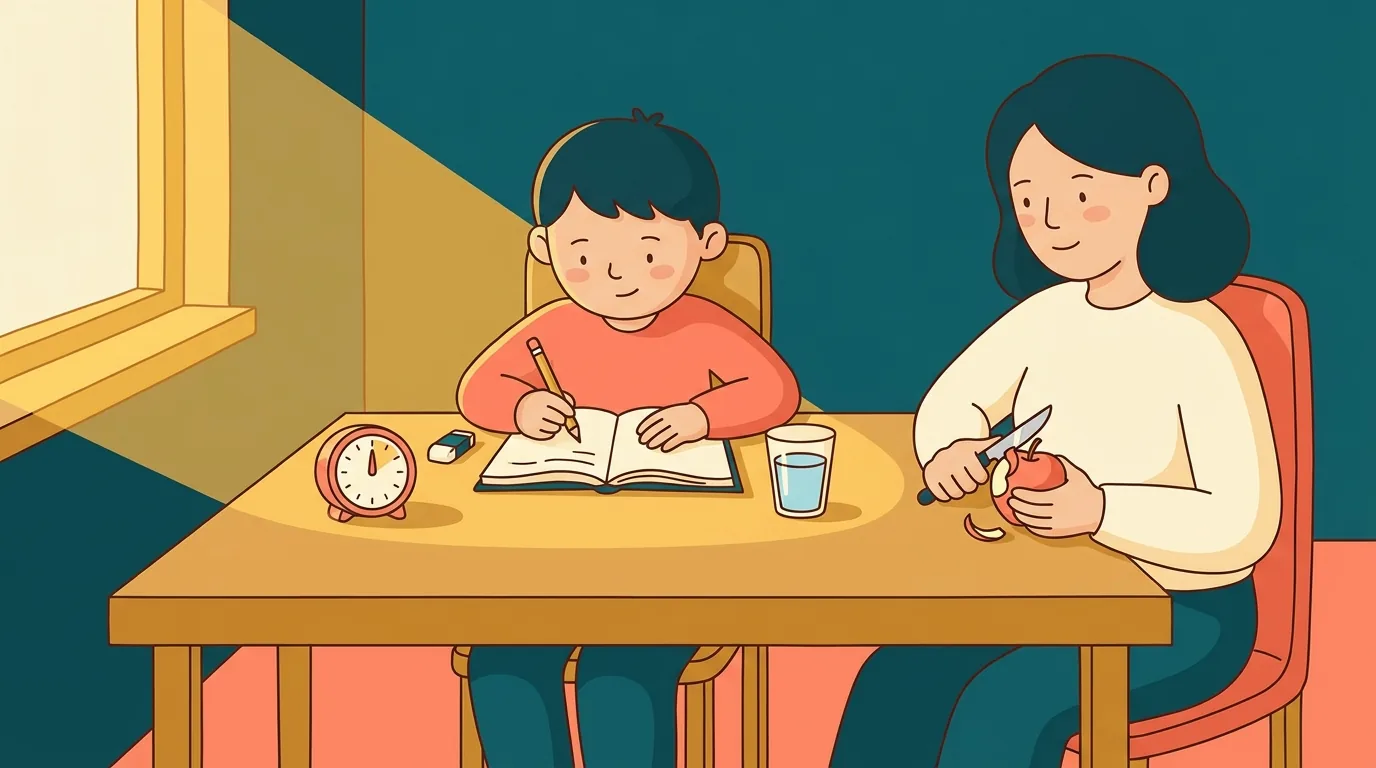
It's 6:10 pm. The homework diary says just one line: “read the lesson, do exercise 4.” Twenty minutes later, the pencil has been sharpened twice, the pencil case tidied, a snack requested — and exercise 4 is still blank.
It's not a lack of effort. Concentration isn't a personality trait you either have or don't: it's a resource, one that gets tired, can be recharged, and depends a lot on the environment. The good news: most of what helps it recover happens at home, in tiny details. Here are ten practical ways to help, from the most effective to the most subtle.
What’s really behind “they can’t concentrate”
Concentration isn’t just one thing, but three mental actions in a row: filtering out distractions, sticking with it even when bored, and getting back to the task after drifting off. A primary school child will be stronger in some than others, and that’s normal: focused attention takes years to develop.
Before looking for a method, it’s worth naming what’s really getting in the way that evening:
- Tiredness: after six hours at school, their tank is already running low.
- The task is too hard: you can’t concentrate on what you don’t understand — you just want to escape.
- The task is too vague: “revise your lesson” isn’t an instruction, it’s a whole programme.
- Too many distractions: TV, siblings, phone — anything moving will win over a conjugation exercise.
- Conflict: if every evening turns into a battle, all the energy goes into negotiating. That’s a separate issue, covered in our guide on helping a child who refuses to revise.
The strategies below tackle the first four. None require special equipment or being a top student yourself.
How long can a child actually concentrate for?
There’s no official answer: even children the same age can be wildly different. The guidelines below are what teachers observe for set school tasks — not for games, where the same child might focus for an hour without blinking.
| Level | Realistic work block | Format that works |
|---|---|---|
| GS – CP (age 5-7) | 5 to 10 minutes | One activity only, with an adult sitting beside them |
| CE1 – CE2 (age 7-9) | 10 to 15 minutes | Two short blocks with a standing break in between |
| CM1 – CM2 (age 9-11) | 15 to 20 minutes | The child says out loud what they want to achieve in the block |
| 6e (age 11-12) | 20 to 30 minutes | A proper break between blocks, and no screens |
The practical takeaway is always the same: break things up just before they reach their limit. Three ten-minute blocks achieve far more than one thirty-minute block where the last twenty minutes are spent staring out the window.
Helping your child concentrate: 5 body-based strategies
These are the least flashy, but by far the most effective. A tired child, who’s been still for two hours and hasn’t had a drink, won’t concentrate no matter what method you try.
1. Sleep comes first. Paediatricians agree: 9 to 12 hours’ sleep a night between ages 6 and 12. Missing an hour each night won’t show in the living room — it’ll show at school, as fidgeting or daydreaming. Before trying any study technique, check bedtime for a week.
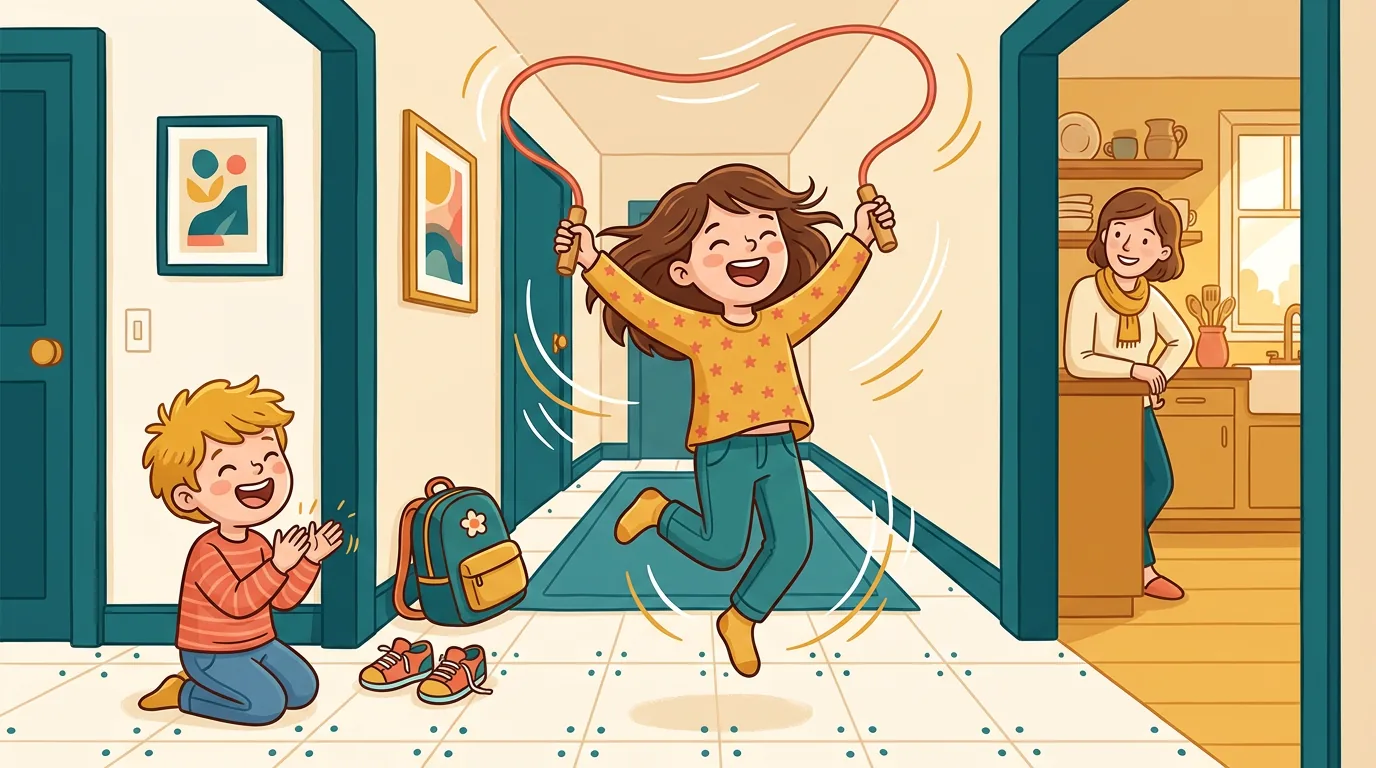
2. Move before sitting down. Ten minutes of cycling, trampoline, running up and down the hall or energetic tidying, and the body is finally ready to sit still. Going straight from the “school chair” to the “kitchen chair” is the best way to turn homework into torture.
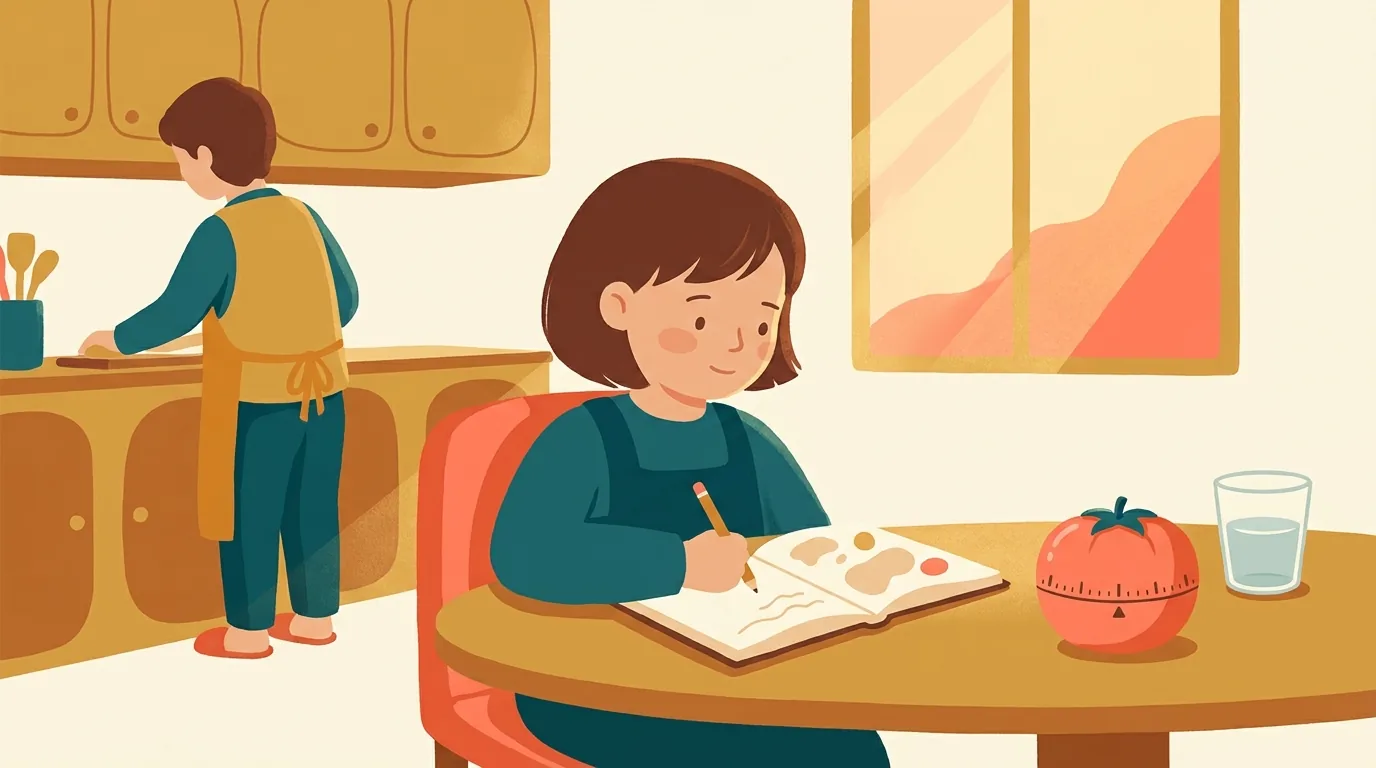
3. A proper snack, a glass of water on the table. Bread, fruit, dairy — enough to last until dinner. The glass of water next to the workbook also saves three trips to the kitchen.
4. Posture. Feet flat on the floor (a shoebox makes a great footrest), back supported, light coming from the opposite side to their writing hand. A child perched on an adult chair spends their energy on balancing, not on their work.
5. No screens just before. Switching from a cartoon to mental maths is like going from fireworks to a candle: everything seems dull. Always put something else — snack, shower, a game — between screen time and homework.
And 5 strategies for the study table
6. A clear table. On the work surface: the open exercise book, a pencil, and a rubber. Everything else — the whole pencil case, felt tips, today’s favourite toy, yesterday’s post — goes elsewhere. Every visible object is an invitation to get distracted.
7. One instruction at a time. “Get out your maths book”… then, once that’s done: “read question 4 out loud.” Stacking instructions (“get your things, do number 4, and read your poem again”) overloads working memory: your child will remember just one, often the last, and get stuck.
8. A visible timer on the table. This changes how effort feels: you’re not working “until it’s finished” (an unknown, stressful length), but “for twelve minutes.” An egg timer or kitchen timer is better than a phone, which brings back notifications.
9. The trickiest subject first. Attention is at its peak in the first ten minutes. That’s when to tackle things that need thinking — the maths problem, the lesson to memorise — and save the more automatic tasks, like copying, colouring, or tidying the bag, for the end. For learning the lesson itself, our method for memorising a lesson avoids endless rereading that doesn’t stick.
10. The adult within earshot, not hovering overhead. Stay in the room, busy with something calm. If you watch every word, your child has to manage your gaze as well as the work. If you’re absent, it’s easier for them to drift off with no one noticing.
The three saboteurs we no longer notice
They’ve become so familiar they don’t even count as distractions. But they are.
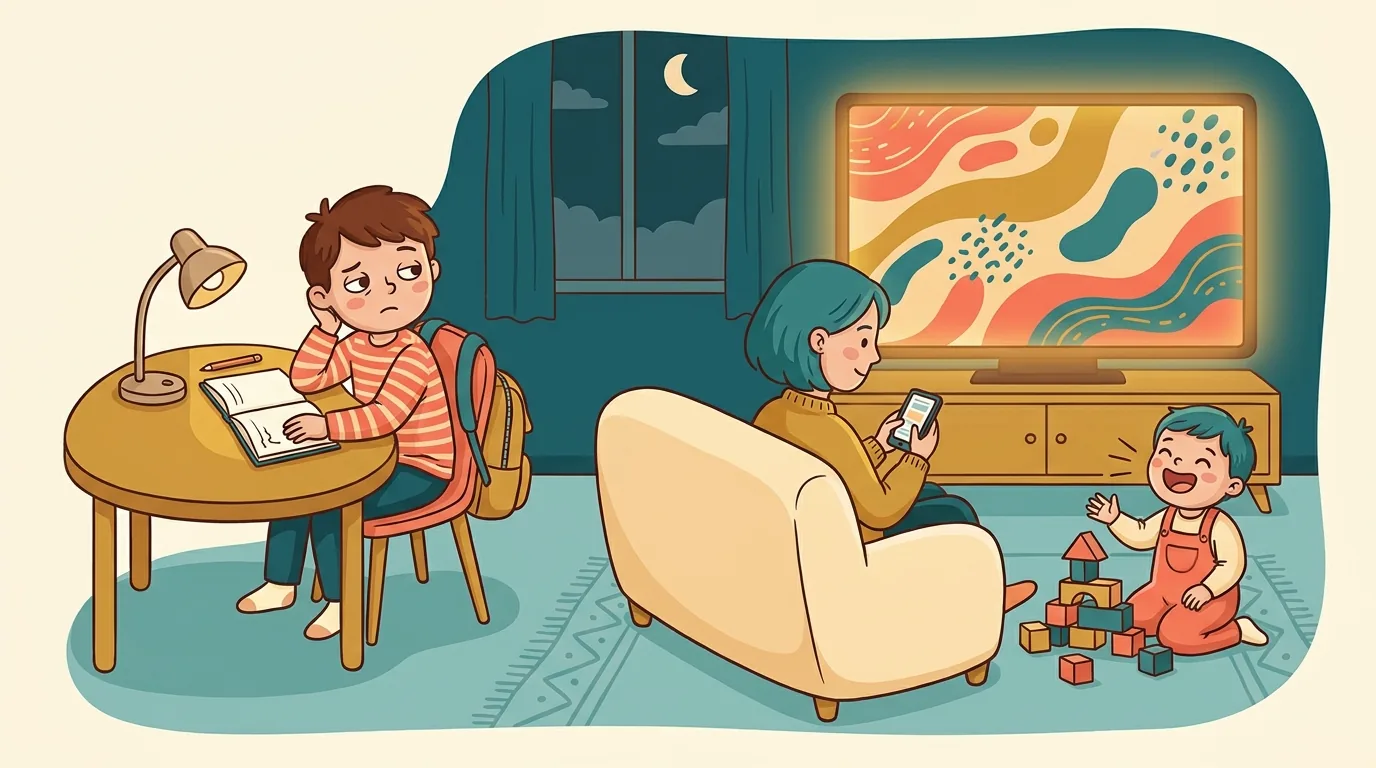
- The TV or radio on in the background. The brain can’t help processing language: voices compete directly with reading and memorising. If total silence isn’t possible, quiet instrumental music is much less distracting than speech.
- The parent’s phone. It’s hard to expect full attention if you’re checking messages every two minutes. The half-hour for homework is also half an hour without notifications for the adult.
- Well-meaning interruptions. “Did you underline the verb?”, “Have a drink”, “Mind your back.” Every comment, even helpful ones, costs several seconds to get back on track. Save them for breaks.
One last adjustment often forgotten: the way your child is asked to work. Some lose focus with written text but remember everything they say out loud or act out; we explain how to spot this in our article on visual or auditory memory in children.
When trouble concentrating needs outside advice
Everything above assumes a tired or unsettled child, not one with ongoing difficulties. Some signs, though, are worth discussing with someone:
- the difficulty is everywhere — at school, in sports, in games, at home — not just with homework;
- it’s lasted for several months and the teacher has noticed too;
- it comes with constant restlessness or, on the contrary, daydreaming they can’t snap out of;
- it’s starting to affect their learning or their mood.
The first person to talk to is the teacher, who can compare with the rest of the class. Then, your GP or paediatrician: they’ll often start by checking two things we often overlook, sight and hearing, before considering a wider assessment. Only a doctor can diagnose attention difficulties, after a thorough evaluation — never with an online questionnaire.
Helping your child concentrate: what to remember
Three main things, really. Sleep before work. Short sessions, not long ones. Remove anything from the table and room that doesn’t belong. The other seven tips are fine-tuning; these three alone can transform most evenings.
Then there’s the format of the work itself. A short page, nicely laid out, with a clear start and finish, gets done; a pile of photocopied worksheets doesn’t. That’s the idea behind our free printable Kidibook workbook, and L'Aventure 31 jours: one adventure workbook per day, tailored to your child’s class, designed to fit into the fifteen or twenty minutes when they’re really available.
📘 All these tips are also in a book: Malo & Lila, Stronger Than Screens — learning to stop on their own, without evening battles.
Want to put these tips into practice?
Every day, a new adventure workbook adapted to your child's school level — to print or do on screen. No commitment.
Your questions
How long can a child in CE2 stay focused?
For a set school task, expect a block of 10 to 15 minutes, though it varies a lot from child to child and day to day. The best way is to measure your own: for three evenings, note when they start to lose focus, then break up the work just before that point.
Should homework be done straight after school or after a snack?
After a snack, and ideally after some movement. A child coming out of six hours of lessons needs to eat and burn off energy before sitting down again. The only time to really avoid is just before bed: tiredness cancels out any benefit from the work.
Does music help with concentration?
It depends what’s playing. Voices — songs, radio, TV in the background — compete with reading and memorising. Gentle instrumental music, played quietly, can actually mask household noise. Try it at home and simply see if the work gets done.
My child can focus for hours on a video game but not ten minutes on homework — is that a problem?
No, it’s very common. A game gives a clear goal, instant feedback, and constantly adjusts the difficulty; schoolwork rarely offers any of that. This difference doesn’t rule out warning signs, but it does explain most of the gaps you see at home.
Next up
 Revision methods
Does your child refuse to revise? 7 methods that really work
Refusal, tears, conflict? Discover 7 parent-tested ways to get your child revising without drama: short sessions, rit…
 Revision Methods
The Syllabic Method for Learning to Read: Why It's Making a Comeback
Syllabic Method for Learning to Read: How It Differs from the Whole-Word Approach, and What the Official Guidelines Say…
 Revision Methods
The Pomodoro Technique for Children: Revising in 10-Minute Sessions
The Pomodoro Technique for Children: The Right Block Length for Each Level, Choosing a Timer, and a Sample Homework Session…