🙅 Your child refuses to revise? 7 methods that really work

It’s 6:45 p.m. The notebook has been open for ten minutes and not a line is written. Your child sighs, fidgets, asks for a glass of water… then tears come: "It’s useless, I can’t do it, I don’t want to!" And you, after your day, feel your patience wearing thin.
Breathe. This scenario plays out every evening in thousands of families. A child who refuses to revise is almost never lazy : they are tired, discouraged, or overwhelmed. Good news: there are simple methods, tested by parents, to break the stalemate. Here are seven.
Why they refuse (and why it’s not bad will)
Behind a categorical “no” almost always hides one of these four reasons:
- Fatigue : at 6 p.m., after six hours of school, a primary school child’s brain is drained.
- Fear of failure : refusing is avoiding making mistakes. “I don’t want to” often means “I’m afraid I won’t succeed.”
- A task too vague : “revise your lessons” is a mountain. Where to start? How long?
- Memory of conflict : if every session ends in an argument, the brain associates studying with stress. Refusal becomes a protective reflex.
Each method below addresses one of these causes. Choose one or two, and stick to them for a week.
Helping your child study: 7 methods from parents that work
1. Shorten: 10 minutes on the clock, not a minute more
It's counterintuitive, but it's the most effective method. Announce a short duration and show it : kitchen timer, hourglass, oven timer. When it rings, stop — even in the middle of an exercise.
A child easily accepts an effort when they see the end. Ten truly focused minutes are better than forty-five minutes of sighs.
2. A fixed-time ritual rather than daily negotiation
The worst enemy of studying is negotiation: 'When will you start? After snack? Come on, now...' Each discussion reopens the door to refusal.
Set an unchanging time slot, always the same: snack, then 10 minutes of workbook, then free play. After about ten days, the question no longer arises, like tooth brushing. A ready-to-use support helps a lot: print the free Kidibook activity workbook and leave it on the table, open to the right page.
3. Play as a Trojan horse
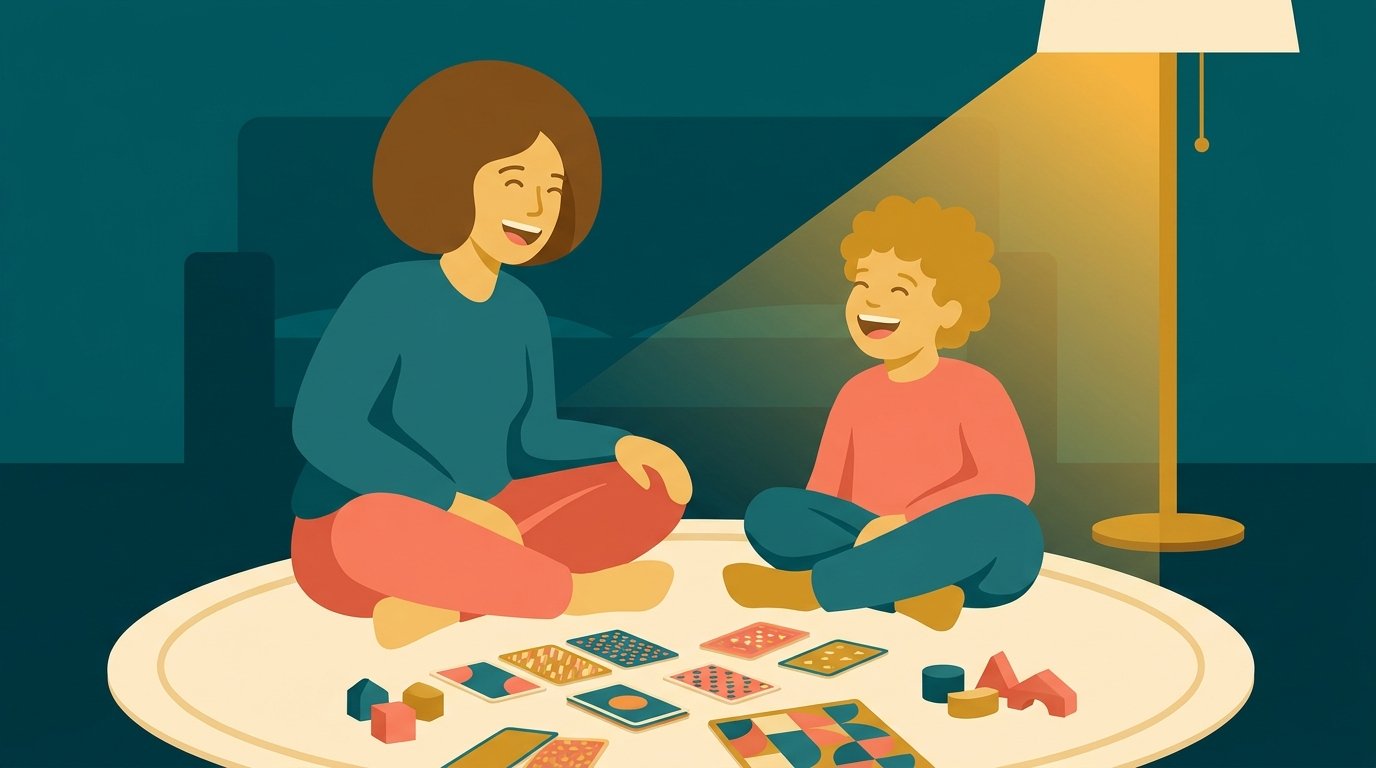
A child who 'refuses to study' readily agrees to count points in a board game, read a cake recipe, or spell out road signs on the highway. The brain studies, but the child plays.
Multiply these disguised micro-study moments: mental math in the car, dictation of the shopping list, multiplication tables while tossing a ball. And if there is a screen, make it useful: Le Grand Saut, the free Kidibook game, is played with the workbook mascots — perfect as a reward that stays within the learning universe.
4. Give them a quick win with a mnemonic aid
Discouragement is cured by success. Teach them a spectacular mnemonic trick: the 9 times table read on ten fingers, 'Mais où est donc Ornicar?' for conjunctions, a magic phrase to remember the order of the planets…
In two minutes, the child masters something that seemed impossible. This victory changes their view of themselves : 'actually, I can do it.' This is exactly the spirit of the Grand Livre des Pense-Bêtes, which compiles hundreds of tricks like this, from primary school to lycée (ages 15-18).
5. Controlled choice: 'math or reading?'
Never ask 'do you want to study?' — the answer is no. Offer a choice where both options are acceptable to you: 'Would you rather start with math or reading?', 'at the table or on the couch?', 'before or after the shower?'
The child regains a sense of control — which they lack most — and you get the essential: they study.
6. Reward effort, never the result
'Well done for your 10/10' teaches the child that only the grade matters — and weakens them at the first failure. Prefer: 'You settled down on your own, without me asking. Well done.' or 'You redid the failed exercise, that's being brave.'
Effort depends on them; the result, not always. By valuing what they control, you build motivation that lasts over time.
7. Lead by example: read beside them
It's hard to convince a child that reading is important if the adult next to them is scrolling on their phone. During their 10 minutes of revision, sit down next to them with your own book, a magazine, your papers — something written.
You are no longer the supervisor: you are two people working side by side. The atmosphere changes completely, often from the very first evening.
What doesn’t work (even though we’ve all done it)
Three very common reflexes that worsen refusal instead of solving it:
| The reflex | What the child takes away from it | What to do instead |
|---|---|---|
| Punish, take away screen time or outings | "Revision = punishment." Disgust sets in. | Short session + valuing effort |
| Compare (“your sister, at least…”) | "I’m worse than others." | Compare them to themselves: “look at your progress since Monday” |
| Extend the session “because it’s not going in” | "This will never end." They disengage. | Shorten but repeat: 10 minutes a day beats 1 hour on Sunday |
When refusal hides something else: signals to take seriously
In the vast majority of cases, refusal to revise is a temporary power struggle. But talk to the teacher without delay if you observe, in addition to refusal :
- recurrent stomach or headaches on school mornings;
- a sudden drop in results in all subjects;
- a child who constantly devalues themselves (“I’m useless anyway”);
- persistent difficulties in reading or writing despite real efforts.
The teacher sees your child six hours a day: they are your first ally. A note in the school diary is enough to request a meeting; they can reassure you or, if needed, guide you (speech therapist, school psychologist).

Make your child revise without conflict: your plan for this week
No need to revolutionize everything tonight. Here is the minimal plan:
- Choose only one method — the simplest for you (a timer is an excellent start).
- Block 10 minutes per day, always at the same time, with a support already prepared.
- Praise a specific effort every evening, even tiny.
And during the holidays? Teachers notice every year at the start of school: long weeks without reading or counting leave marks — this is the famous "summer slide," which we analyze in this article. Again, 10 playful minutes a day are more than enough.
Finally, if you are looking for a ready-made support that makes children want to learn, the Kidibook subscription (€7/month, no commitment) offers each day an adventure workbook adapted to your child's class, from GS to CM2: the ocean with Plouf for CP, Leo's jungle for CE1, space, dinosaurs, the castle… Enough to turn "I don't want to" into "What's today's mission?"
Want to put these tips into practice?
Every day, a new adventure workbook adapted to your child's school level — to print or do on screen. No commitment.
Your questions
How much time should a primary school child revise each day?
Ten to twenty minutes are enough in primary school, provided they are regular. Consistency matters much more than duration: better 10 minutes every day than an hour on Sunday, where the child loses focus after fifteen minutes.
My child cries as soon as they see their homework, what to do?
Stop the session: nothing is learned while crying. Resume later with a very short and easy task to recreate success. If tears return at every session for several weeks, make an appointment with the teacher to find the cause.
Should I force my child to revise during the holidays?
Not with long sessions. However, a mini playful ritual of 10 minutes a day helps maintain the year's learning — teachers notice every start of school the effects of a summer without reading or counting. A workbook, evening reading, or mental math in the car work perfectly.
What reward should I give a child for their revisions?
Favor immaterial and immediate rewards: a specific compliment on effort, a shared play moment, choosing dessert. Avoid money or systematic screen time, which shift motivation towards the reward rather than learning.
To read next
 Memory aids & memorization
15 mnemonic techniques every student should know (from CP to Bac)
A good mnemonic technique gets a lesson into the head in a few seconds. Discover 15 proven tips, from …
 Parent’s guide
The “summer slide”: why your child forgets, and what to do
Loss of skills during school holidays is not inevitable: here’s how to avoid it in 10 minutes per day…
 Holiday workbooks
Holiday workbook: how to choose well, grade by grade (GS → CM2)
Level, duration, answer keys: the 5 criteria to choose a holiday workbook really adapted to your child, grade by g...