📖 Helping your child enjoy reading: what works (and what puts them off)
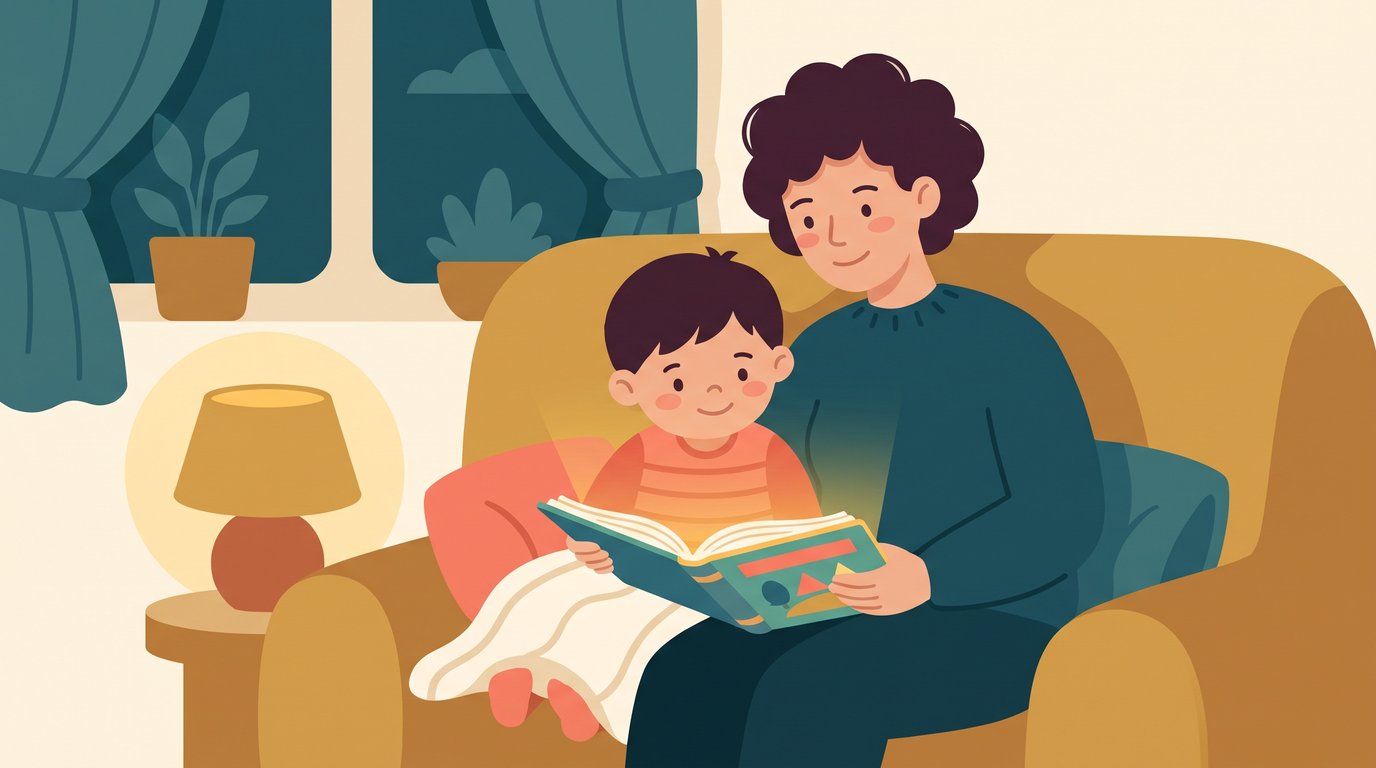
There’s the pile of books given at Christmas, still untouched. There’s the evening routine — “come on, ten minutes of reading” — followed by a sigh. And there’s that little worry that keeps coming back: will they ever enjoy reading?
Most of the advice you hear is sound. The problem often comes from elsewhere: a few well-meaning habits that actually kill motivation. So here are two lists, from a parent’s point of view: what works, what puts children off, and how to adapt it from nursery (maternelle) up to CM2.
Why doesn’t my child like reading?
In the vast majority of cases, it’s not laziness or personality. It’s about effort.
As long as a child is decoding, all their attention goes into working out the sounds, putting syllables together, keeping their place on the line. There’s nothing left for the story. The result: they reach the end of the page without knowing what they’ve just read — and nobody willingly goes back to an activity that feels hard and gives nothing back.
Enjoyment comes when reading is fluent enough for the brain to focus on meaning. This is the famous “decoding ≠ reading” moment, which usually happens between CP and CE2, at very different speeds for each child. If your child is still struggling, our article my child struggles to read in CE1 explains what to do in practice, and the syllabic method shows how decoding develops.
When reading becomes a chore
The second, more subtle reason: reading has become a school thing. It’s an exercise to be marked, corrected, imposed. A child who refuses to read isn’t refusing stories — they’re refusing the exercise. So the real question isn’t “how to make them love reading”, but “how to make reading something outside of school”.
Helping your child enjoy reading: 5 things that really work
Nothing dramatic here. These are things you can repeat even on a tired weekday evening — and that’s exactly why they work.
- The reading ritual: ten minutes, always at the same time. Ten minutes before lights out is better than an hour on Sunday. Same place, same time: your child doesn’t have to decide, so there’s nothing to negotiate.
- Read with your child, even when they can read alone. Reading together works really well: you read a page, they read a paragraph. They get to enjoy the story without all the effort. And keep reading aloud for a long time — that’s how they discover books they couldn’t yet decode themselves.
- Let them choose. Really. Comics, manga, magazines, shark documentaries, joke books, recipes: it all counts. A child who reads what they love reads more, so they make more progress, and eventually dare to try something new.
- Connect reading to real life. The rules for a board game before playing, the recipe for crêpes, Lego instructions, a road sign. These are real reading moments, with an immediate reward.
- Show that you read yourself. Children copy what they see. The local library, often free for children, is the perfect extra: you go as you would to the park, borrow books, bring them back, no need to buy anything.
A word about routine: many French schools now do a “quarter of an hour of reading” where everyone reads at the same time, adults included. You can do this at home too, and it’s often the easiest way to stick with it: nobody checks on anyone else, everyone just reads.
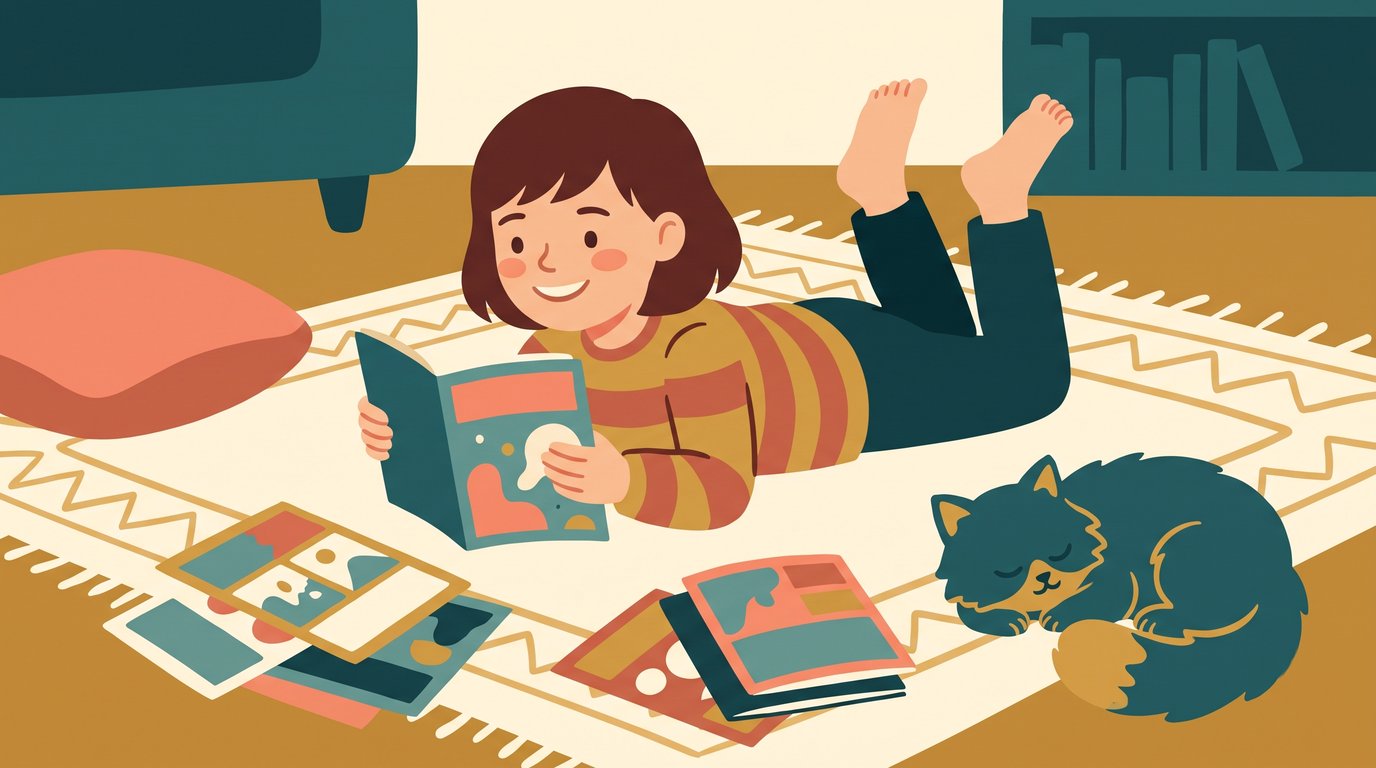
What puts children off: 4 well-intentioned mistakes
These all come from good intentions. That’s what makes them hard to spot.
- Reading as punishment. “No tablet until you’ve read for twenty minutes.” The message is crystal clear: reading is the price to pay for doing what you enjoy. It’s hard to do worse.
- The quiz after every page. “So, did you understand? Who’s the main character?” Again, reading turns into a test. Instead, share what you thought about the book: your child will join in naturally.
- Correcting every word out loud. Constantly picking up on mistakes breaks the flow and is a bit humiliating. Let the small errors go if they don’t change the meaning.
- Comparing. With an older sibling, the neighbour, or what you did “at their age”. Comparison never motivates a child who already feels behind: it just confirms they’re the “bad one” in the story.
Helping your child enjoy reading: from CP to CM2, stage by stage
The same advice doesn’t work for a child in grande section and a CM2 who’s lost interest. Here’s how to adjust the routine depending on where your child is.
| Stage | Realistic goal | What works best | Pitfall to avoid |
|---|---|---|---|
| GS – CP | Enjoy the moment, not yet reading alone | You do the reading. Picture books, word books, stories repeated twenty times | Turning the bedtime story into a decoding session |
| CE1 – CE2 | Move from decoding to reading independently | Reading together, first short series, comics with lots of text | Stopping adult bedtime reading too soon |
| CM1 – CM2 | Rekindling the Spark When Motivation Fades | TV series, manga, documentaries, magazines, books linked to their interests | Judging their choices (“that’s not real reading”) |
A common situation in CM1-CM2: your child reads very well, but suddenly stops reading altogether. Here, it’s not about technique, but about motivation. Start again from what excites them, even if that means a football magazine or a joke book.
Another, more surprising, way in: old schoolbooks. The engravings, short stories and the feel of the pages from a 1950s textbook fascinate many children — because it’s a beautiful object, not homework. Lots of children will open one of these, even if they’ve refused everything else.
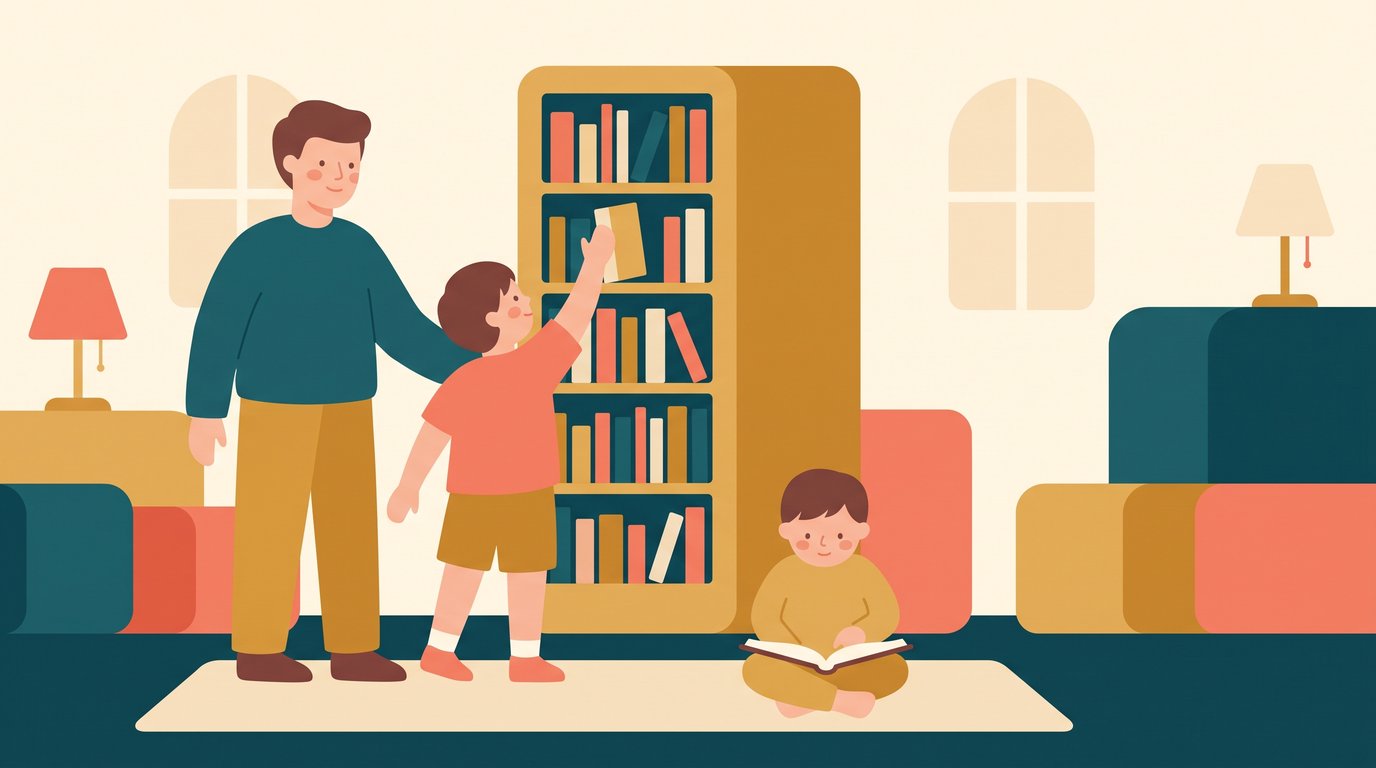
And if nothing works? Warning signs to look out for
A love of reading can take years to develop, and that’s nothing to worry about. But some signs are worth discussing, without making a drama of it.
- Extreme tiredness after just a few lines, or headaches while reading.
- Skipping lines, making up words, or still reading very haltingly at the end of CE1 (age 7-8).
- Letter confusions that persist well beyond CP.
- Refusal turning into anxiety, with tears as soon as a book is opened.
In these cases, the best people to talk to are first the class teacher, then your GP, who can suggest an eye test or refer you to a speech therapist. They’re the ones who can make a diagnosis — not the internet, and not a worried parent at 11pm.
A love of reading isn’t a talent you’re born with or without. It’s a habit you build, little by little, mainly by removing what spoils it. And to keep up the pace without it feeling like school, Kidibook workbooks take over, level by level, from nursery to CM2.
Want to put these tips into practice?
Every day, a new adventure workbook adapted to your child's school level — to print or do on screen. No commitment.
Your questions
My child used to love reading but has stopped: why?
This is very common around CM1-CM2. There are three main reasons: the books on offer no longer match their interests, reading has become a marked school task, or screens have simply taken over all their free time. In this case, it’s not about technique — they read very well — but about motivation: start again from whatever they’re passionate about, even if it’s a magazine or a comic.
Should I keep reading aloud once my child can read alone?
Yes, and it’s actually one of the most helpful things you can do. Children can understand much richer stories than they can read by themselves. Reading them chapters at bedtime gives them access to these stories, keeps reading enjoyable, and shows them where reading can take them when it gets easier. There’s no need to stop in CE1, or even in CM2.
Do comics and manga count as reading?
Yes. They’re full of text, vocabulary, dialogue and a story to follow. A child who devours comics reads far more words than one who drags their feet through a set novel. What matters is how much they read and how much they enjoy it: that’s what makes reading fluent, and fluency is what opens the door to novels.
How long should you read with your child each day?
Ten to fifteen minutes a day is more than enough in primary, as long as it’s regular. Ten minutes every evening is better than an hour at the weekend. If your child wants more, keep going; if they get tired sooner, stop without making a fuss. The aim is for them to look forward to picking up the book again tomorrow.
Read next
 Revision methods
Your child refuses to revise? 7 methods that really work
Refusal, tears, conflict? Discover 7 parent-approved ways to help your child revise without drama: short sessions, rit…
 Revision methods
The syllabic method for learning to read: why it’s making a comeback
Syllabic method for learning to read: how it differs from the global method, what the official recommendations say…
 Revision methods
Improving your child’s concentration: 10 practical tips for home
How to boost your child’s concentration: realistic timings by level, 10 tips you can use tonight, and the si…