📚 Homework and Dyslexic Children: Supporting Learning at Home Without Burnout

When reading is hard work, homework can become exhausting. Here are some ways to organise things, to discuss with your child's teacher and the professionals supporting them. These are not a diagnosis or a therapy plan.
Understanding difficulties without arbitrary numbers
Dyslexia affects learning written language, and it looks different for every child. None of the sources here claim that homework takes 'three times more' effort. Instead, notice what is challenging: decoding instructions, writing answers, remembering lessons, or staying focused after school.
A reading difficulty alone does not mean dyslexia. If it persists or worries your child, speak to their teacher and doctor. The French Health Insurance explains how to spot and diagnose it: assessment may involve several professionals, including a speech therapist, under medical supervision. The tests needed depend on each case.
Adapting a session with the teacher
Pick a goal: understanding a lesson, memorising a few words, or reading a passage. If reading the instruction isn’t the aim, you can read it aloud, then ask your child to explain what they need to do. If the focus is on decoding, follow the materials and guidance used in class or therapy.
- Give one instruction at a time and allow plenty of time to answer.
- Offer an oral answer when writing isn’t the goal and it fits the task.
- Spot one success and one specific difficulty, rather than correcting every mistake at once.
- Take a break if your child gets tired. Make a note of what’s left to do so you can discuss it with the teacher.
Tools to try—no guaranteed results
A line guide, more spaced-out text, or a visual marker can be helpful. Ask your child if it really makes a difference. A special font or layout alone does not solve dyslexia.
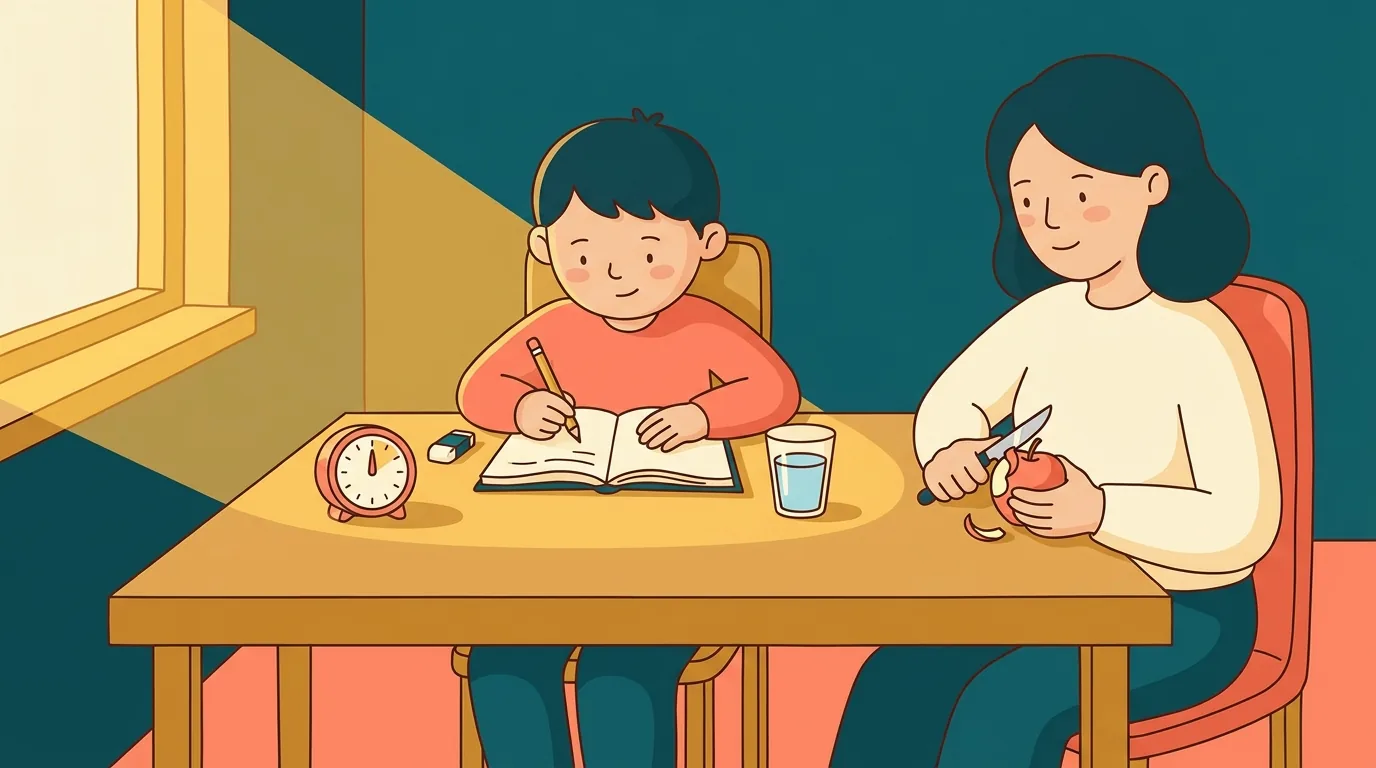
A timer can help make sessions predictable, as long as it doesn’t add stress. For a lesson, drawing or explaining aloud can support reading. Try one change at a time and keep what works, in line with any existing adaptations.
For a few days, you can jot down: the task, the help used, and when tiredness sets in. This concrete record will be more useful at meetings with the teacher than a general comment like “he doesn’t want to work”.

How long should homework take?
We don’t suggest a set time per class for dyslexic children. Needs, tasks and tiredness all vary. Agree a realistic framework with the teacher: what are the priorities, what’s the time limit, and what happens if work isn’t finished? The professional supporting your child can also advise on adaptations.
Time spent does not reflect your child’s effort. If evenings are often difficult, review the routine with those supporting your child, rather than simply making sessions longer.
At school: understanding PPRE, PAP and PPS
The Ministry of Education explains support for special educational needs. These measures are not interchangeable:
- PPRE: teaching support for certain learning difficulties.
- PAP: adaptations for ongoing learning difficulties linked to a learning disorder, following the set procedure and medical advice.
- PPS: an education plan for disability, with the MDPH.
Ask the school team which plan matches your child’s needs and how adaptations will be monitored. An online document is no substitute for this conversation.
Preparing for the meeting and choosing a resource
Bring two or three examples of tricky tasks. Ask what’s most important, what can be adapted orally, and what to report if a session stops early. Avoid adding extra exercises without a clear aim.
The free Kidibook workbook is a general resource, not a specialist or approved tool for dyslexia. Review it with the adult supporting your child before using it. The 31-Day Adventure is free; printed books are sold separately.

Sources and editorial responsibility
Kidibook editorial guide, updated 8 September 2026 using the official resources listed. This is not a substitute for individual clinical review. For health decisions, consult your child’s doctor; for school adaptations, speak to the education team.
Want to put these tips into practice?
Every day, a new adventure workbook adapted to your child's school level — to print or do on screen. No commitment.
Your questions
How can I adapt homework?
Set priorities with the teacher, give one instruction at a time, and adapt the approach to the goal. Adjustments should be based on your child’s needs.
How long should homework take?
There’s no universal marking scheme. Agree on a framework with the teacher and adjust it according to your child’s tiredness and the support planned.
How can I tell if my child is dyslexic?
Talk to your child’s teacher and doctor about any ongoing difficulties. A proper diagnosis requires a professional assessment; no online questionnaire can replace this.
Is Kidibook specialised in dyslexia?
Kidibook workbooks are general resources. They are not a form of therapy and are not clinically validated materials for dyslexia.
Read next
 Revision methods
Does your child refuse to revise? 7 methods that really work
Refusal, tears, arguments? Discover 7 parent-tested ways to help your child revise without drama: short sessions, rit…
 Revision methods
The syllabic method for learning to read: why it’s making a comeback
Syllabic method for learning to read: how it differs from the global method, and what the official recommendations say…
 Revision methods
Improving your child’s concentration: 10 practical strategies at home
Boosting your child’s concentration: realistic times by level, 10 strategies to try tonight, and the warning si…