🧩 Noun modifier: definition, examples and how it differs from adjectives
A noun modifier is a little group of words that turns ‘a bike’ into ‘a racing bike’ or ‘Léa’s bike’. Your child will come across this in CM1 and CM2, when they learn to expand and analyse noun groups. It sounds simple on paper, but in practice, children often mix it up with adjectives or with verb complements.
Here’s a clear definition, a three-step method to spot it, examples sorted by meaning, and the two most common confusions to clear up. All the examples are from everyday life, so you can use them at the dinner table or in the car.
What is a noun modifier?
A noun modifier is a function: it’s a word or group of words that adds detail to a noun. The noun being described is called the main noun of the noun group. The noun modifier comes after this noun and is usually introduced by a preposition: de, à, en, pour, sans, avec, and so on.
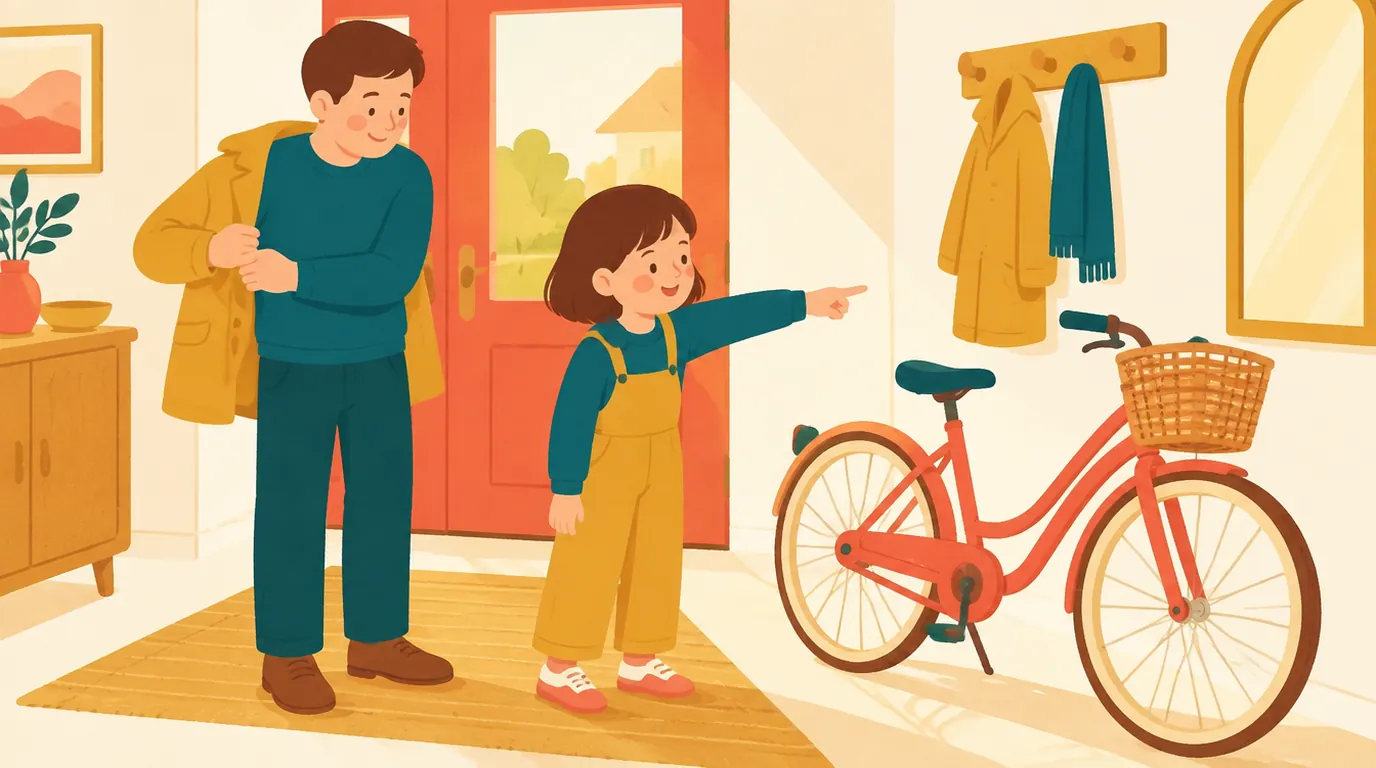
Take the sentence « Léa montre son vélo rouge à panier en osier ».
- rouge is an adjective: it describes vélo and agrees with it;
- à panier is a noun modifier for vélo (which bike? a bike with a basket);
- en osier is a noun modifier for panier (which basket? a basket made of wicker).
Remember, ‘noun modifier’ describes the role a word plays, not what the word is. That’s the difference between word type and function, which we explain in our article on word types.
How to spot it in three steps
- Where is the main noun? Find the main noun in the group: in ‘la porte du garage’, it’s porte.
- What extra detail comes after it? Ask a question starting from the noun: ‘la porte de quoi?’ → du garage.
- Can you remove it? You can almost always remove the noun modifier without making the sentence wrong: ‘La porte du garage grince’ → ‘La porte grince’. You lose some detail, but the sentence still works.
A little trick: du, des, au, aux contain both a preposition and an article (de + le, de + les, à + le, à + les). In ‘une tarte aux pommes’, the noun modifier is aux pommes, introduced by à merged with les. If your child gets stuck on these, our article on determiners explains contracted articles.
Noun modifiers can also be nested: in ‘la porte du garage de mon oncle’, du garage adds detail to porte, and de mon oncle adds detail to garage.
What can a noun modifier add?
It can give all sorts of information. This table helps you vary examples when practising.
| It adds detail about… | Example | Noun modifier |
|---|---|---|
| Ownership | le cartable de Tom | de Tom |
| Material | un pull en laine | en laine |
| Contents | une tasse de chocolat | de chocolat |
| Purpose | une boîte à bijoux | à bijoux |
| An ingredient | une tarte aux pommes | aux pommes |
| Place | la plage de Nice | from Nice |
| The moment | summer holidays | summer |
| The destination | a bag for the swimming pool | for the swimming pool |
| A characteristic | a girl with green eyes | with green eyes |
The number of the complement depends on the meaning: you write une tarte aux pommes (there are several apples in it) but un pot de miel (honey can't be counted). And watch out for compound nouns, which form a single word: a pomme de terre isn't an apple, and de terre isn't a complement to the noun.
What can a noun complement be?
Because it's a function, several types of words can fill this role:
- a common noun: a jar de miel;
- a proper noun: the bike de Léa;
- a noun phrase: the bike de mon grand frère;
- an infinitive verb: the urge de jouer, the pleasure de lire;
- an adverb: the people d'ici, the newspaper d'hier;
- a pronoun: the car de quelqu'un.
In CM1, you mainly focus on the first two or three. The others come up in CM2 and middle school, when analysis gets more detailed.
Noun complement or adjective?
Both give extra detail to a noun, which is why they’re often confused. Here are three ways to tell them apart:
- Agreement: adjectives change to match the noun, noun complements don’t. Un pull chaud, des pulls chauds; but un pull en laine, des pulls en laine.
- Preposition: an adjective stands alone, a noun complement usually starts with de, à, en…
- Position: adjectives can go before the noun (un grand vélo), noun complements always come after.
Often, you can swap one for the other and say almost the same thing: la lumière du soleil / la lumière solaire, un repas de famille / un repas familial, les vacances d'été / les vacances estivales. Turning one into the other is a great way to build vocabulary.
Noun complement or verb complement?
Another common mix-up: a group starting with de or à doesn’t always complete a noun. You need to check what it’s describing.
- “Tom parle de son voyage”: here, the group completes the verb parle (parler de quelque chose), so it’s an indirect object.
- “Tom raconte l’histoire de son voyage”: here, the group completes the noun histoire, so it’s a noun complement.
It’s the same with “Elle sort du garage” (the group tells you where she’s coming from: it completes the verb) and “Elle ouvre la porte du garage” (it completes the noun porte). For a refresher on verb complements, our article on COD and COI has some simple tests.
Practising at home
Noun complements are easy to practise out loud, through games:
- The growing group: start with “un gâteau” and take turns adding details: “un gâteau au chocolat”, “un gâteau au chocolat de grand-mère”… The first person to make a clumsy sentence loses.
- The guessing game: describe a household object using only noun complements (“une boîte à biscuits”, “un pot à crayons”) and have your child guess what it is.
- Book treasure hunt: on a page of their novel, your child finds three noun complements and circles the main noun.
Noun complements are also really useful in writing. If your child writes “Il y avait une maison”, suggest adding a detail: une maison en pierre, une maison au bord de la mer, la maison de ses grands-parents. Their sentence becomes more precise, which is exactly what teachers are looking for when they ask children to enrich a text.
For written practice, you’ll find spotting exercises in our printable CM1 worksheets, and longer sentences to analyse in our printable CM2 worksheets. And to keep handy tips close by, Kidibook Memory Tricks gather this kind of advice in a short format.
Want to put these tips into practice?
Every day, a new adventure workbook adapted to your child's school level — to print or do on screen. No commitment.
Your questions
In which year do children learn about noun complements?
This topic usually comes up in CE2 or CM1, when children start learning how to expand noun phrases, and is explored further in CM2 and middle school. At first, the focus is mainly on complements introduced by “de” or “à”.
Is the noun complement always introduced by “de”?
No. “De” is the most common preposition, but you’ll also see “à”, “en”, “pour”, “sans” or “avec”, as in un pull en laine or un sac pour la piscine. Don’t forget about forms like du, des, au and aux too.
How can you tell the difference between a noun complement and an adjective?
Try putting the noun in the plural: the adjective will change, but the noun complement stays the same. For example, des pulls chauds but des pulls en laine. An adjective is a single word, while a noun complement usually starts with a preposition.
Read next
 Study methods
The syllabic method for learning to read: why it’s making a comeback
Phonics Method for Learning to Read: how it differs from the whole-word approach, what official guidelines say, and…
 Study methods
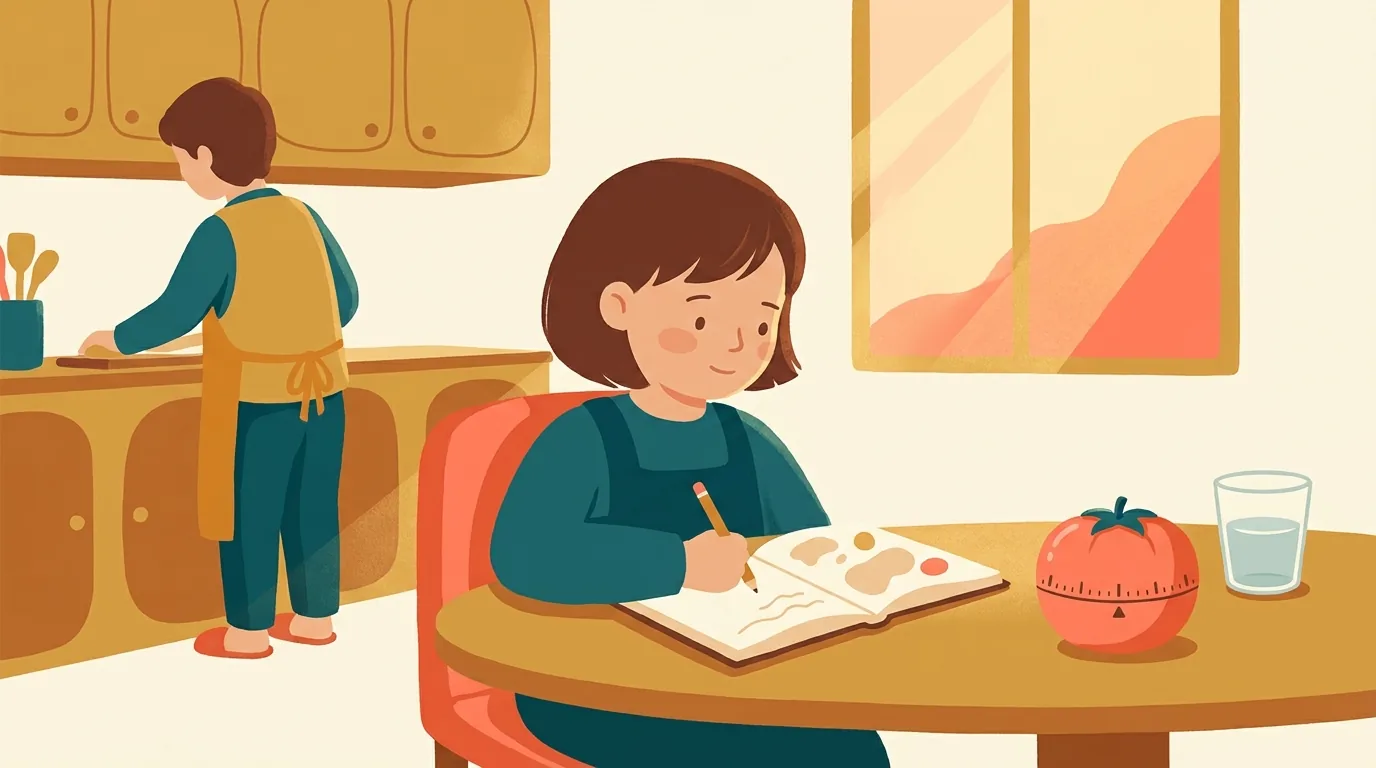
The Pomodoro Method for Children: Study in 10-Minute Bursts
The Pomodoro Technique for Kids: best block length by level, which timer to use, and a sample homework session…
 Study methods
Mind Maps: How to Help Your Child Learn
Mind mapping explained for parents: how to create one with your child, a real lesson example, and practical tips.