🏰 CM2 · 10-11 years old · the Castle world

CM2 exercises
to print in PDF

Here are CM2 exercises to print in PDF, free and without registration: the homophones “ces” and “ses”, “on” and “ont”, sentence analysis, decimal numbers, proportionality, perimeter and area, plus a page of games and answers. Gauvain the knight accompanies your child in the Castle world.

✅ 100% free⚡ Instant PDF🚫 No account or email required🇫🇷 Designed in France

What are CM2 exercises for?

The last year of primary school: not much new is discovered, it’s about consolidating — and gaining autonomy.

At 10-11 years old, your child already knows the essential tools. What changes in CM2 is reliability: knowing how to set up a calculation with decimals without making a comma mistake, rereading a sentence and spotting the agreement error themselves, choosing the right operation for a problem.

Our CM2 exercises to print therefore aim for three things: solid calculation automatisms, spelling that resists homophone traps, and the habit of checking one’s work alone. They are inspired by the end-of-CM2 expectations and gently extend school, without replacing it. This also makes the transition to 6e smoother. The complete course is on the page that gathers all our holiday workbooks.

The three domains of a CM2 workbook

Each activity, on paper or on screen, belongs to one of these three domains.

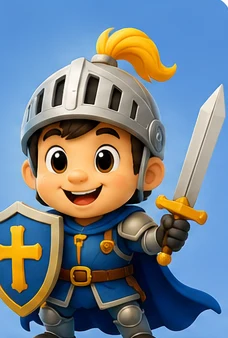
Gauvain the knight, mascot of CM2 (10-11 years)
Domain 1 · Write correctly

Spelling and conjugation

The year of traps that can no longer be guessed by ear: you have to understand the rule to choose the correct spelling.

  • The homophones: “ces” or “ses”, “on” or “ont”
  • Present, imperfect, future, past tense (passé composé)
  • Past participle agreement
Domain 2 · Analyse

Grammar and vocabulary

We look at the sentence like a mechanism: who does the action, what is the verb, what is the role of each word.

  • Find the subject and the verb of a sentence
  • Nature and Function of Words
  • Synonyms, Antonyms, and Vocabulary
Domain 3 · Calculating

Numbers, Fractions, and Measurements

Decimals and Fractions Become Everyday Tools, Used in Problems.

  • Decimals: Adding, Multiplying, Comparing, Ordering
  • Fractions, Percentages, Proportionality, Average
  • Perimeter, Area, Volume, Angles, Symmetry, Conversions

6 A4 pages: a cover, one French page, one maths page, one games page, one answer key page, and one final page. Free, no account or email required.

Printable CM2 Exercises in PDF

One file, six A4 pages, ready to print. No account, no email.

Our workbook brings together free printable CM2 exercises in PDF drawn from the key concepts of the year. In French: choosing between “ces” and “ses” — “Il range ___ propres affaires” (He puts away ___ own things), “Regarde ___ oiseaux là-bas” (Look at ___ birds over there) — distinguishing “on” and “ont”, then analysing the sentence “Les enfants jouent dans le jardin” (The children play in the garden) by identifying the subject and the verb. In maths: three calculations with decimal numbers, a proportionality situation, and the perimeter then the area of a rectangle. A games page to relax, and the answers at the end, for you.

The file contains six pages in total: a cover, three activity pages (French, maths, games), an answer key page, and a final page. So, there are three exercise pages, and it is intentionally short — one page per session is more than enough at this age. To continue, interactive workbooks take over for free.

For printing: A4 format, 100% scale (avoid "fit to page"), and a pencil rather than a pen. It prints very well in black and white, as many times as you want.

To go further, our free CM2 holiday workbook guide details what a 10-year-old child learns during the year.

And to review maths while having fun: our free CM2 magic colouring pages — one calculation per box, one hidden drawing per page.

All level materials are gathered on the printable CM2 exercises page: the PDF workbook, the colouring pages, and 30 corrected exercises.

CM2 Maths Exercises: Decimals, Proportionality, Geometry

Three groups of concepts that will come back throughout middle school.

Our printable CM2 maths exercises in PDF start with decimal numbers: adding 3.5 and 2.75, multiplying 12.4 by 10, subtracting 3.6 from 8. The real work is here: aligning the decimal points before setting up the operation. A child who writes neatly makes far fewer mistakes.

Next comes proportionality, with a concrete situation: three pens cost €6, we look for the price of one, then that of five. Going through the unit is the reflex to develop; it will be useful again for percentages.

Finally, geometry: a rectangle 6 cm by 4 cm, for which we calculate the perimeter then the area. This is an opportunity to separate two ideas that children often confuse: the perimeter of the figure, measured in cm, and the surface it covers, measured in cm². The rest of the programme is worked on screen, on the big CM2 workbook.

CM2 French Exercises: Homophones and Sentence Analysis

Two skills that weigh heavily in both dictation and writing.

Our printable CM2 French exercises first tackle homophones. “Ces” or “ses”? The question to ask aloud is always the same: does it belong to him/her/them? “Il range ___ propres affaires” (He puts away ___ own things) — his own, so “ses”. “Regarde ___ oiseaux là-bas” (Look at ___ birds over there) — we are pointing at them, so “ces”. The same replacement principle applies for “on” and “ont”: if the sentence remains correct with “avaient” (had), write “ont”; otherwise, it’s “on”.

Next comes sentence analysis. In “Les enfants jouent dans le jardin” (The children play in the garden), the child looks for who is doing the action, then what the action is. This reflex is the foundation of all agreements: you only agree what you have identified.

If some basics remain fragile, going back is no harm: printable CM1 exercises cover the same groups of concepts one level lower, and this review is often more effective than a painful CM2 exercise.

The 30 interactive workbooks for CM2, to do on screen

Self-correcting, free, in the browser: the child clicks, the screen responds immediately.

When the printer is broken, the interactive workbooks take over. The child clicks, immediately knows if it's correct, earns stars, and leaves with their diploma. At 10 years old, this immediate correction is precious: it allows to start again right away, without waiting for an adult to be available.

The thirty workbooks cover the whole year. In French, there are nine: homophones, the present tense, the imparfait, the future tense, the passé composé, past participle agreement, word class and function, synonyms and antonyms, vocabulary. In numbers and calculation, fifteen: numbers up to a million, comparing and ordering, adding and subtracting decimals, multiplying a decimal, long multiplication, division, adding fractions, equivalent fractions, a fraction of a quantity, decimals and fractions, proportionality, percentages, the average, big calculations, word problems. And in geometry and measurement, six: perimeter, area, volume, angles, symmetry, conversions.

Everything is gathered on a single page: the big CM2 workbook, its 30 chapters and its Grand Champion CM2 diploma. And if your child prefers to progress like in a book, page after page, there is the Castle workbook: thirteen challenges, a pearl earned with each success and the Young Knight diploma at the end.
How to support a 10-11 year old child?

In CM2 (last year of elementary school, age 10-11), your role changes: you go from explaining to checking from a distance.

Let them proofread themselves. Rather than pointing out the mistake, simply say: "there is a mistake in this line." Searching by oneself is worth ten corrections given.

Ask them to explain their method. "How did you find it?" is better than "Is it correct?" A child who verbalises their reasoning often spots their own mistake.

Short and regular rather than long and rare. Fifteen to twenty minutes, a few times a week — including summer, without making it a big deal. One page abandoned at the right moment is better than three pages finished in tears.

Take the stress out of 6e. Middle school is mainly prepared by habits: a backpack packed the night before, a notebook kept neatly, work started without being asked. If the subject often comes up at home, preparing for 6e gives you concrete guidelines to approach it without worrying your child.

Gauvain and the Castle world

Each level has its own mascot at Kidibook. In CM2, it’s Gauvain the knight, in the Castle world.

Gauvain is not just decoration: he accompanies the child from one activity to another and celebrates each success. At 10 years old, children think they are too old for characters; in reality, a red thread still holds attention very well.

Before the Castle, there was Rex the dino: each world follows on from the last, which gives the child a sense of progress. And when an activity is finished, there is the reward: the Kidibook Passport, where your child finds Gauvain again, collects stamps of the eight heroes and prints their diploma.

Frequently asked questions about CM2

My child still confuses "ces" and "ses", is that normal?

Yes, very much. These two words sound exactly the same: no ear can distinguish them, you have to think each time. The good news is that one test is enough: if you can say "les siens" (his/hers), you write "ses"; otherwise, it’s "ces". Repeated over a few sentences per week, the reflex eventually settles in.

Decimals cause problems: where to start?

With ordering, before calculation. Ask them to put 1.5 · 1.05 · 1.55 · 1.15 in ascending order, as in the workbook’s game page. As long as they believe that 1.15 is bigger than 1.5 because it has more digits, adding or multiplying makes no sense. Once this idea is in place, the rest follows quickly.

What exactly does the CM2 workbook in PDF contain?

Six A4 pages: a cover, three activity pages (one French, one maths, one games), one answer key page and one final page. Each activity page offers three exercises, nine in total. It’s deliberately short, and that’s also why the 30 interactive workbooks take over: they also cost nothing.

Are CM2 exercises really free?

Yes, completely. The workbook in PDF and the 30 interactive workbooks are free: no account, no email required. You download, you print, your child does.

Ready to cross the gates of the Castle with Gauvain?

Download the CM2 workbook in PDF, print the first exercise page, and let the knight do the rest. It’s free.

📥 Download the CM2 workbook in PDF 💻 The 30 interactive workbooks

🎁 31 days of 10-minute challenges — free

One playful exercise a day by email, from Kindergarten (GS) to CM2, online or as a PDF to print. Unsubscribe any time.

Start the 31 days →
Trust you can check

Our commitments, in black and white

No empty promises: only what we deliver.

Printed on demand

Our paper books are made to order, in Europe: expect 2 to 5 working days for printing, then shipping.

Free delivery

Free shipping in mainland France, with no minimum order.

Free reprint

A printing defect on your copy? We will reprint it at our expense.

14 days to change your mind

The legal withdrawal period applies to all paper book orders.

No subscription

The 31-day Adventure is now free, and our books are sold individually: no subscription, no recurring charges.

Trademark registered at INPI

Kidibook is an independent French brand, registered at INPI.

PDF · immediate downloadFree workbook without email or registrationDesigned in France, from Preschool (3-4 years) to CM2 (10-11 years)