🎲 Learning through play: helping your child without turning everything into homework
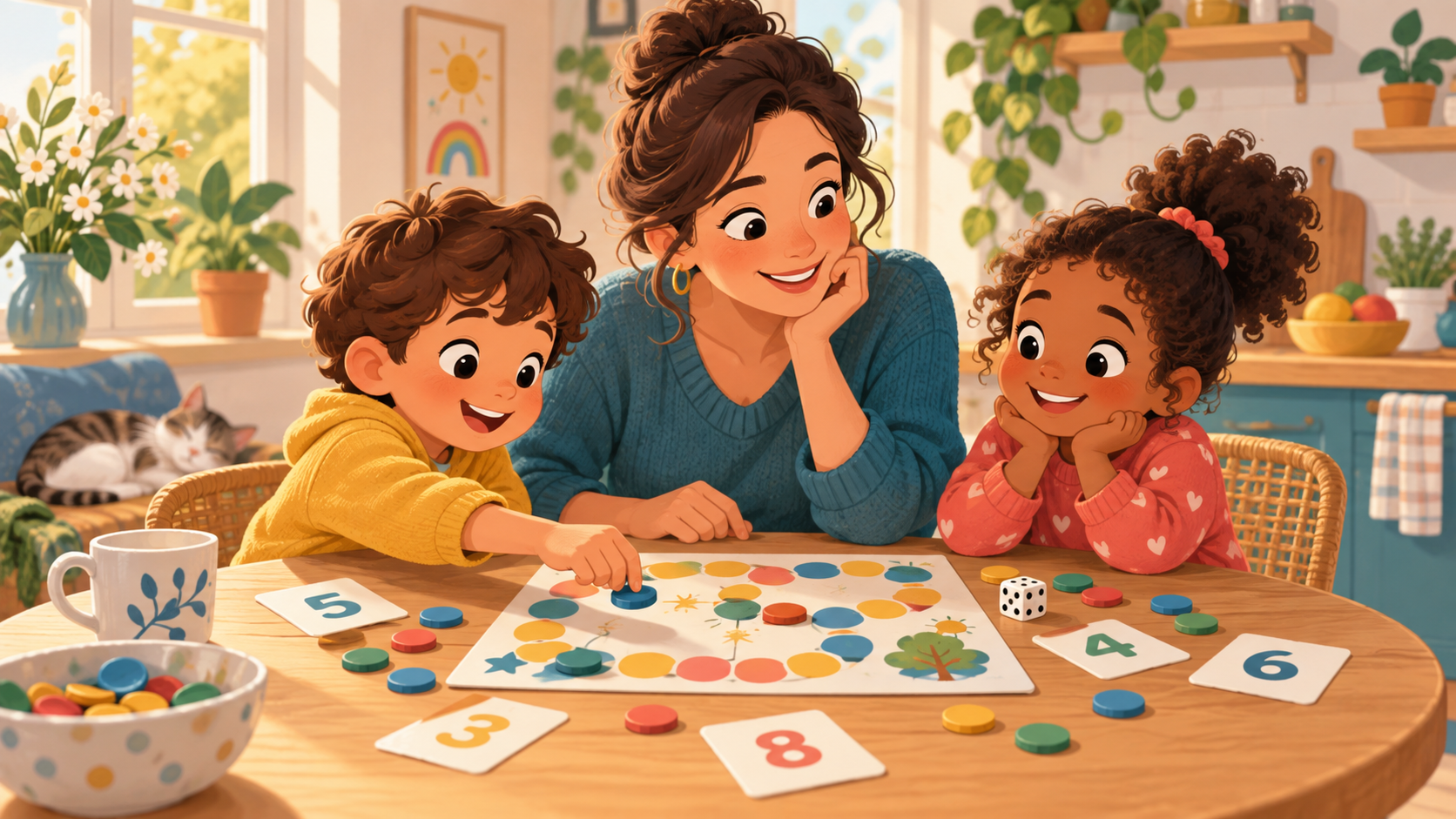
Your child refuses another worksheet but begs for another round of a game? Learning through play can be a different way to approach a topic. The key is to notice what your child is actually doing: choosing a strategy, explaining a word, or comparing quantities is much more than just collecting stars.
Games aren’t a magic solution, nor are they just homework disguised with a fun theme. Here’s how to make space for play at home, from CP to CM2, without turning every shared moment into a test.
Learning through play: what games can really offer
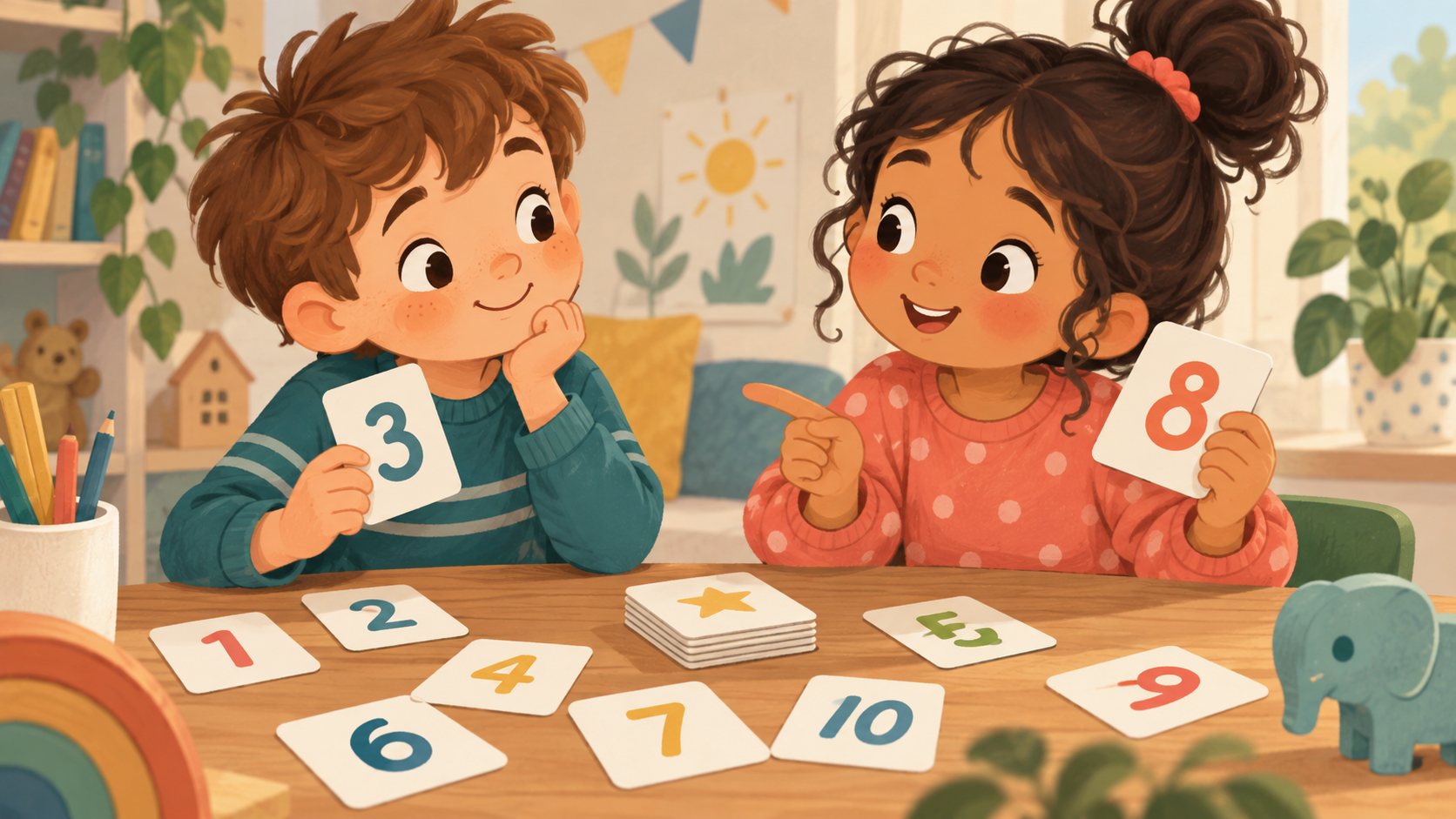
A rule sets up a problem to solve. A partner means you have to explain your choices. A new round lets you try a different approach. These are all opportunities to think and practise, in a setting that’s different from a workbook.
Éduscol describes games as a way of learning that can help children engage with activities. But that doesn’t mean every game teaches everything, or that a child will automatically remember more just because they’re having fun.
The official introduction to the Oiseaux-compteurs maths games for CP also highlights an important point: the educational value depends on the game you choose and how you use it. At home, remember this above all: the concept needs to be used during the game, not just printed on the box.
Free play, playful practice: don’t mix everything together
Building a den, inventing a restaurant, or chasing a ball don’t need an adult to add a school goal. Make sure your child also has time to choose their own story and rules.
If you suggest a game to review a lesson, just say so: “Shall we try practising with some cards?” Your child might agree, suggest a twist, or choose something else. There’s no need to promise a free play session and then bring out a list of required questions.
| Your aim | What you can offer | What’s best to avoid |
|---|---|---|
| Sharing time together | Letting your child pick the game | Quizzing on a lesson every turn |
| Revisiting a concept | A short rule, with help available | Adding several challenges at once |
| Understanding a mistake | Redoing an example and talking it through together | Taking away points without explanation |
| Unwinding after school | A real break to relax | Insisting every break is educational |
Learning through play from CP to CM2: three home ideas
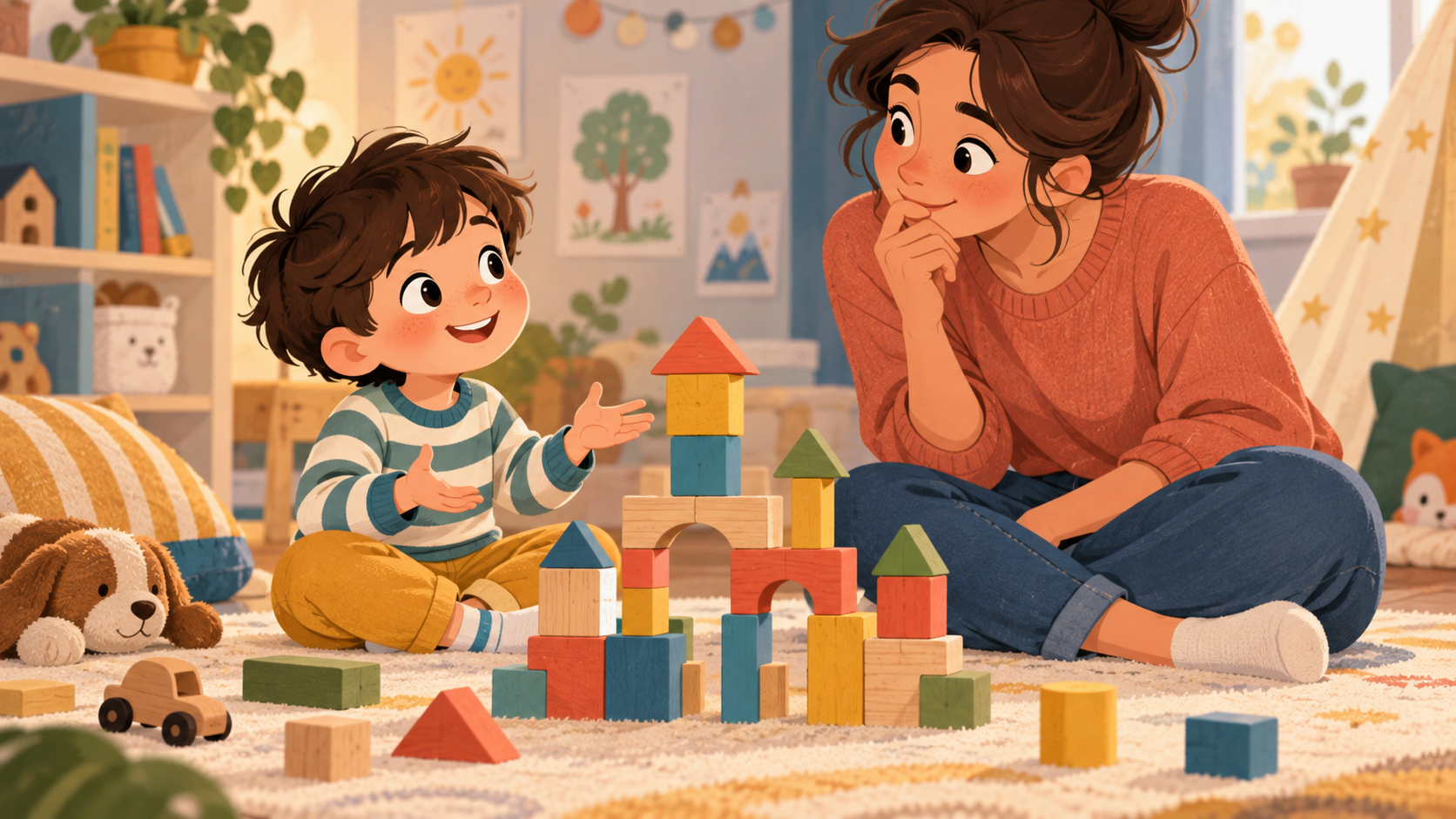
The following levels are starting points, not rules. Pick words and ideas your child already knows from class. If a rule is too tricky, it might hide a skill your child already has.
For CP: the object detective
Put a few familiar objects on the table: a book, a spoon, a sock. Secretly pick one and give a clue about its use: “You use it to eat soup.” Your child points to the object and explains what helped them decide. Swap roles so they can make up their own clues.
This activity uses vocabulary and spoken description. It’s not a reading exercise. If you want to add reading, use only labels with words your child can read, then match them to the objects. Stick to the spoken version if the labels get in the way.
For CE1 or CE2: the mystery collection
Take identical counters and an opaque cup. Count a small collection together. Your child closes their eyes; hide some under the cup, leaving the rest visible. They guess how many are hidden, then lift the cup to check.
Start with a number your child is comfortable with. Ask: “How did you work it out?” They might count, draw, or explain how they broke it down. Only change the total when the rule is clear. To focus on times tables, try our game rules for learning tables.
For CM1 or CM2: the remote artist
Place a folded sheet between you to hide your drawings. One person draws a simple shape using familiar forms, then describes it without showing. The other tries to copy it. Compare your drawings: what clue was missing? Which word was unclear?
The challenge is about using geometric vocabulary and giving clear instructions, not artistic skill. Use the terms from your child’s schoolbook. If “on the right” is confusing, agree on a point of view before trying again. Finding a clearer way to say something is part of the game.
The parent’s role: help your child understand, then let them try on their own
Try a practice round with no score. Show an action, let your child have a go, then check if they can explain the rule in their own words. This helps you spot misunderstandings rather than confusing them with genuine learning difficulties.
When a mistake happens, try asking “How can we check?” instead of “But you know this!”. Use the materials, workbook, or an example for support. Explain what went wrong before moving on: repeating without clear feedback can just reinforce the mistake.
Stop when attention or enthusiasm fades. A short, enjoyable game doesn’t need to become a forced series. And if you find yourself taking over, our guide on helping without doing it for them offers practical phrases.
After the game: notice what sticks, without turning it into a test
A high score alone doesn’t show what your child has understood. At another time, try a similar situation with one detail changed: a new object to describe, a different collection, another drawing. Watch if they reuse an idea or explain their thinking.
If your child only succeeds with your help, it’s not a failure: you know what support to keep. If a difficulty keeps coming up in games and schoolwork, talk to the teacher rather than piling on extra sessions at home.
And remember to keep space for fun, without school promises. Kidibook’s Le Grand Saut lets you jump over obstacles and catch stars with the mascots: it’s a relaxing game, not a reading or maths method. Playing together can simply be a good moment.
Want to put these tips into practice?
Every day, a new adventure workbook adapted to your child's school level — to print or do on screen. No commitment.
Your questions
Can you learn through play without buying an educational game?
Yes. Everyday objects, paper and a few counters are enough for the activities suggested here. Choose a simple rule and a clear idea rather than a long setup.
Can games replace lessons and exercises?
They can support explanations and practice, but don’t automatically replace the work set in class. Build on the topics studied and the teacher’s advice.
What if my child struggles with losing?
Try a cooperative rule, take a break, or pick a game without scoring. Acknowledge their disappointment without teasing. There’s no need to insist on competition to enjoy a useful activity together.
How do I know if a game really helps practise a skill?
Look at what the game asks you to do: read, compare, calculate or explain. Then see if your child can reuse an idea in a similar situation. Points alone aren’t enough to check this.
Next to read
 Learning through play
15 games to keep children busy in the car (that get them thinking)
15 games to keep children busy in the car, with almost no equipment: classics and clever games that get them revising …
🎲Learning through playGames for learning times tables: 5 homemade ideas
Cards, dice, old maid: pick a game to learn times tables at home, with simple rules…
🎮Learning through playFree online educational games for primary: which to choose?
Compare free educational games from CP to CM2: reading, maths, ads and sign-up. Simple pointers for …