🚗 15 games to keep children busy in the car (that make them think)
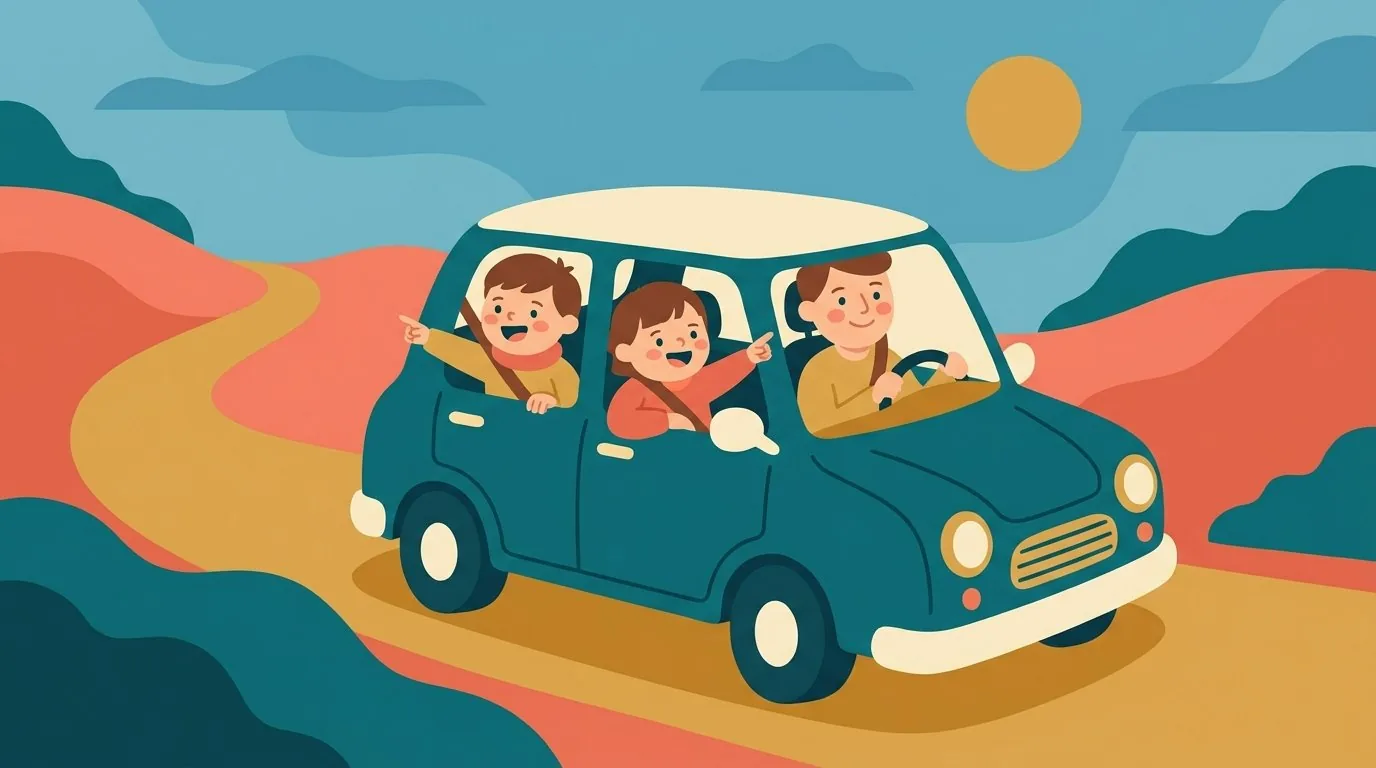
“Are we there yet?” — the classic phrase of big departures. On the way to vacation, the kilometers always seem longer in the back seat. Good news: the best games to keep children busy in the car require no materials, keep boredom at bay… and make children think without them noticing. Here are 15 proven ideas, sorted by what they develop, plus some golden rules to avoid tantrums and motion sickness.
Our golden rules before starting
Before the list, three principles that change everything for a successful trip.
- Alternate games : a child's attention span is short. Change every 15-20 minutes, allow quiet breaks (music, scenery, nap).
- Favor oral activities : reading or staring at a screen too closely promotes motion sickness. Games played while looking at the road or talking are easier on sensitive stomachs.
- Get the whole car involved : when the driver and front passenger join in, the atmosphere lifts and siblings bicker less.
Games to keep children busy in the car: the classics that work
These timeless classics cross generations because they work, from about 4-5 years old up to adolescence. Zero preparation.
- The “I spy with my little eye…” game : one player spots a visible object and gives a clue (“…something red”), others guess. Observation and vocabulary.
- The oral word category game : a letter is chosen, and each person takes turns naming an animal, fruit, first name, or country starting with that letter.
- No yes or no : questions are asked, and the other answers without ever saying “yes” or “no.” Guaranteed laughter.
- The license plate game : spot department numbers, invent a phrase from the letters on a plate, add the digits.
- The color hunt : “the first to see a yellow car!” Perfect for the little ones.
- The oral exquisite corpse : each person adds a sentence to invent a long, increasingly silly story.
- Guess what I’m thinking of : a theme (animal, job, character), maximum 20 questions to find it.
These games strengthen language, listening, and logic skills without anyone feeling like they are “revising.” And if you’re looking for other ways to learn while having fun all year round, our article on essential mnemonic devices is full of tips to turn into games.
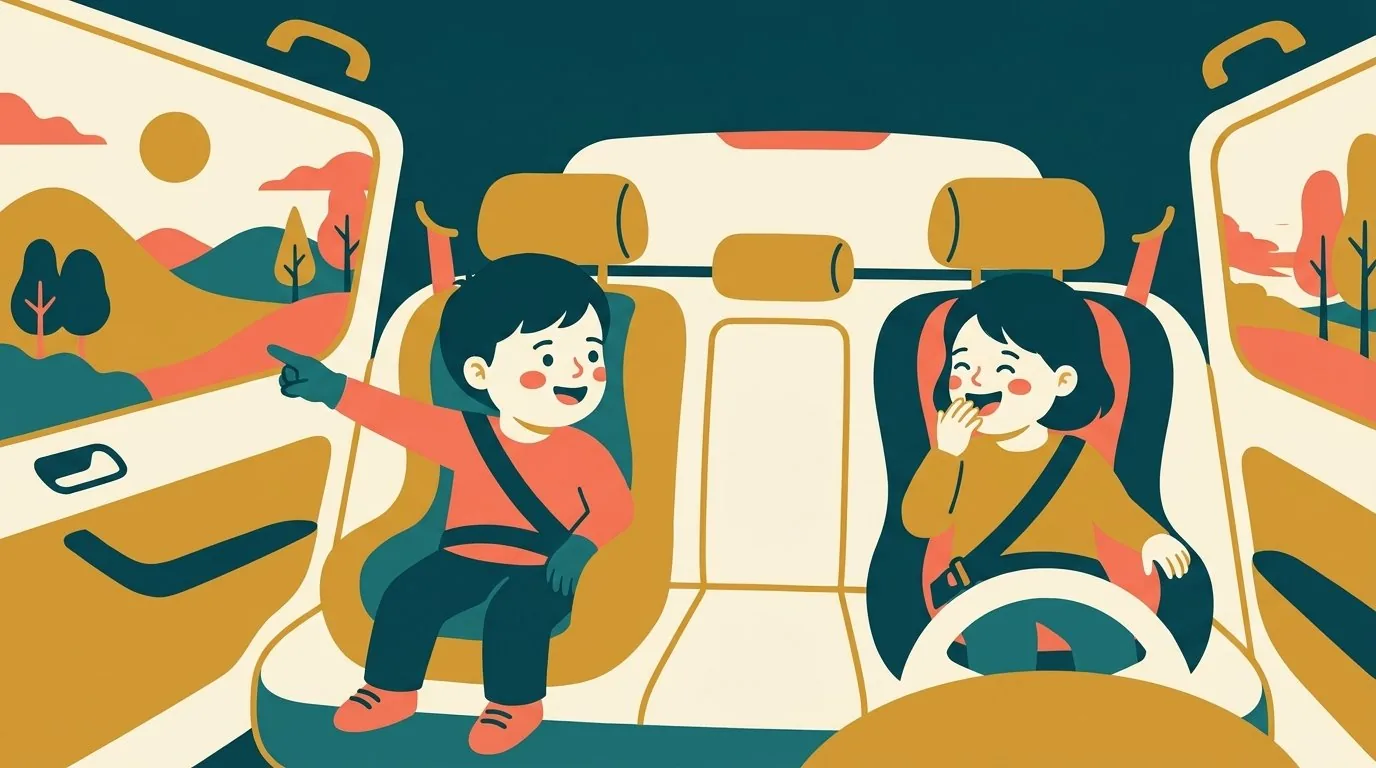
Games to keep children busy in the car… that secretly help them review
The journey is a great opportunity to maintain some skills, in small doses and without a workbook. The child only sees a game; you know they are working.
- Multiplication tables in a speed challenge : “7 times 8?” in speed mode, taking turns. Perfect for reinforcing multiplication tables.
- Spelling backwards : spell “maison” backwards (n-o-s-i-a-m). Excellent for spelling and concentration.
- Calculating from road signs : add or multiply the crossed numbers (distances, speeds, exits).
- The longest word : from 3 randomly drawn letters, find the longest word. Vocabulary and spelling.
- Chain rhymes : one word, the next must rhyme. Continue until you run out of ideas.
- The mystery capital : “What is the capital of Italy?” for older children, general knowledge and geography.
- Mental calculation of kilometers : “There are 60 km left at 100 km/h, how long until we arrive?” Real-life math.
Which game according to your child's age
Not all games are suitable for all ages. This quick guide helps you choose fast, depending on who is traveling in the back seat.
| Age | Most suitable games | What it works on |
|---|---|---|
| 4-6 years old (early primary school) | Color hunt, “I spy something”, animal riddles | Vocabulary, observation, attention |
| 7-8 years old (primary school years 2-3) | Oral categories game, timed multiplication tables, no yes/no, chain rhymes | Language, calculation, rule listening |
| 9-11 years old (primary school years 4-5) | Spelling backwards, longest word, mystery capital, license plate game | Spelling, culture, logic |
| Whole siblings group | Oral exquisite corpse, guess what I’m thinking, kilometer calculation | Imagination, cooperation, math |
The right balance matters as much in the car as at home: better three short and joyful games than one endless challenge. The same principle applies to summer reviews, as our article on the ideal daily time on a holiday workbook.
When the screen becomes an ally (used in moderation)
No need to demonize the screen on a six-hour trip: the goal is for it to remain a controlled wildcard, not the trip babysitter. The rule that works: first exhaust oral games, music, and the scenery, and the screen comes as a last resort, for a pre-announced time ("one round, then we put it away").
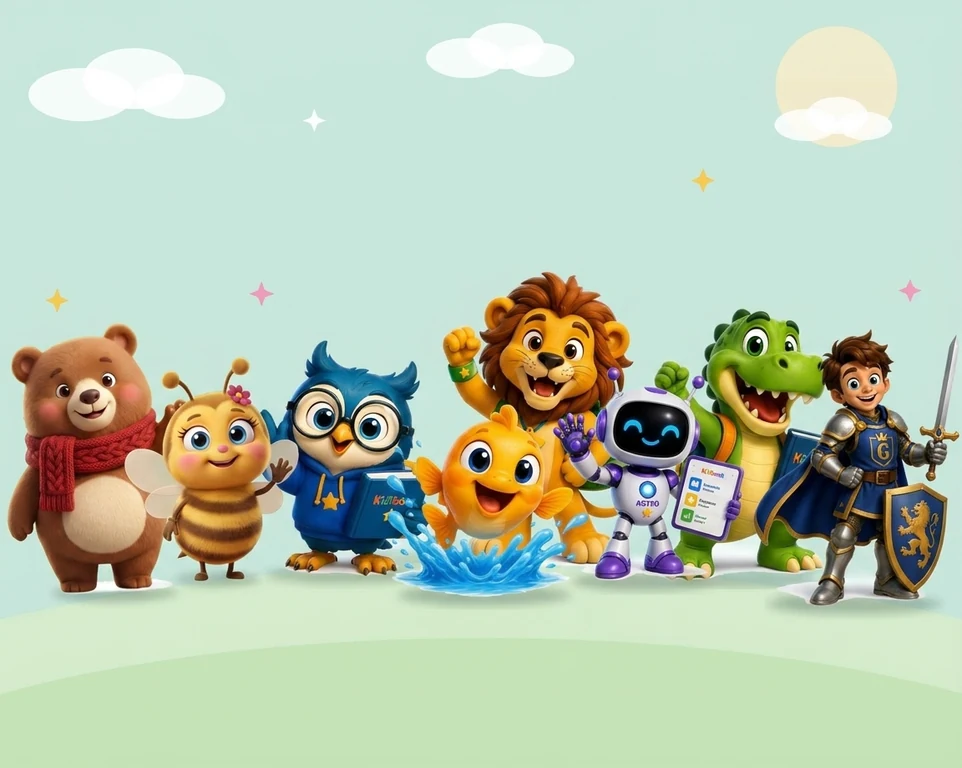
For the break at the highway rest area, after stretching your legs, five minutes of our free game Le Grand Saut make an ideal reward: a short and colorful runner with the Kidibook workbook mascots, without registration or aggressive advertising. Play one round, then leave, everyone is happy.
In summary, to keep children occupied in the car without losing your nerves: alternate games, play out loud, slip in some clever challenges that maintain skills, and keep the screen as the cherry on top. The trip stops being a bad moment to endure: it becomes a time of bonding — and sometimes, the best summer revision room.
Want to put these tips into practice?
Every day, a new adventure workbook adapted to your child's school level — to print or do on screen. No commitment.
Your questions
What games keep children occupied in the car without any materials?
The best are played entirely orally: "I spy something", the oral category game, yes-no game, exquisite corpse, animal or job riddles, and multiplication table challenges. They require nothing, involve the whole car, and train language, logic, and calculation without the child feeling like they are revising.
How to avoid motion sickness during games?
Avoid anything that requires looking down for a long time: reading, coloring, screen held close. Prefer games that make the child look outside, towards the horizon (counting objects, spotting colors, guessing). Air out regularly, take breaks, and if needed, seat the sensitive child in the middle, from where they can see the road ahead. Looking far away significantly calms nausea.
Can car games really help with revision?
Yes, in small doses and in a playful form. A multiplication table challenge, spelling backwards, the longest word, or a kilometer calculation maintain mental math, spelling, and logic. The important thing is to stay in the game and pleasure: three joyful minutes are better than an interrogation. Always set the difficulty just above what the child masters.
How much screen time to allow on a long trip?
There is no magic number, but a good rule is to make it a wildcard rather than a reflex: start with oral games, music, and scenery, and the screen comes last, for a pre-announced and limited time (one round, one episode). Alternating with active breaks at each highway rest area also helps prevent the screen from monopolizing the trip.