🏖️ Vacation workbook: how to choose it well, class by class (GS → CM2)

Early July, stationery aisle of the supermarket. Forty covers all looking alike, "program-compliant" banners everywhere, and your child pulling on your sleeve to go see the floats. So you grab the most well-known one, slip it into the cart... and find it untouched at the bottom of a beach bag on August 15.
It's a shame, because a well-chosen workbook is 10 minutes a day that change the back-to-school period. And a poorly chosen workbook means a month of pointless negotiations. Here's how to aim right, criterion by criterion, then class by class.
What is a vacation workbook really for?
Let's be clear: a vacation workbook is not for getting ahead for the next school year. It is to maintain what has just been learned, exactly like maintaining a muscle. Two months without reading or counting, and some automatisms fade away.
This is not just a worried parent's whim: teachers observe it every September, and Anglo-Saxon research has measured this summer loss of skills phenomenon, especially in reading and mathematics. We have dedicated a full article to it: the summer slide, and how to avoid it without spoiling the holidays.
The good news? It doesn't take much to counter it. Not hours of work: a small daily ritual, short and regular. That's exactly what a good vacation workbook should allow.
Choosing a vacation workbook: the 5 important criteria
1. Sessions of 10 to 15 minutes, no more
This is the number one criterion. In summer, a child's concentration capacity melts like ice cream in the sun. The right format: one page or a double page = one session, completed before boredom sets in. Avoid dense double pages that require 45 minutes.
2. The right level: review the class just completed
This is THE question that makes all parents hesitate in front of the aisle. The convention is simple: a workbook "from CP to CE1" reviews the CP program, the one your child has just finished. You consolidate the past year, you do not discover the next one.
Why? Because a child alone facing never-before-seen concepts gets discouraged after two pages. Whereas reviewing what they already know gives them small daily victories — and it is this feeling of success that makes them come back the next day.
3. Adapted to age, not just level
Look beyond the curriculum: short and readable instructions, large enough handwriting, cheerful illustrations, a universe that speaks to your child. A workbook at the right school level but as austere as a textbook will remain closed.
4. Fun, otherwise abandonment in three days
A story that progresses, characters, challenges, games between exercises: this is not a gimmick, it is the engine that keeps it going all summer. If the workbook looks like an end-of-year test, the child immediately senses it — and rightly protests.
5. Always with answer keys
For you first: no one wants to recalculate a subtraction problem on the beach, and methods may have changed since your CE2. For the child next: around CM1-CM2, self-correction is a real learning experience.

Choosing the right holiday workbook according to the school year: the GS → CM2 table
Every summer has its priorities. Here, class by class, is what should be maintained as a priority — and therefore what the workbook should contain.
| Completed school year | Focus on… | To maintain as a priority this summer |
|---|---|---|
| GS | CP (6-7 years old) | Recognition of letters and sounds, letter tracing, counting small quantities, listening to a story and retelling it |
| CP (6-7 years old) | . | Read aloud every day (the heart of the matter), complex sounds (ou, an, oi…), numbers up to 100, small additions and subtractions |
| . | CE2 (8-9 years old) | Reading comprehension of short texts, multiplication tables from 2 to 5, telling time and money, first spelling rules |
| CE2 (8-9 years old) | CM1 (9-10 years old) | All multiplication tables automatically, multiplication technique, present/future/imperfect tenses, reading longer texts |
| CM1 (9-10 years old) | CM2 (10-11 years old) | Simple fractions and decimal numbers, agreements within the noun phrase, past tense (passé composé), regular pleasure reading |
| CM2 (10-11 years old) | 6e | Long division, fractions and decimals, subject-verb agreement, and a bit of autonomy: it's the ideal summer to learn to work alone for 15 minutes |
You will notice a constant: daily reading is present at all levels. Even ten minutes of comics count. The workbook is a tool, not an end in itself.
The 3 traps that send the workbook to the bottom of the bag
Trap No. 1: the workbook is too school-like. Exercise lines that look suspiciously like the year's textbook. The child has worked for ten months, they deserve a different presentation: an adventure, characters, games. Otherwise, it is experienced as a punishment — and a punishment is sabotaged.
Trap No. 2: the workbook is too long or too ambitious. An 80-page tome completed at 10% weighs everyone down: the child feels guilty, the parent too. Better to have a short format finished with pride than a marathon abandoned in the first week.
Trap No. 3: the workbook has no answer key. Without correction, mistakes are repeated all summer and become ingrained — this is the exact opposite of the intended goal. Check for the presence of solutions before buying; it is a deal-breaker.

Single workbook or daily subscription: which option for your summer?
The classic paper workbook works well for simple summers: one child, one level, one book in the suitcase. But it has a weakness known to all parents: after a week, the novelty wears off, and page 12 looks a lot like page 4.
That's exactly why we designed the Kidibook subscription differently: each day, a new adventure workbook to print, in a world designed for each level — Bibou the owl in GS (Grande Section, around 5 years old), the Ocean with Plouf at CP (Cours Préparatoire, around 6 years old), the Jungle with Léo at CE1 (Cours Élémentaire 1, around 7 years old), Space at CE2 (Cours Élémentaire 2, around 8 years old), Dinosaurs at CM1 (Cours Moyen 1, around 9 years old), the Castle at CM2 (Cours Moyen 2, around 10 years old). The daily surprise does the motivation work for you, for €7 per month with no commitment, and one subscription covers several children of different levels.
Not sure? Start with the simplest test in the world: download our free holiday workbook (without leaving an email), print it out, and observe your child tomorrow morning for ten minutes. If they want more, you have your answer.
Two useful supplements depending on age: for rainy days or trips, Le Grand Saut, our free online game with the mascots, helps review without seeming like it. And for a CM1-CM2 child quietly preparing for middle school, Le Grand Livre des Pense-Bêtes turns the rules to remember (multiplication tables, conjugation, spelling) into mnemonic tricks that you never forget.
Your 3-step action plan
No need to spend the whole evening:
- Tonight: identify the grade your child has just finished — that is the level the workbook should review.
- Tomorrow morning: test the 10-15 minute format with the free workbook, right after breakfast.
- This week: choose the option that fits your summer — a good single workbook with answers, or the daily adventure subscription — and let your child make the final choice.
A successful holiday workbook is not the one with the prettiest cover. It's the one your child still opens on August 20th — with a smile.
Want to put these tips into practice?
Every day, a new adventure workbook adapted to your child's school level — to print or do on screen. No commitment.
Your questions
Which holiday workbook level to choose for a child entering CE1?
Take the "from CP to CE1" workbook: the convention is that a holiday workbook reviews the grade just completed, so here the CP program. Reviewing what they know gives the child daily successes, while discovering new concepts alone quickly discourages them.
How much time per day should be devoted to the holiday workbook?
10 to 15 minutes per day is more than enough; the important thing is consistency rather than duration. One page per day, each morning at the same time, maintains skills better than two long sessions per week imposed painfully.
Should you force your child to do their holiday workbook?
Forcing is counterproductive: the child then associates revision with punishment. Instead, rely on a fun workbook they chose themselves, a short ritual at a fixed time, and encouragement for effort. If refusal persists, change the medium for a few days: pleasure reading, oral calculation games, educational online game.
When to start the holiday workbook during summer?
First allow one to two weeks of real relaxation at the beginning of July: your child needs it after their school year. Then establish the daily ritual of 10-15 minutes, maintaining it gently until the end of August to arrive fresh at the start of school.
To read next
 Holiday workbooks
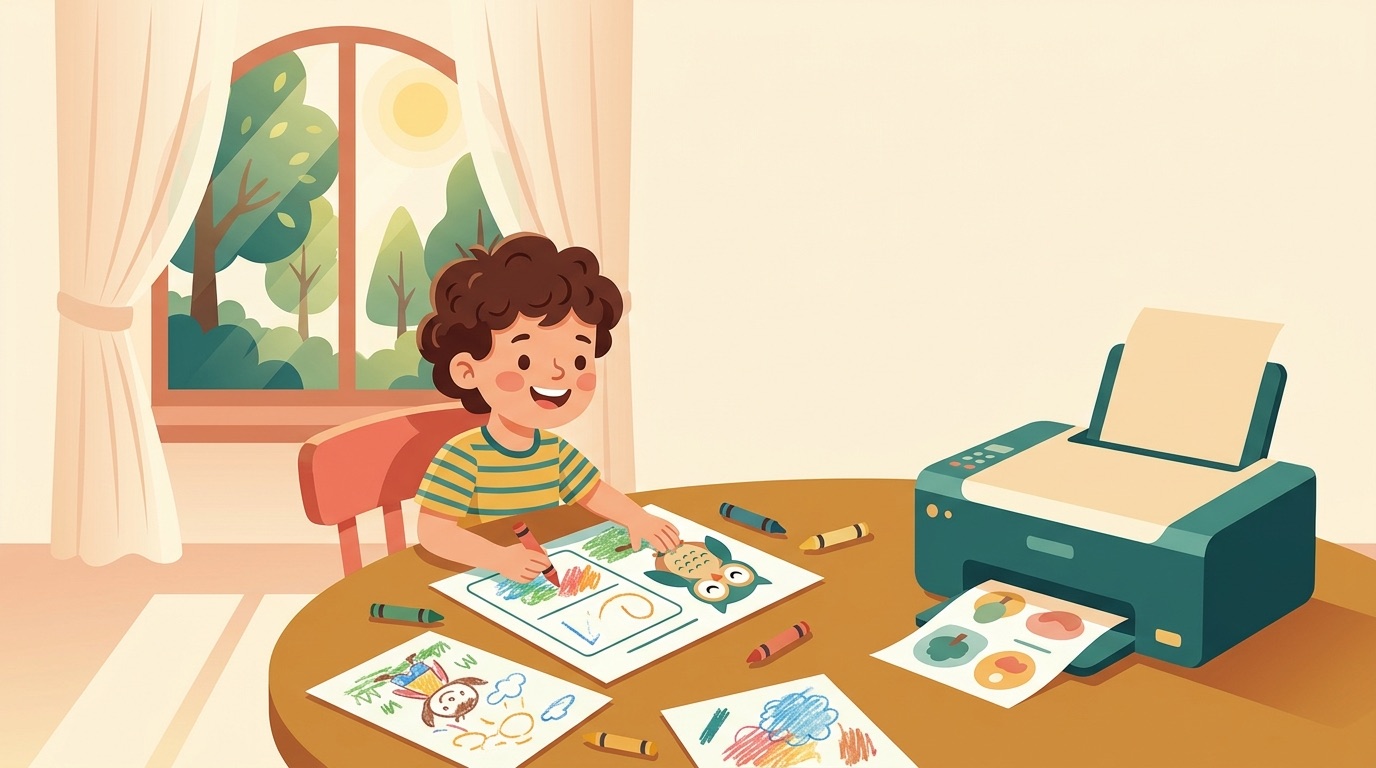
Free printable CP holiday workbook: what to review before CE1
A real free printable CP holiday workbook, no email required: what to review before CE1 (reading, writing, calculation) without...
 Holiday workbooks
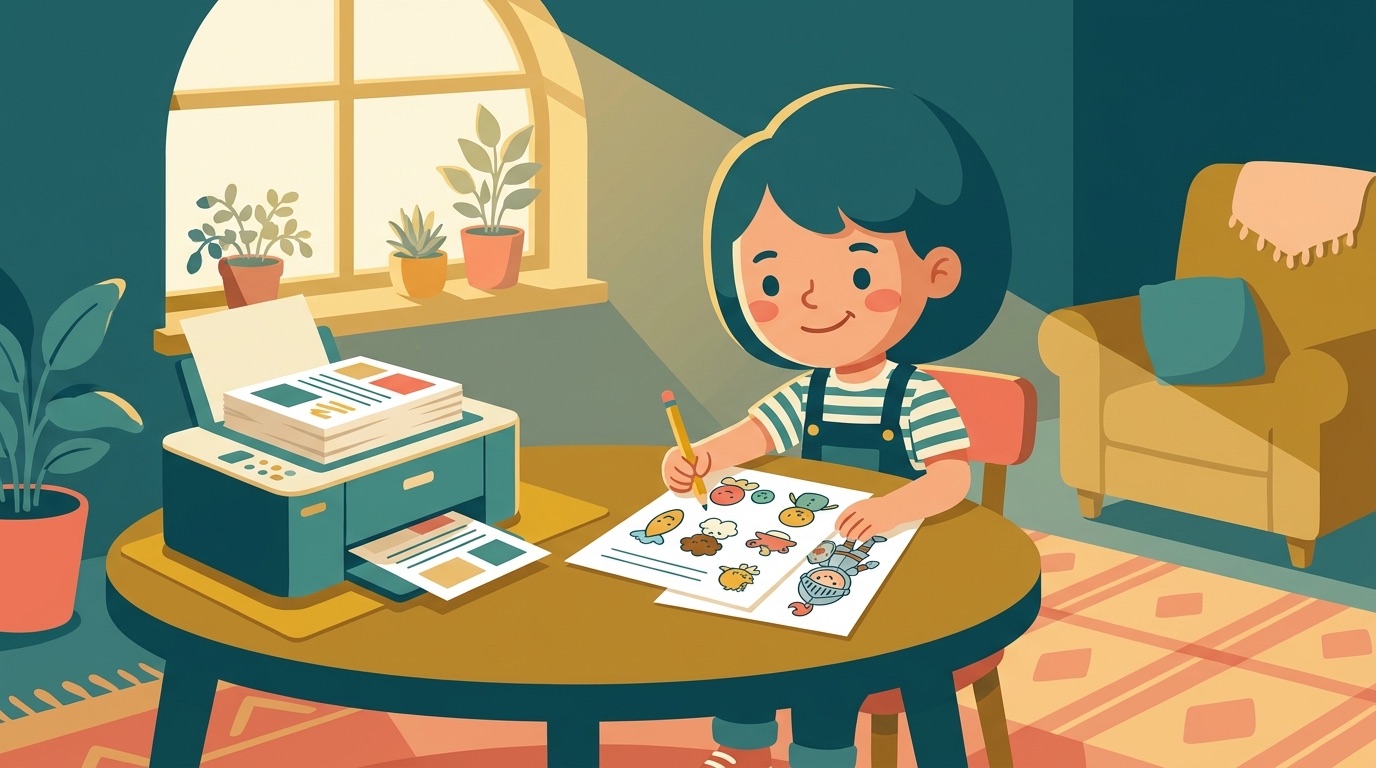
Free printable Grande Section holiday workbook: prepare for CP without pressure
A real free printable Grande Section holiday workbook, no email required: handwriting, letters, sounds, counting up to 10...
 Holiday workbooks
Free printable CM2 summer workbook: preparing for entry into 6th grade
A free printable CM2 (5th grade) summer workbook, no email required, to prepare for 6th grade: fractions, conjugation, writing…