📜 How to remember history dates: timelines, stories and mental images
The history test is on Thursday. Your child read through the lesson twice, knew it perfectly last night… and this morning, they're hesitating: 1492 or 1592? 800 or 8000? You sigh, they get frustrated, and the evening is ruined.
Good news: this isn’t a memory problem. A date is just four digits—no picture, no sound, no story—the hardest thing for a child’s brain to remember. The answer isn’t to reread more, but to disguise the number. Here’s how to make history dates stick, with five techniques that take ten minutes a night, not an hour.
Why history dates are so easily forgotten
Rereading isn’t learning. When rereading, your child recognises the date: it feels familiar, so they think they’re ready. But recognising and recalling are two different things: on test day, the page is blank and there’s nothing to recognise.
There’s another problem: a date on its own has nothing to latch onto. It doesn’t look like anything, it doesn’t tell a story, it just… looks like every other date. That’s why you see the classic three symptoms: similar numbers get mixed up (1914 and 1940), the order of events is lost, and what was memorised the night before lasts exactly twenty-four hours.
Change your goal: don’t try to stack up forty dates, but plant a dozen solid ones—the rest can hang onto these.
How to remember history dates: link them to an image
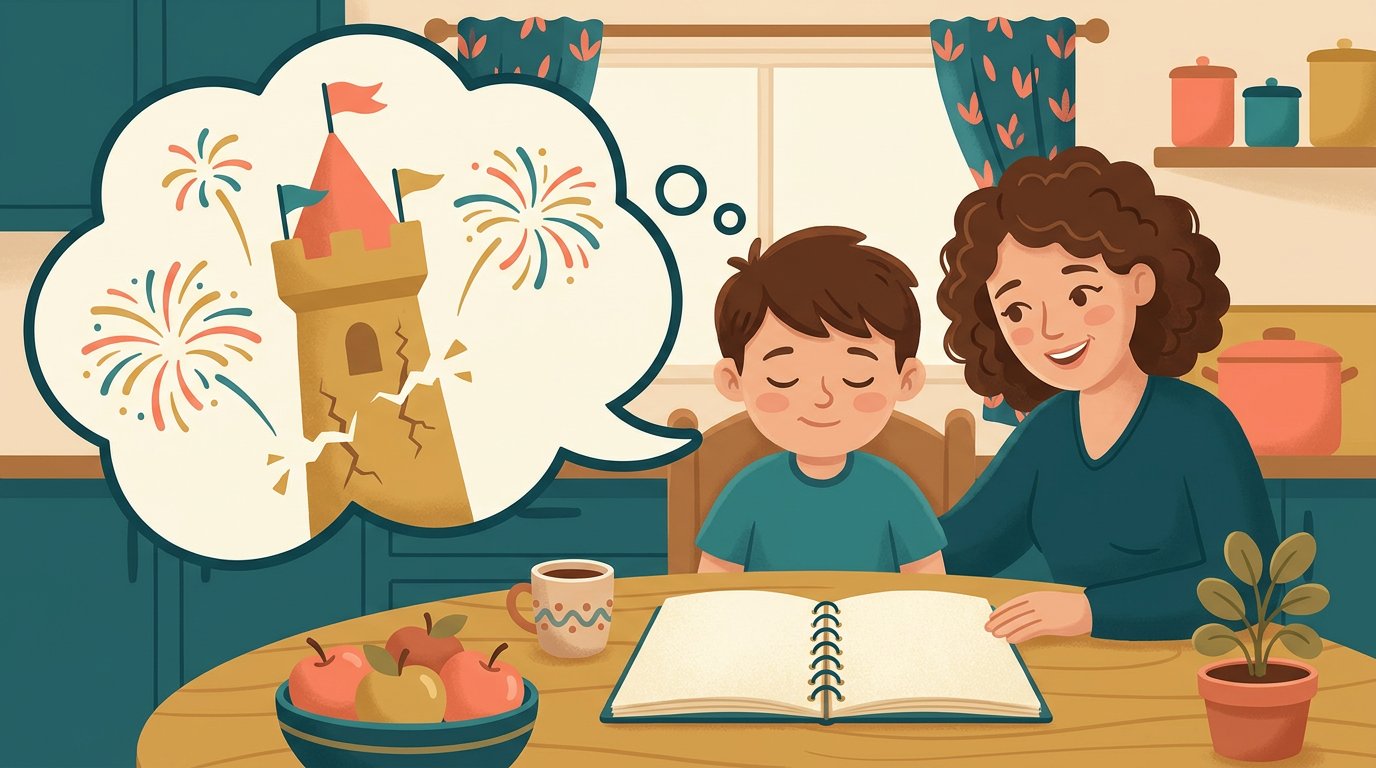
Our memory loves strong, slightly exaggerated, even funny images. Turn each date into a little mental scene, and have your child describe it out loud: the Bastille’s towers toppling like dominoes under a 14 July firework display; Charlemagne receiving his crown on Christmas Day, like a present under the tree; a boot leaving its print in the grey dust of the Moon.
Three rules to make the image work:
- It must be seen, not explained. Ask about the colours, sounds, the weather in the scene.
- It must be created by your child. An image you suggest will only stick in your memory, not theirs.
- It must include the number. Write the date big and colourful, right in the middle of the drawing or imagined scene.
It’s the same idea as the famous planets sentence, which puts Mercury and Neptune in order in a flash: see our article on the mnemonic for the planets. The brain doesn’t remember the list; it remembers the image, and the list follows.
12 key dates and their memory hooks
Here are the main milestones from the primary school curriculum, each with a memory hook to make it easy. Don’t try to learn them all at once—just two per week.
| Date | Event | The hook |
|---|---|---|
| 52 BC | Alesia: Vercingetorix surrenders to Julius Caesar | The last battle of the Gauls, just before year 1 |
| 476 | Fall of the Western Roman Empire | The exit door from Antiquity |
| around 496 | Clovis baptised in Reims | Twenty years after 476: the Empire falls, the Frankish kingdom rises |
| 800 | Charlemagne crowned emperor, 25 December | A round number and a Christmas present: the crown |
| 1492 | Christopher Columbus reaches America | « Quatorze cent quatre-vingt-douze, Colomb met les voiles » (Fourteen ninety-two, Columbus sets sail); end of the Middle Ages |
| 1515 | Marignan, victory of François Ier | Two times 15: the easiest date in the curriculum |
| 1789 | 14 July: storming of the Bastille | It’s already in the family calendar |
| 1804 | Napoleon crowned emperor | Fifteen years after 1789: the Revolution ends with a crown |
| 1881-1882 | Ferry Laws: free, then compulsory and secular school | Two years in a row, just like the two laws |
| 1914-1918 | First World War | 14, then four long years |
| 1939-1945 | Second World War | 39 + six years; and 39 is 25 years after 14 |
| 1969 | First steps on the Moon (July) | 69 reads the same forwards and backwards |
Notice the method in the third column: we almost never remember a number on its own, but rather a difference (1789 + 15), a rhyme (1515), or a shape (69). This is exactly how Kidibook Memory Tricks work: they group these hooks by subject, from CP to lycée, with all the key history dates on a single card.
How to remember history dates by telling the story
A child who recites “1789, French Revolution” hasn’t really learned anything: they’ve just stuck two words to a number. But a child who can explain why people marched on a prison one summer morning, what they found there, and what changed afterwards, will never forget the date. The story does the work for them.
The routine comes down to three questions, always in this order:
- Who? A name, a face, a side. Any child-friendly answer is fine.
- What? The action in a single sentence, with a strong verb: take, crown, sign, leave.
- And then? The consequence. This is what links one date to the next and builds up the timeline.
Play the journalist: you ask the questions, never just let them recite into thin air. And if the story gets stuck, don’t give the answer—just give the first sound of the word. This same technique works wonders for learning texts by heart, as we explain in how to learn a poem quickly.
The corridor timeline and sorting by century
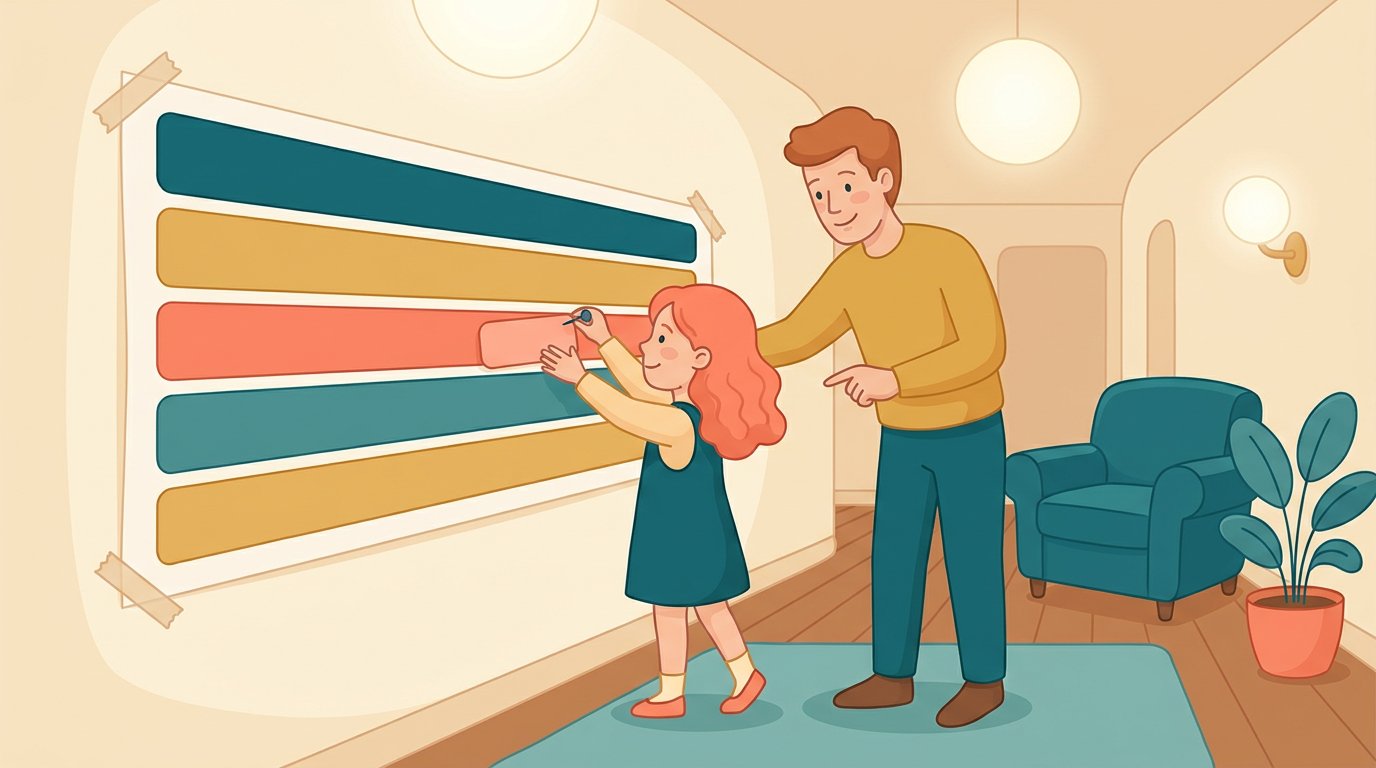
Dates get muddled mainly because children can’t see time. Fix this with a physical timeline: a long strip of paper taped up in the corridor, five coloured sections, and a new label for each lesson.
The five main periods of history as taught in school:
- Prehistory, up to the invention of writing;
- Antiquity, from writing to 476;
- The Middle Ages, from 476 to 1492;
- The Modern Era, from 1492 to 1789;
- The Contemporary Era, from 1789 to today.
Two markers from the table above (476 and 1492) also act as boundaries: learning them means learning three things at once. Add the century rule, which is gold at collège: take the first two digits of the year and add 1. 1789 becomes 17 + 1, so the XVIIIe century. Only years ending in 00 are exceptions: the year 800 ends the VIIIe century.
Why the corridor? Because you walk through it ten times a day. The timeline revises itself, no one has to sit down.
The Sunday night quiz: test, don’t just reread
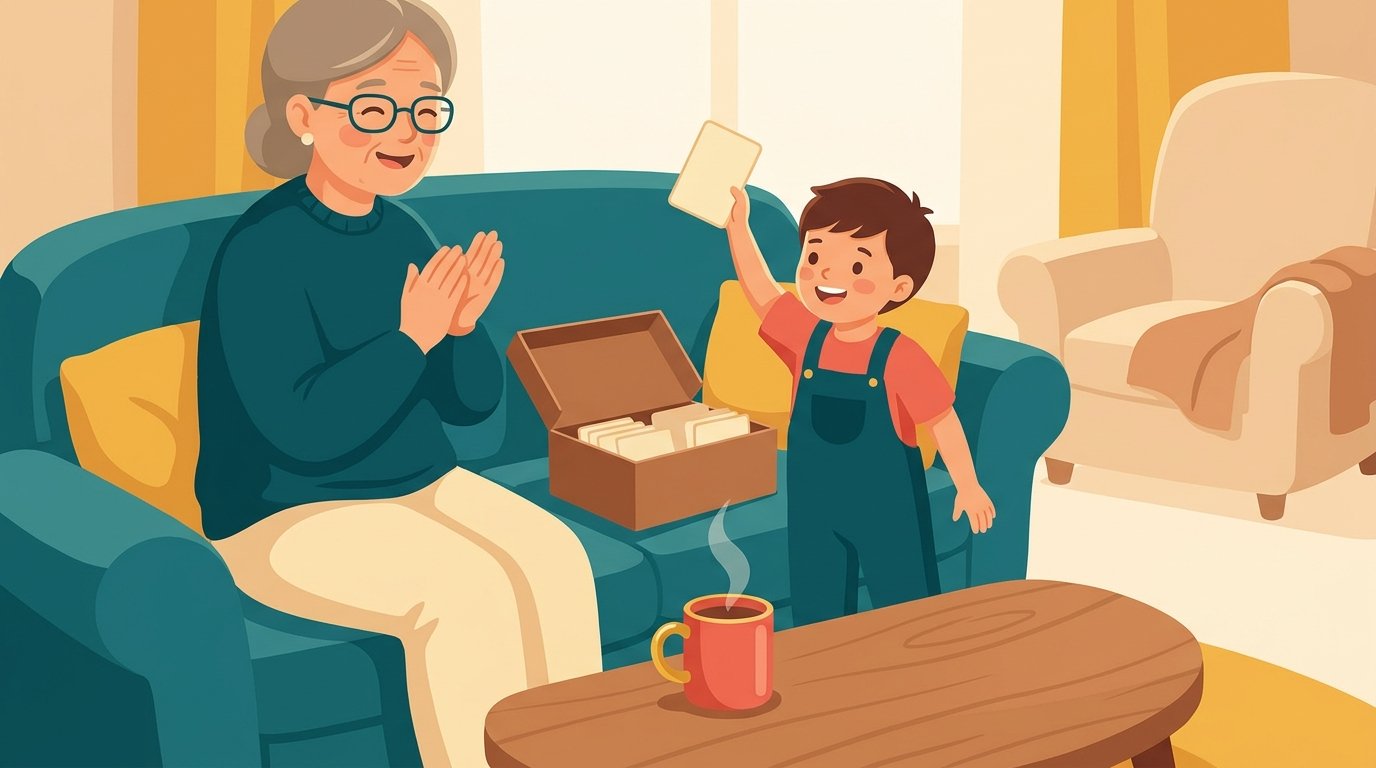
Final step, and the most effective: five minutes of questions, once a week. Write each date on a small card, the event on the back, and quiz both ways—from date to event, then event to date. The second way is much harder, and that’s what tests usually ask for.
Space out the revision instead of cramming the night before: the evening of the lesson, the next day, three days later, then the night before the test. Four short sessions beat one long last-minute cram, for dates as well as times tables: this is the principle explained in our overview of essential memory techniques.
And don’t correct harshly. A mistake just means the hook is missing: make one together, and ask again two minutes later. Ending on a success is much better than ending with a lecture.
📘 All these tips are also in a book: The Big Book of Memory Tricks — dates, rivers and kings, without rote learning.
Want to put these tips into practice?
Every day, a new adventure workbook adapted to your child's school level — to print or do on screen. No commitment.
Your questions
At what age do children really start learning history dates?
Structured history, with chronological markers to memorise, starts in cycle 3 (CM1, CM2, 6e). Before that, in CP and CE1, the focus is on understanding time: yesterday and tomorrow, the seasons, the family timeline. There’s no point making a 7-year-old learn 1515: start with a timeline on the wall—they’ll use it three years later.
Do you need to remember the exact day and month, or is the year enough?
The year is enough in almost all cases. A few dates are exceptions because school and daily life use the full date: 14 July 1789, 11 November 1918, 8 May 1945. For the rest, insisting on the exact day wastes time and puts children off.
My child always mixes up 1914-1918 and 1939-1945. What should I do?
Don’t revise both on the same night: the two wars are too similar to learn side by side. Anchor the First on its own first, with a picture and its gap (14, then four years). A week later, introduce the Second as “25 years after”, linking it to the first instead of making them compete.
How many dates should children know by the end of primary school?
There’s no official number: the curriculum gives guidelines, not a set quota, and each teacher chooses their own selection. In practice, a dozen really solid dates, well spread across the five periods, are enough to place almost any lesson in context. Better to know twelve dates well than forty only vaguely.
Read next
 Memory tricks & memorisation
15 mnemonic techniques every pupil should know (from CP to Bac)
A good mnemonic helps a lesson stick in your mind in seconds. Discover 15 tried-and-tested tips, from …
 Memory tricks & memorisation
How to learn your times tables: the plan that finally works
In what order, with which tips, and how long each day? A practical plan for learning times tables…
 Memory tricks & memorisation
Mnemonic for the planets: remember the order of the solar system in one sentence
The planets mnemonic: the sentence that puts Mercury to Neptune in order, the table of all 8 planets and …